
Here for you: art@pulvisurns.com | (562) 609-4019
Selecting a cremation urn is a highly personal experience. In many cases, when you see the right urn – you feel it immediately. Traditional cremation urns often have a generic appearance that can be hard to trigger an emotional response, whereas artisan urns with contemporary styles can provide that distinct look and feel that strikes you immediately and feels right.
There’s no right or wrong answer when choosing a cremation urn – it simply depends on staying true to your own emotional response. By summarizing the main design differences between traditional and contemporary cremation urns, this article can help point you in the right direction as you get started on your search for the perfect urn.

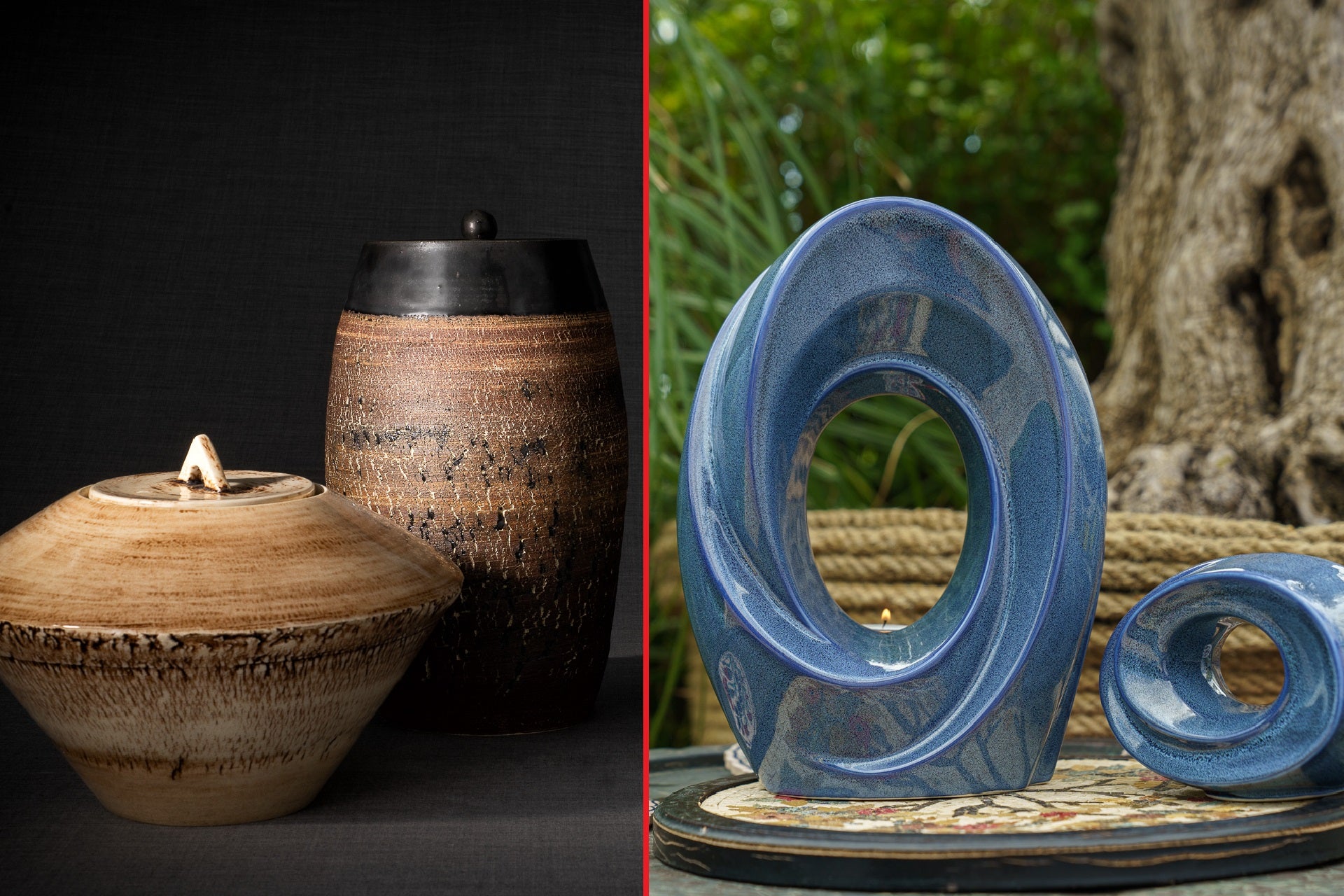
Traditional cremation urns have a vase or jug-like shape with a round lid and smooth surface. They’re often gently rounded in form and symmetrical, as if shaped on a pottery wheel. Colors are typically subdued with monochromatic neutral tones. Beige, pewter, and gray are common color choices for traditional urns.
Traditional designs tend to be generalized and standard. They’re quite easy to find because they are so similar in style. In fact, many traditional cremation urns are mass-produced, giving them an identical appearance. People who prefer traditional cremation urns are often looking for something understated that won’t grab a lot of attention or stand out.

And while this can be considered an advantage for some, others may find that traditional cremation urns lack character and don’t capture the full essence of the loved one’s life and memory. Another common complaint with traditional cremation urns is that they can easily be mistaken for other household décor items, like cookie jars, flower vases, and storage bins.
This can lead to some uncomfortable situations when a cremation urn is confused for something else! With that said, a traditional urn may be better for passing down through the family line, since the design is often modest and easy to display anywhere.
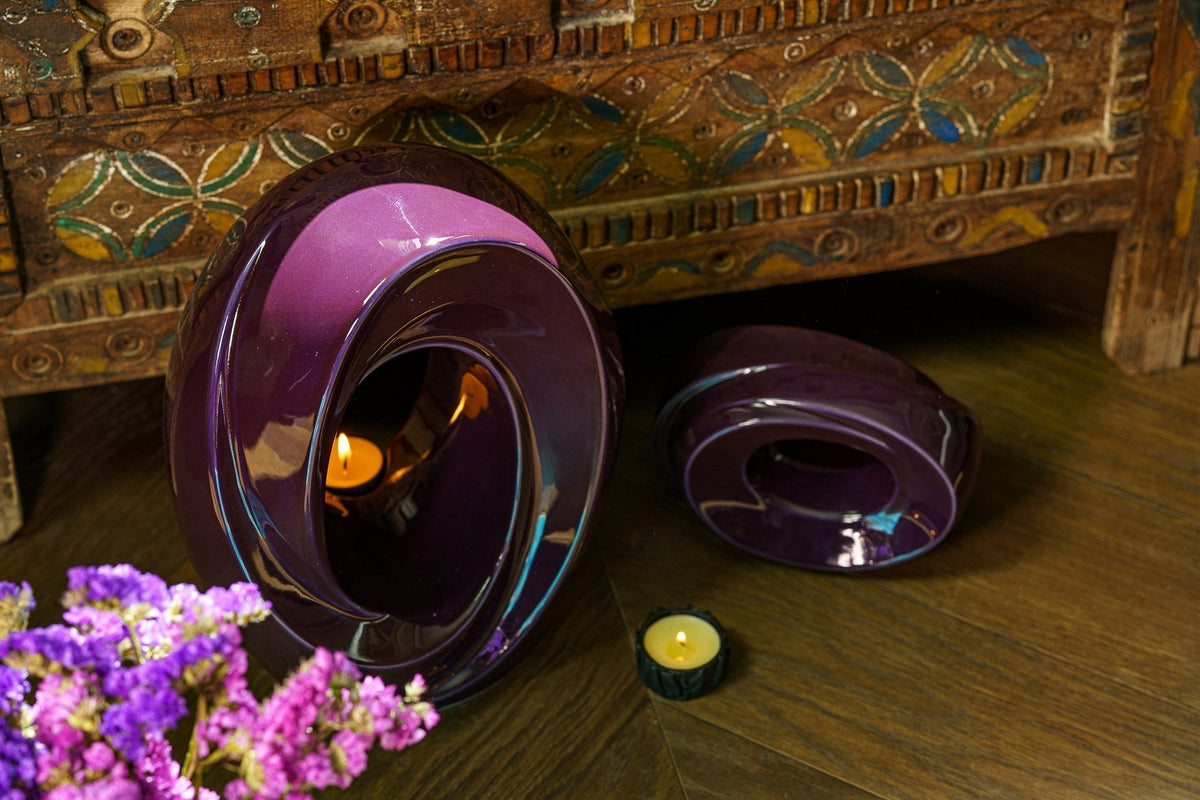
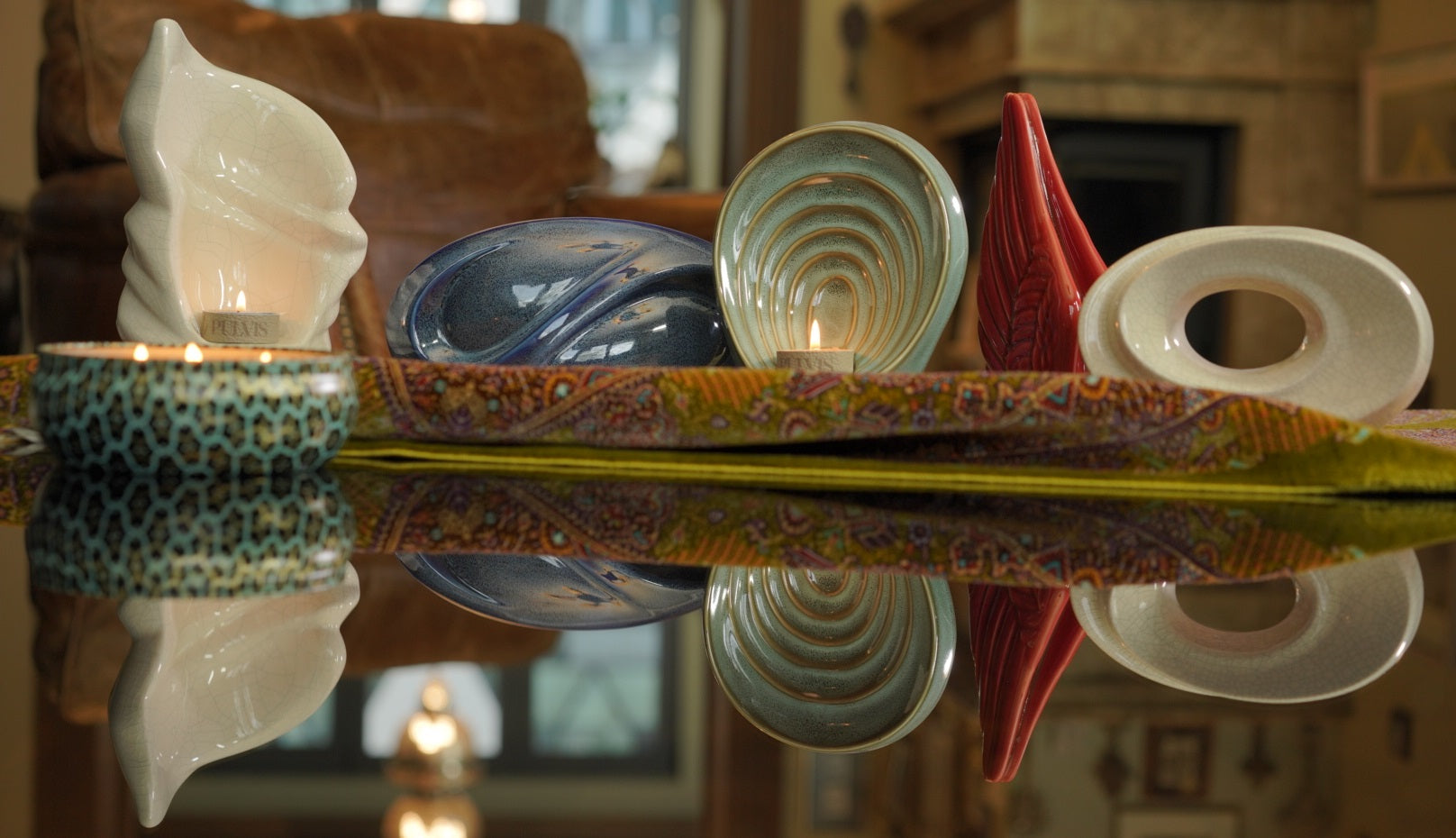
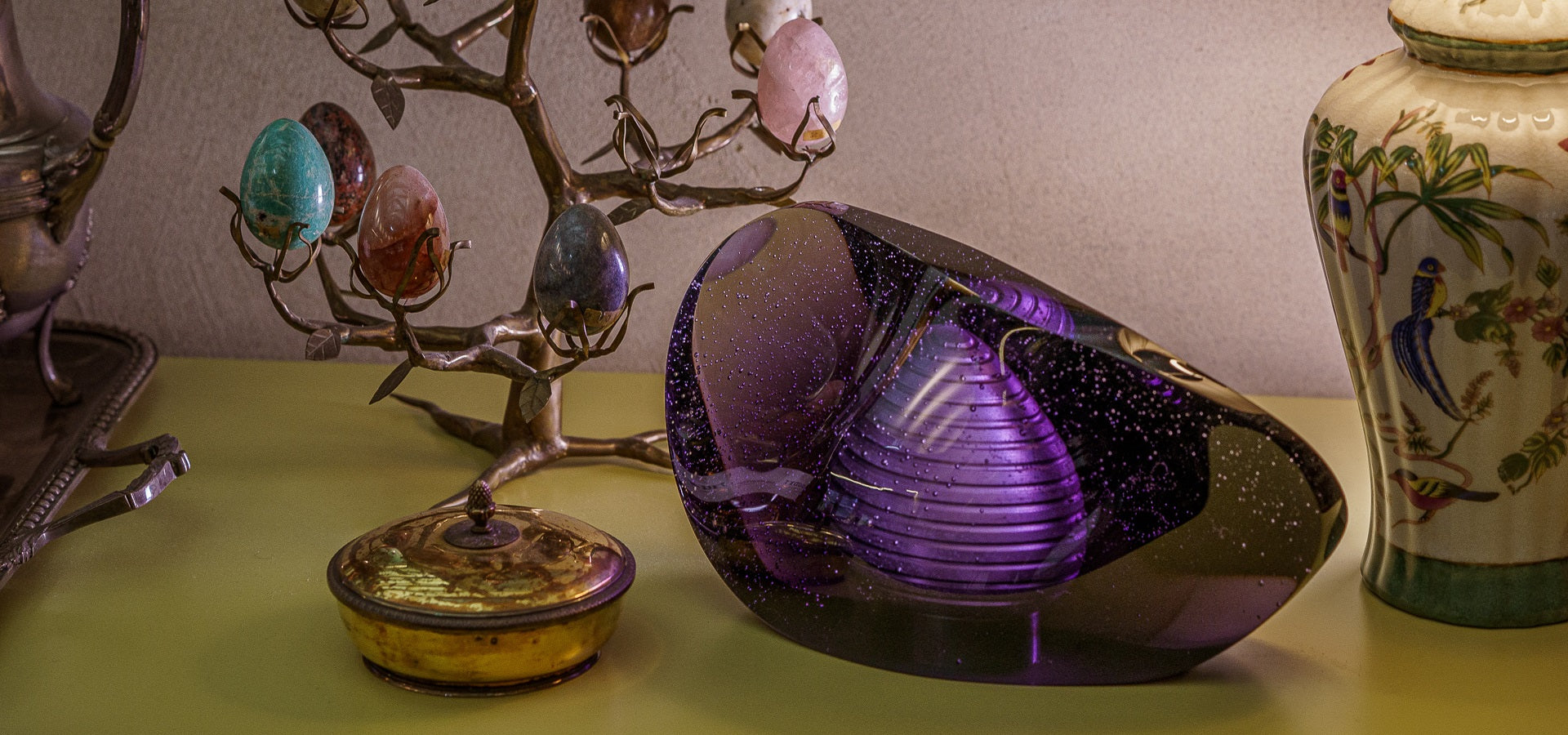
Contemporary cremation urns are much flashier in appearance, and there is such vast variety available, that the designs can’t be summarized in a succinct way. Abstract, ornate, minimalist – contemporary urns cover all the bases. From candlelight elements to colorful ceramic finishes and dynamic shapes, contemporary cremation urns provide a wealth of different design styles to consider.
This variety actually leads to one of the biggest advantages, which is that contemporary cremation urns offer personalized styles that feel much more expressive. These distinct designs tend to capture the spirit and memory of the deceased better than traditional urns. If you prefer a vessel that reflects the life and personality of your loved one, you’ll definitely want to look at artisan urns with distinct styles.
Abstract shapes and bold colors can also strike reflection in a way that traditional jug-style urns don’t. A votive candle feature built into the urn design adds iconic beauty and solemnity to the display, helping it stand out from other home décor pieces. Antique ceramic finishes, dynamic wood elements, recognizable shapes and symbols – contemporary cremation urns truly spark the spirit. Creative and captivating, these artisan urns won’t be mistaken for other décor, especially since they’re each handcrafted individually.

Remember – there’s no right or wrong when it comes to choosing the best cremation urn for your loved one. Hopefully, this article helps guide you in the right direction to find exactly what you’re looking for in a cremation urn.
Join us in helping families honor the memory of their loved ones and pets through art!
Our Affiliate Program is now available at https://www.pulvisurns.com/pages/affiliate-program-by-pulvis-art-urns

Can You Inherit a Pet’s Memory?
Can we remember a pet we never knew? Explore how stories, photographs, objects and memorials can carry an animal’s memory across generations, turning a private life into part of a family’s shared history.
What a Pet Teaches Us About Impermanence
Living alongside a pet teaches us that the most meaningful parts of life are often temporary. Explore how animals shape our understanding of time, impermanence a quiet, lasting expression of what remains.
Why the Best Pet Memorials Don't Always Look Like Pet Memorials
The most meaningful pet memorials do not always rely on familiar symbols. Discover how contemporary pet urn design uses form, material, colour, and craftsmanship to create personal memorials that quietly belong within the home.
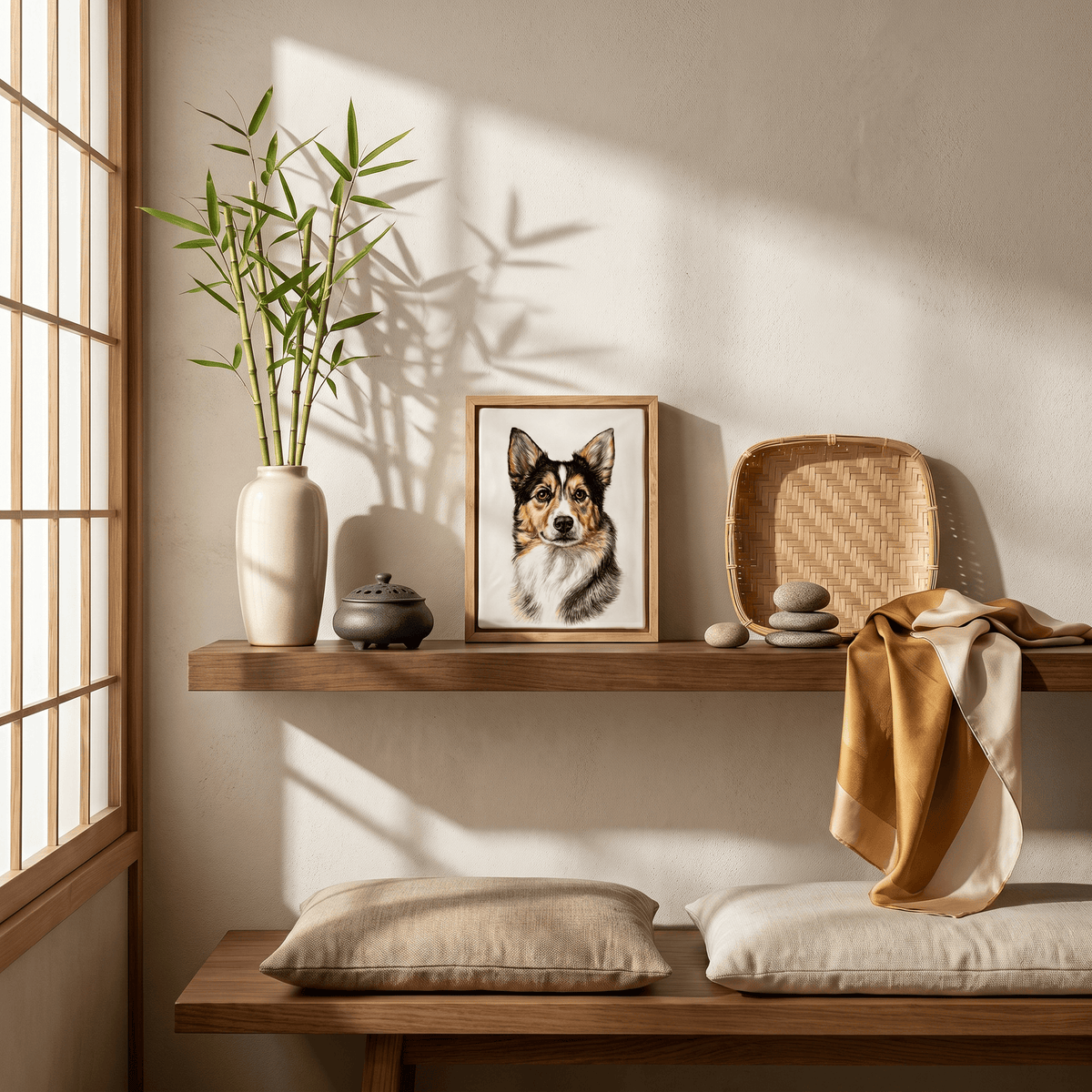
The Urn as a Bridge Between Presence and Absence
What happens when a pet is no longer physically present, but something of that life remains? Explore how a memorial urn can become a bridge between absence and presence, giving memory a tangible form and a lasting place within the home.
Memento Mori: Why Humans Have Always Made Art About Death
For thousands of years, humanity has transformed death into art — from skulls and fading flowers to portraits, monuments and memorial objects. Explore why we continue to create around mortality, memory and the human desire to make something last.


Share:
How to Write an Obituary
Preserving Ashes: Understanding Different Materials Used in Cremation Urns