


Here for you: art@pulvisurns.com | (562) 609-4019
7% off your order
Use this code at checkout:
Eco-friendly burial is achievable with biodegradable urns, allowing families to repurpose a loved one’s ashes in a meaningful tribute. Throughout North America, people are embracing sustainable, environmentally friendly ways to approach end-of-life burial decisions.
Now that it’s possible to purchase beautiful cremation urns for ashes that are biodegradable, families can finally have a fitting way to honor their loved one’s memory without worrying about their carbon footprint.

Similar to scattering ashes, determining the local legality of burying biodegradable urns is essential. State laws about planting biodegradable urns may vary throughout the U.S. This article provides an overview of American laws concerning biodegradable urns, but local authorization and guidance should always be sought prior to finalizing burial plans. As planting biodegradable urns becomes more popular in the United States, laws continue to develop, and confirming the rules and regulations with local authorities is the best way to stay informed.
Green burials – or those that reduce impact on the environment by using sustainable materials – are gaining popularity in the United States. Symbolizing the circle of life, returning the body to the land in a natural way can bring peace and closure. After choosing cremation, those who aren’t interested in keeping urns at home often decide to scatter the ashes outdoors to symbolize that reconnection with nature.

The problem with scattering ashes is that – though it’s a beautiful gesture – it can be difficult for families to return to the physical location where ashes were scattered and feel the same connection with their deceased loved one. It’s human nature to want to see, feel, and experience the presence of those who have passed.

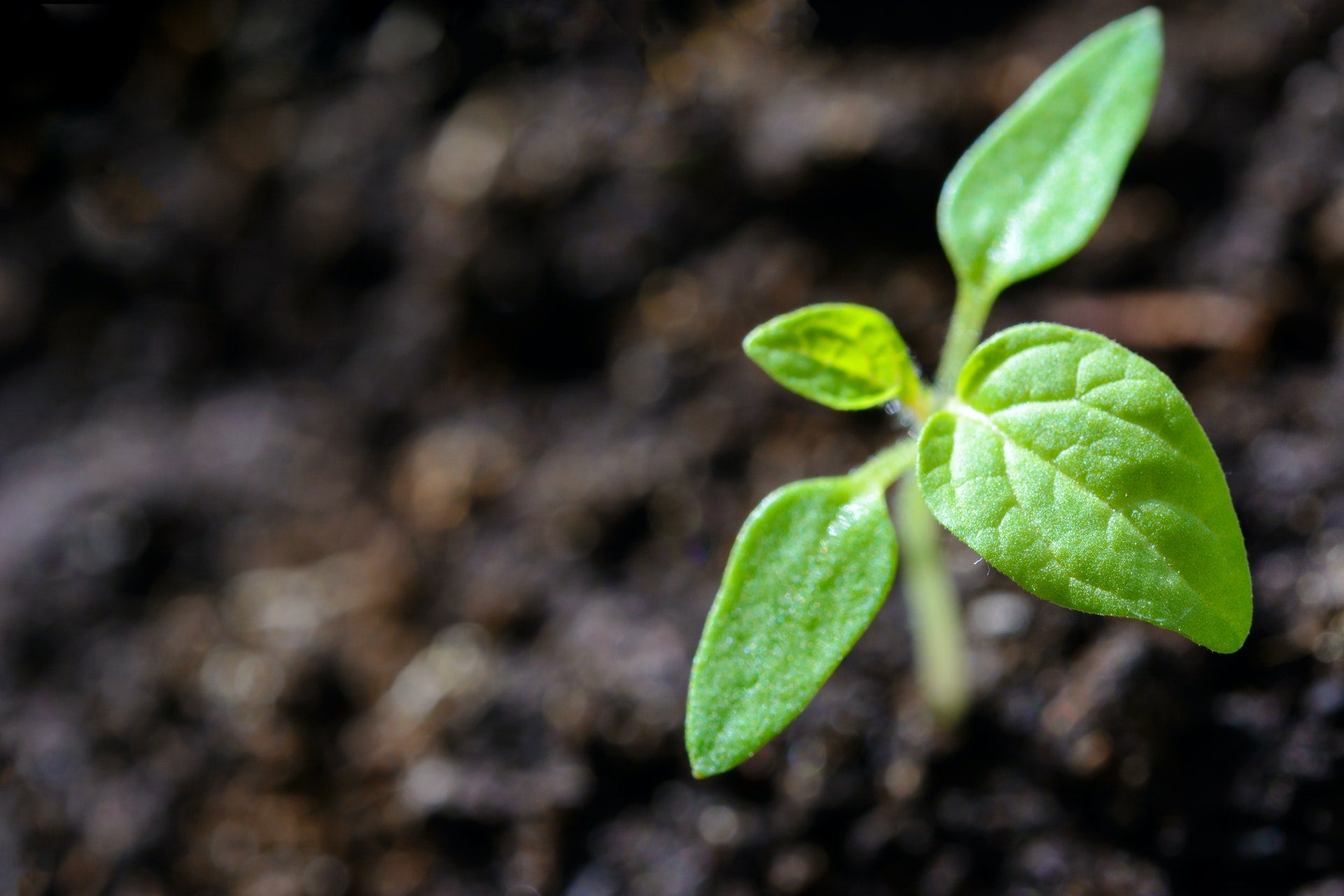
Biodegradable urns are a great solution for this disconnection. Instead of scattering the ashes, which end up blowing away and disappearing, cremated remains can be placed in an eco-friendly, biodegradable urn that is then planted in a specific location. The site can be marked with a living tree or plant seeds. Seeing and experiencing the cremated ashes grow into a new living thing provides a powerful experience for surviving family members, and it often makes it easier to feel a connection with those who have passed away.
So, where can you plant a biodegradable urn in the U.S.? This can be a tricky question to answer in entirety, because not all places have distinct laws yet about biodegradable urn burials. In some places, the laws about scattering ashes serve as the sole guidance to interpret the legality of planting biodegradable urns. Furthermore, the laws may differ slightly from state to state, city to city, and county to county.

With that said, families do have lots of options for planting biodegradable urns in the United States. Here are a few of the guidelines to consider when learning where, how, and when to plant a biodegradable urn in the U.S.
This remains one of the safest, most secure options for families who want to honor their loved one by planting cremated remains in a biodegradable urn. So long as permission is granted by the property owner, it is legal to plant a biodegradable urn on private land.
This is perfect for families who want to keep their loved one close by. Glancing out into the backyard and seeing the tree from a biodegradable urn grow taller year after year can provide unique long-term solace.
Here’s where things get tricky. Though public places – especially those in nature, like woodlands and forests – seem like a perfect place to plant the ashes in a biodegradable urn along with a living tree or flower seeds, the laws are not quite explicit about this. What may be viewed as acceptable in one state may not be legal in another. Plus, with many different governing bodies that oversee public land, there may be unique guidelines and restrictions for planting biodegradable urns.

Always check with the local authorities and secure written approval before carrying out any plans to bury a biodegradable urn on public land – even for land that seems to be in the middle of the wilderness. In addition, keep in mind that plans for public land use may change in the future, which can dramatically alter the terrain where you plant ashes in a biodegradable urn.
If you can’t find a feasible option for planting your loved one’s ashes with a biodegradable urn on private or public land, don’t give up hope! There are two other creative options to consider, both of which can be beautiful and fitting arrangements for memorializing your loved one with a sustainable burial.
Some cemeteries are more adapted for eco-friendly burials than others. The Green Burial Council is a fantastic resource for finding cemeteries and burial places that can accommodate biodegradable urns. These cemeteries tend to be quite beautiful and maintain a natural setting that can be visited again and again to feel the ongoing connection with loved ones who have passed.
Another option is to plant the biodegradable urn in a secure container that is large enough to hold a small plant or dwarf-sized tree. There are no laws at this time that restrict biodegradable urns in planters that are kept in the possession of those who planted them. The benefit of planting a biodegradable urn in a container is that you can keep it with you, even if you move homes.

Biodegradable urns are a wonderful way to facilitate a sustainable burial process – all while witnessing your loved one’s ashes return to the earth and support the growth of a living plant. It’s a beautiful experience, and one that more and more Americans are considering when making final resting plans.
Because the laws are continuously adapting to fit this growing interest, it is strongly recommended to check with your local authorities (both state and county) to get the most up-to-date rules for burying biodegradable urns.
------------------
Our Affiliate Program is now available. at https://www.pulvisurns.com/pages/affiliate-program-by-pulvis-art-urns
Which urn size do I need?
A simple rule: about 1 cubic inch of urn per pound of body weight.
Every product page lists the urn's capacity. Keepsake urns hold a small portion of ashes to share.
Need it by a specific date?
Free shipping · Delivery in 3–5 business days
Express delivery in up to 3 business days – choose it at checkout
Need help choosing?
Talk to our team – we're happy to help you find the right urn.
(562) 609-4019 art@pulvisurns.comSend us a message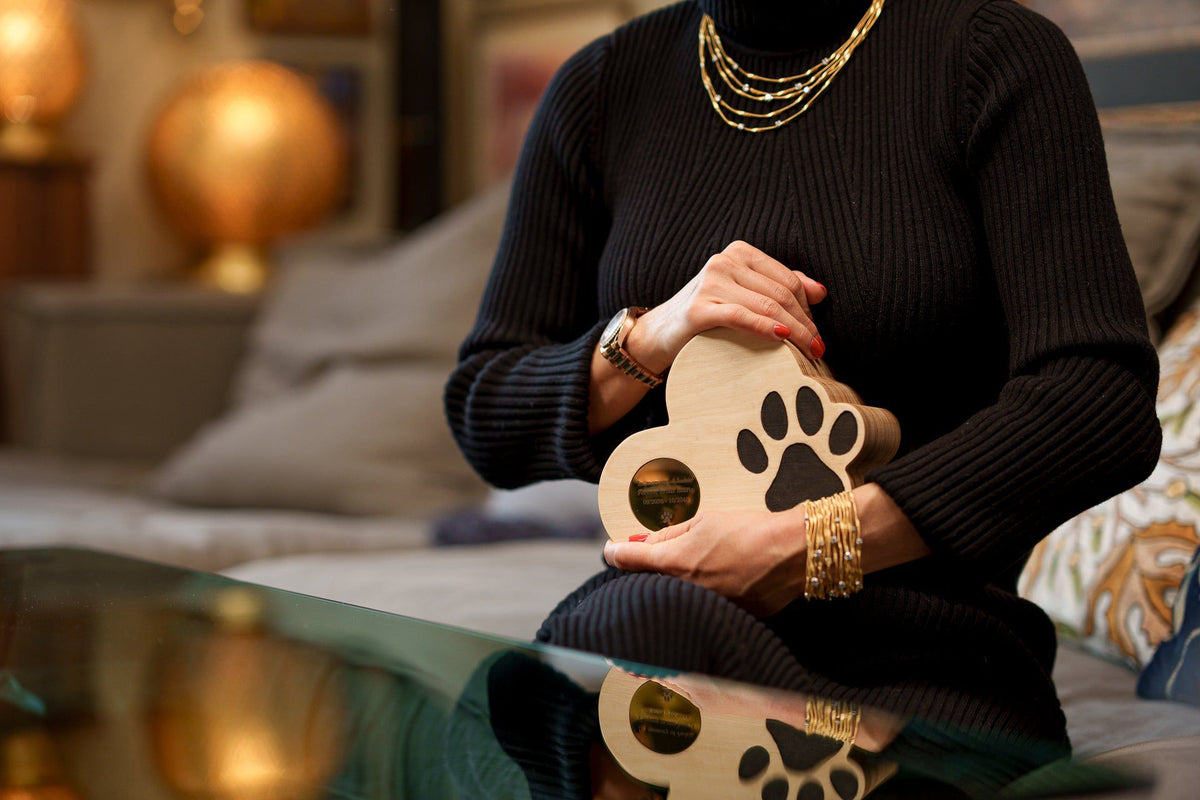
Can You Grieve a Life That Never Had Words?
Discover why losing a beloved pet can be so profound, how wordless bonds shape our lives, and how Pulvis Art Urns brings craftsmanship and thoughtful design to the art of remembering an animal companion.
What Does the Bible Say About Cremation?
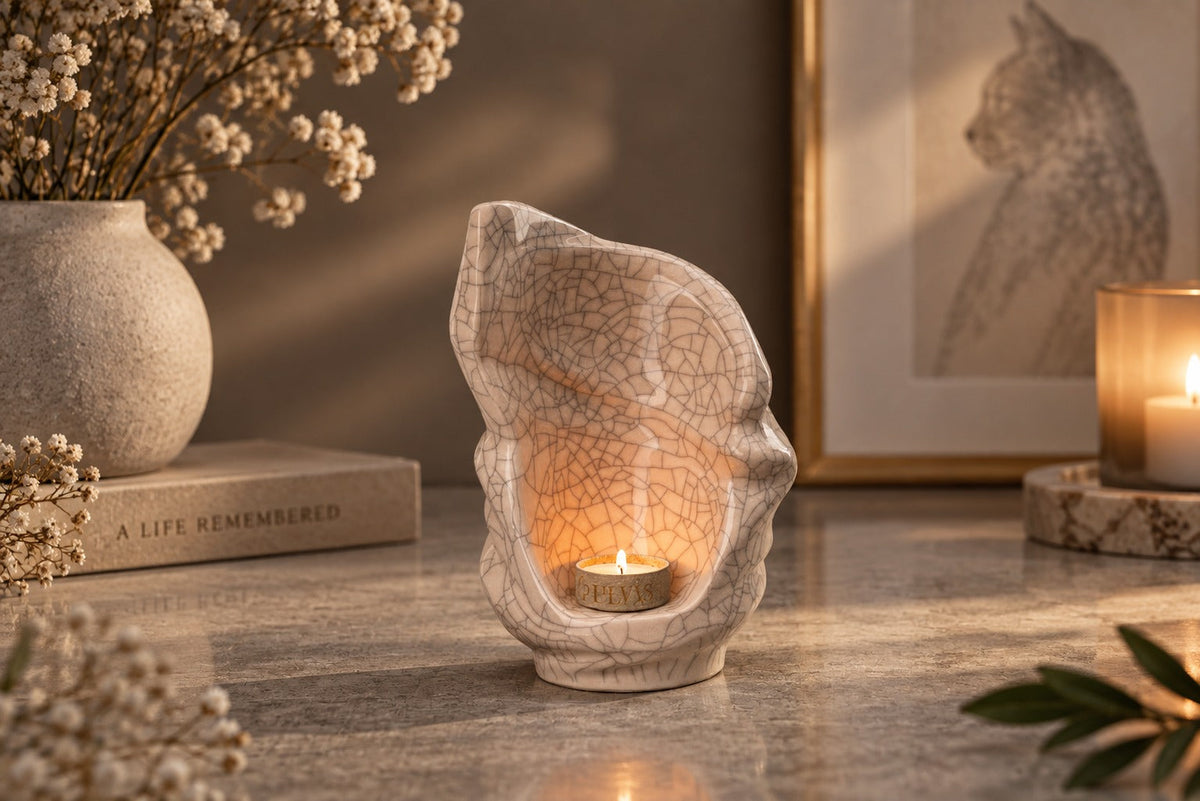
Explore what the Bible says about cremation, Christian beliefs about resurrection, and meaningful ways to honor a loved one’s memory through a thoughtful memorial.
Why Do People Light Candles for the Dead?
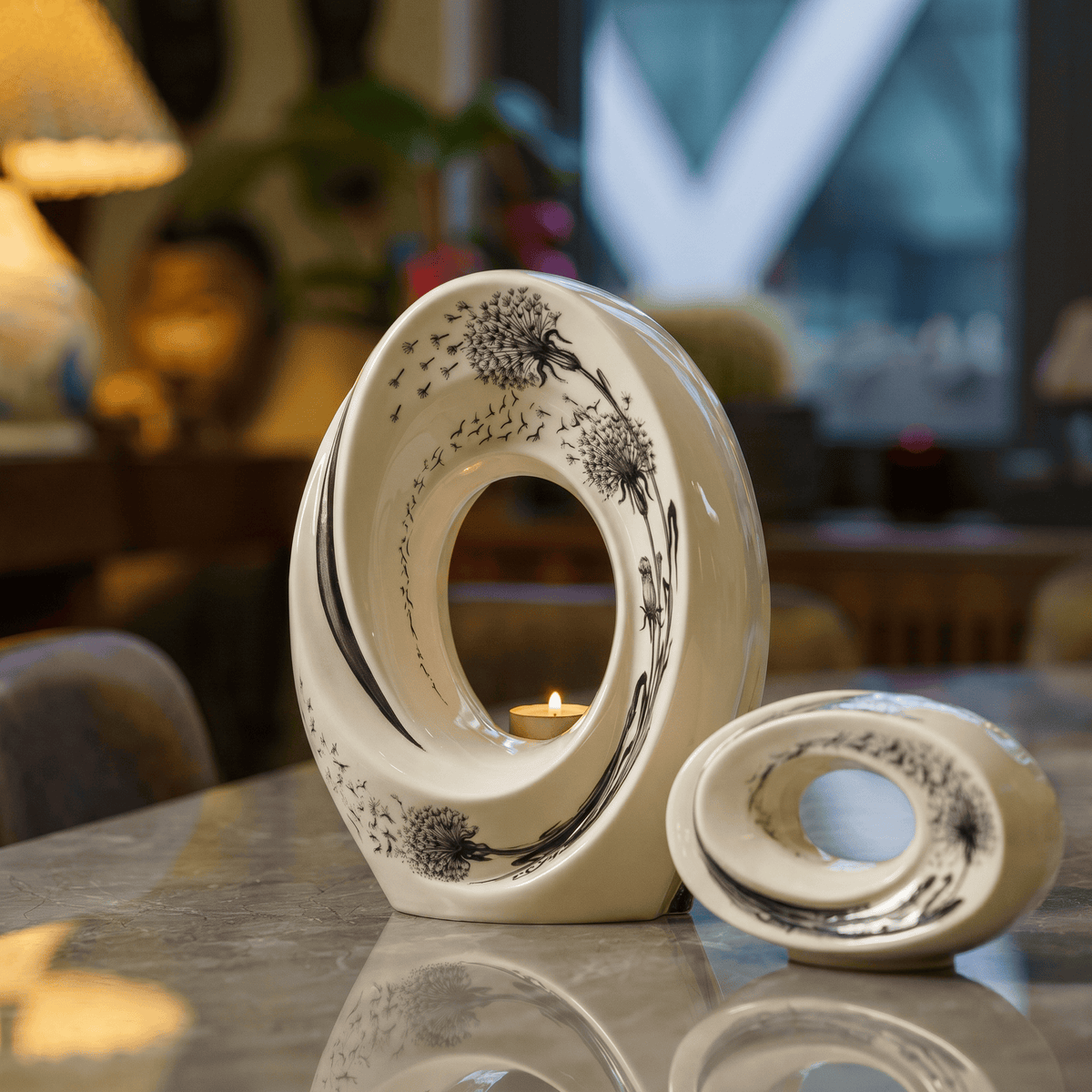
Discover the meaning behind lighting candles for the dead, exploring the traditions, beliefs, and emotions that make this simple ritual a lasting expression of remembrance, comfort, and connection within the home.
The Pet as a Witness to a Human Life
Our pets witness far more of our lives than we realise. Explore what it means for an animal to become a quiet witness to our changing homes, relationships, routines and identities — and how a memorial urn can remain as a physical connection to the life they witnessed.
Can You Inherit a Pet’s Memory?
Can we remember a pet we never knew? Explore how stories, photographs, objects and memorials can carry an animal’s memory across generations, turning a private life into part of a family’s shared history.


Share:
Pulvis Art Urns gets featured in SEEN magazine
Burying Biodegradable Urns – The Laws in Europe