


Here for you: art@pulvisurns.com | (562) 609-4019
This is a first of three essays on Giorgio Agamben, that are going to be shared on our newly found blog section.
Agamben is one of the greatest living philosophers, whose thoughts touch upon some of the fundamental beginnings of culture, religion, and politics, and weaves them with rare finesse in a narrative that lays bare the fragile yet infinite potential of human creativity and desire for meaning.

The Idea of Love
To live in intimacy with a stranger, not to draw him closer, or to make him known, but rather to keep him strange, remote: unapparent-so unapparent that his name contains him entirely. And, even in discomfort, to be nothing else, day after day, than the ever open place, the unwaning light in which that one being, that thing, remains forever exposed and sealed off.
G. Agamben
In this exquisite short prose piece one of Giorgio Agamben, formulates an idea of love, both radical and tender. An idea that has the potential to transform one’s vision of living together, of sharing an existential space with a human being who is wholly other.
For Agamben, one cannot understate or underestimate thе otherness of our loved ones, of our life partners. It is an alterity, constantly present, working within every gesture, every gentle touch, every word that strives to approach, to name, to place him/her within a horizon of meaning. It is this unreachability between two bodies, two souls that love must confront and address.
But how can this be?
There is an obvious contradiction here, a paradox, expressed by Agamben in the very first line of his essay – to live in intimacy with a stranger. For to love someone is the opposite of being a stranger, the opposite of being unreachable. It is love that draws us closer, love that creates a shared world and forms this intimate atmosphere where the fragility of being human is revealed in all its subtle nuances.
However, for Agamben, this is an intuitive understanding of love that, although true, conceals a key dimension that if not expressed clearly and with courage, prevents one from grasping this deeper layer of meaning where love becomes a sublime force that is both universal and radically concrete, i.e., a force that gives Being both its infinity and its necessary limit.
This is what the philosopher tries to name with words like strange and remote. It’s this immanent distance that functions within the core of love. This distance, or to use again a word from Agamben’s essay – this being sealed-off – is what reveals the true force of love when stripped from all common intuitions, all abstract figures of togetherness and sharing.
Thus, the stake of Agamben’s thought is the concreteness of love manifested in the impossibility of fully becoming One with the other, of revealing yourself unconditionally. But this doesn’t mean that there isn’t such a thing as closeness, as vulnerability, as oneness. It means that to fully grasp their essence, their necessity in a relationship, one must understand distance, one must feel the scarring otherness of a loved one, his/her strangeness, and accept it no matter how hard and discomforting such a process may be. In other words, one must free oneself from all the representations that protect one from experiencing the silences, the absences, the everydayness of being together. That is what becoming an empty place means for Agamben – а form of abstinence from judgment, from the security of one’s preconceptions.
Because love is a risk, a decision for building a shared existential space grounded in the acceptance of this unconcealed alterity and the irreducible distance it expresses. Only through such recognition does one understand that to create something mutual is a beautiful paradox, namely the creation of a world not united but filled with numerous differences that need to be reinterpreted, reconstituted.
For love at its most unconcealed is the courage to restate the difference of the loved one incessantly and to protect the fragile beauty of his/her otherness which transforms love into the universal yet concrete tenderness and care for life itself.
Author: Yakim Petrov

------------------
Our Affiliate Program is now available. at https://www.pulvisurns.com/pages/affiliate-program-by-pulvis-art-urns

Can the Design of a Pet Urn Change the Way We Grieve?
Can the design of a pet urn influence the way we experience grief? Explore how meaningful materials, forms and memorial design can help transform loss into a lasting connection with a beloved companion.

What Are the Most Unique Urns Available Today?
Discover the most unique cremation urns available today, from handcrafted ceramic and sculptural designs to glass, nature-inspired, personalized, and keepsake memorials. Learn what makes an urn distinctive and how to choose a meaningful design based on capacity, material, placement, and personal significance.
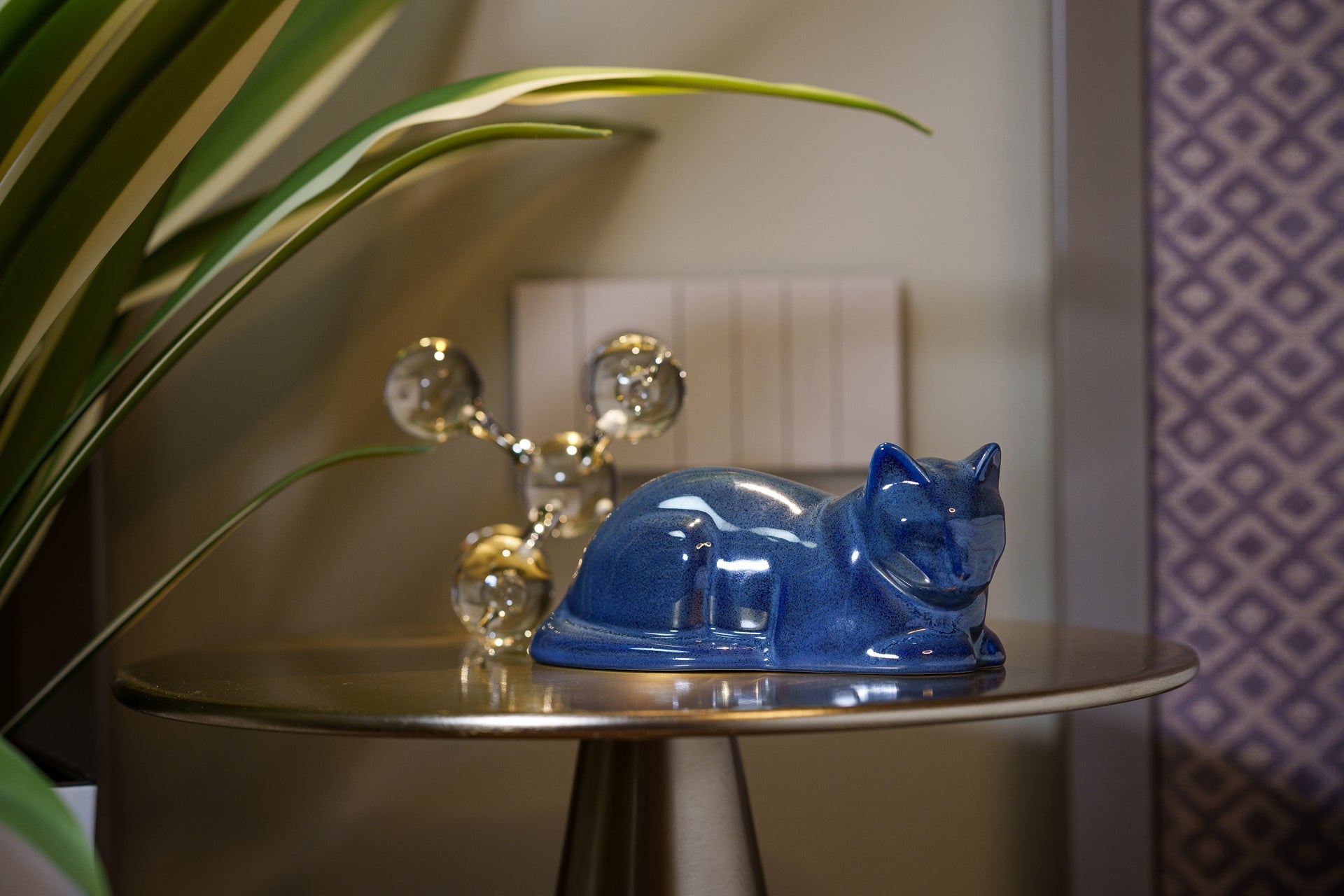
How Do You Choose the Right Pet Urn?
A practical guide to choosing the right pet urn, covering size, capacity, materials, personalization, closure, and meaningful ways to memorialize your beloved companion.
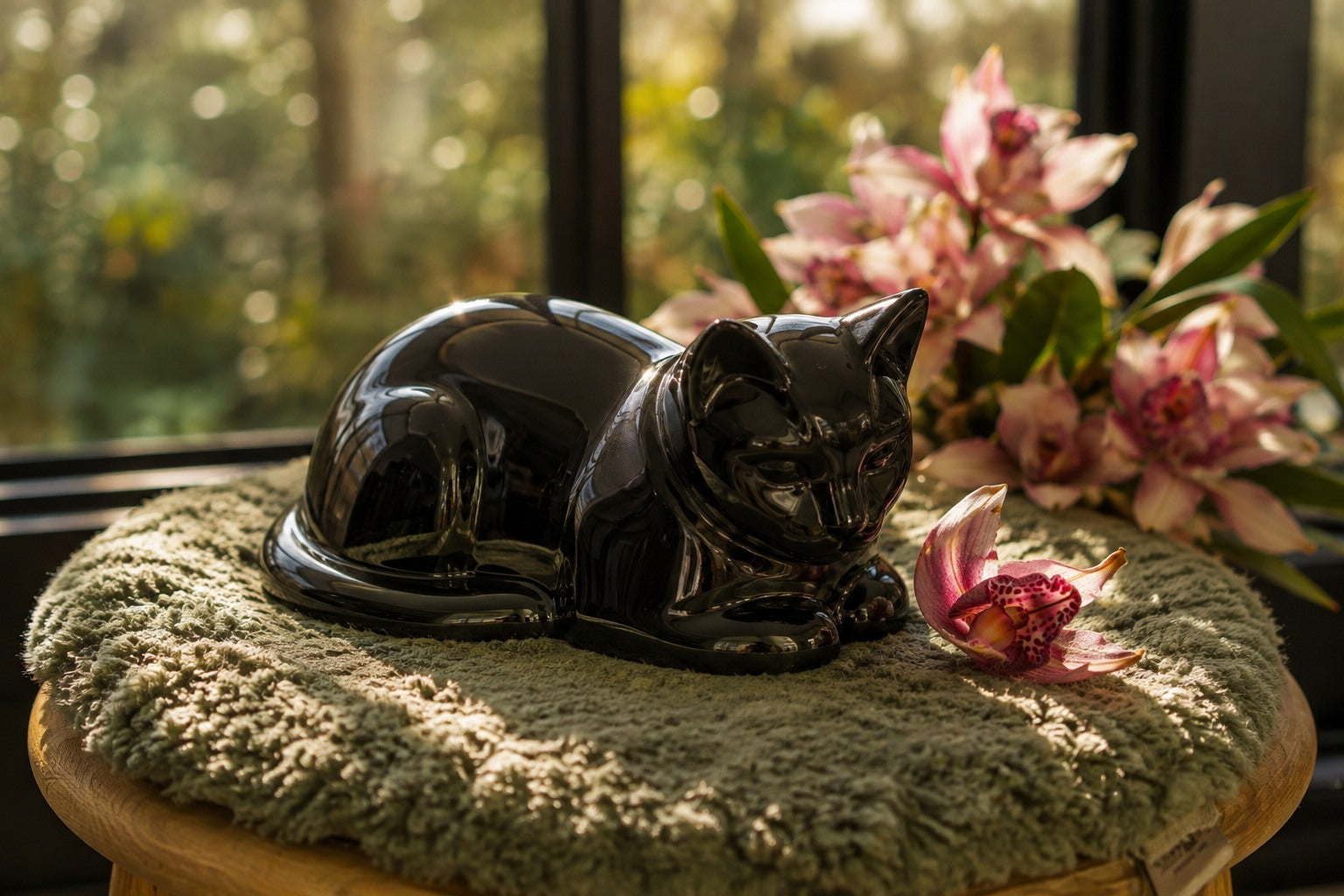
Why Pet Grief Doesn’t Always Get Easier. It Gets Different
Pet grief does not always become easier with time. It changes. Discover how loss evolves, why memories take on new meaning, and how memorial objects such as urns can become quiet reminders of a life once shared.

Why Your Pet’s Smell Can Bring Back an Entire Memory
Why can the smell of a pet bring back an entire moment? Discover how scent, emotion and memory are connected, and why the familiar smell of an animal can preserve some of our most intimate memories of life together.


Share:
Adventure