


Here for you: art@pulvisurns.com | (562) 609-4019
7% off your order
Use this code at checkout:
The Ghost Festival (中元节 Zhongyuan Jie, also known as the Hungry Ghost Festival or the Yulanpen Festival) is one of China’s most distinctive and spiritually significant traditional observances. Falling on the 15th day of the seventh lunar month - usually in August or September - it marks the midpoint of what is popularly called Ghost Month, when the gates of the underworld are believed to open and spirits temporarily return to the human realm.

The festival emerged through the blending of Buddhist and Daoist traditions:
One of the hypothesis on the festival's origin is Buddhism. The Ullambana (Yulanpen) Sutra recounts the story of the monk Mulian who sought to save his mother, trapped as a hungry ghost, by making offerings to the Buddhist community. The Buddha instructed that on the 15th day of the seventh lunar month, offerings should be made to monks and the sangha. The merit of this act would liberate suffering souls. This narrative anchored the festival in the themes of filial piety and compassion.
Alongside these Buddhist influences, Daoist beliefs also shaped the Ghost Festival. In Daoism, the seventh month is associated with the Earth Official (Diguansheng), whose birthday falls on the same day. As one of the “Three Officials” (heaven, earth, water), he is believed to descend to the mortal world to absolve sins. Daoist cosmology further holds that during Ghost Month the Gates of Hell open, allowing both ancestors and wandering spirits to roam among the living.
The intertwining of these influences created a festival that is at once religious, moral, and deeply cultural.

Families set up home altars or visit temples to honor deceased relatives. Offerings of food, incense, and flowers are common, along with the burning of joss paper - representations of money, clothes, and even symbolic luxury items—so that spirits may live comfortably in the afterlife.

Communities light lotus-shaped lanterns and float them on rivers or seas to guide wandering souls back to their realm. The flickering lights symbolize hope and a safe passage for those who died without descendants to care for them.

In cities and villages alike, open-air performances are held to entertain both spirits and humans. In Southeast Asian Chinese communities, these shows are known as Getai. Importantly, the front rows are left empty for unseen ghostly guests, underscoring the belief in their active presence.

Daoist priests and Buddhist monks often perform ceremonies to chant sutras, scatter rice, or conduct rituals of salvation (pudu), intended to alleviate suffering and bring peace to wandering souls.

During Ghost Month, people observe a number of taboos designed to safeguard the living from restless spirits. Swimming is avoided, as waters are believed to conceal ghosts that might pull the unsuspecting beneath the surface. Major life events such as weddings, moving house, or launching new ventures are postponed, since the seventh lunar month is thought to bring misfortune. Even small, everyday actions are carefully watched-clothes are not left hanging outside at night, whistling after dark is discouraged, and one must never answer if an unfamiliar voice calls in the shadows.
These practices reflect a deeper conviction that, during this time, the boundary between the living and the dead grows thin, leaving people more vulnerable to the unseen world.

Beyond its religious framework, the Ghost Festival reflects some of the most enduring values of Chinese culture. At its heart lies filial piety—the duty to honor and remember parents and ancestors, a cornerstone of Confucian thought. The festival also embodies compassion and social memory, extending care not only to one’s own family but also to forgotten or wandering spirits who might otherwise be neglected. At the communal level, its rituals foster social cohesion, strengthening bonds among families and reinforcing a shared sense of belonging through collective acts of remembrance.
The meaning of the Ghost Festival also resonates far beyond China’s borders. It invites comparison with traditions such as All Souls’ Day in Europe, Halloween in the West, and Mexico’s Day of the Dead. Despite their differences, all reflect a universal human concern with the mysteries of death, remembrance, and the ties that bind the living to those who have passed.

The Ghost Festival is more than a commemoration of the departed—it is a living cultural practice that connects past and present, binding the human and the spiritual. Through offerings, rituals, and acts of remembrance, Chinese communities reaffirm enduring values of respect, compassion, and harmony with unseen worlds. Its persistence across centuries underscores not only its religious and cultural richness but also its profound role in shaping collective identity and moral life. In the same way, meaningful memorials—whether through festivals, offerings, or carefully crafted urns—ensure that the love we hold for those who have passed continues to shine brightly in the lives of the living.

Which urn size do I need?
A simple rule: about 1 cubic inch of urn per pound of body weight.
Every product page lists the urn's capacity. Keepsake urns hold a small portion of ashes to share.
Need it by a specific date?
Free shipping · Delivery in 3–5 business days
Express delivery in up to 3 business days – choose it at checkout
Need help choosing?
Talk to our team – we're happy to help you find the right urn.
(562) 609-4019 art@pulvisurns.comSend us a message
Can You Grieve a Life That Never Had Words?
Discover why losing a beloved pet can be so profound, how wordless bonds shape our lives, and how Pulvis Art Urns brings craftsmanship and thoughtful design to the art of remembering an animal companion.
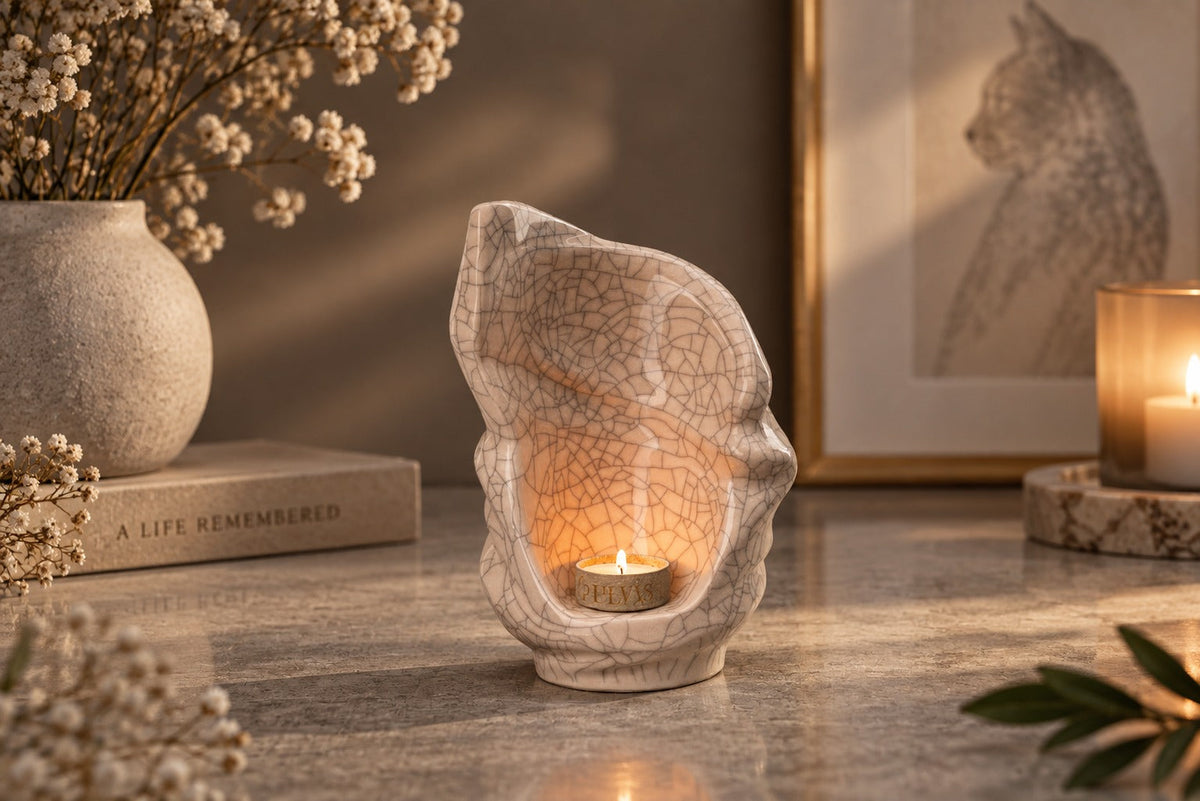
What Does the Bible Say About Cremation?
Explore what the Bible says about cremation, Christian beliefs about resurrection, and meaningful ways to honor a loved one’s memory through a thoughtful memorial.
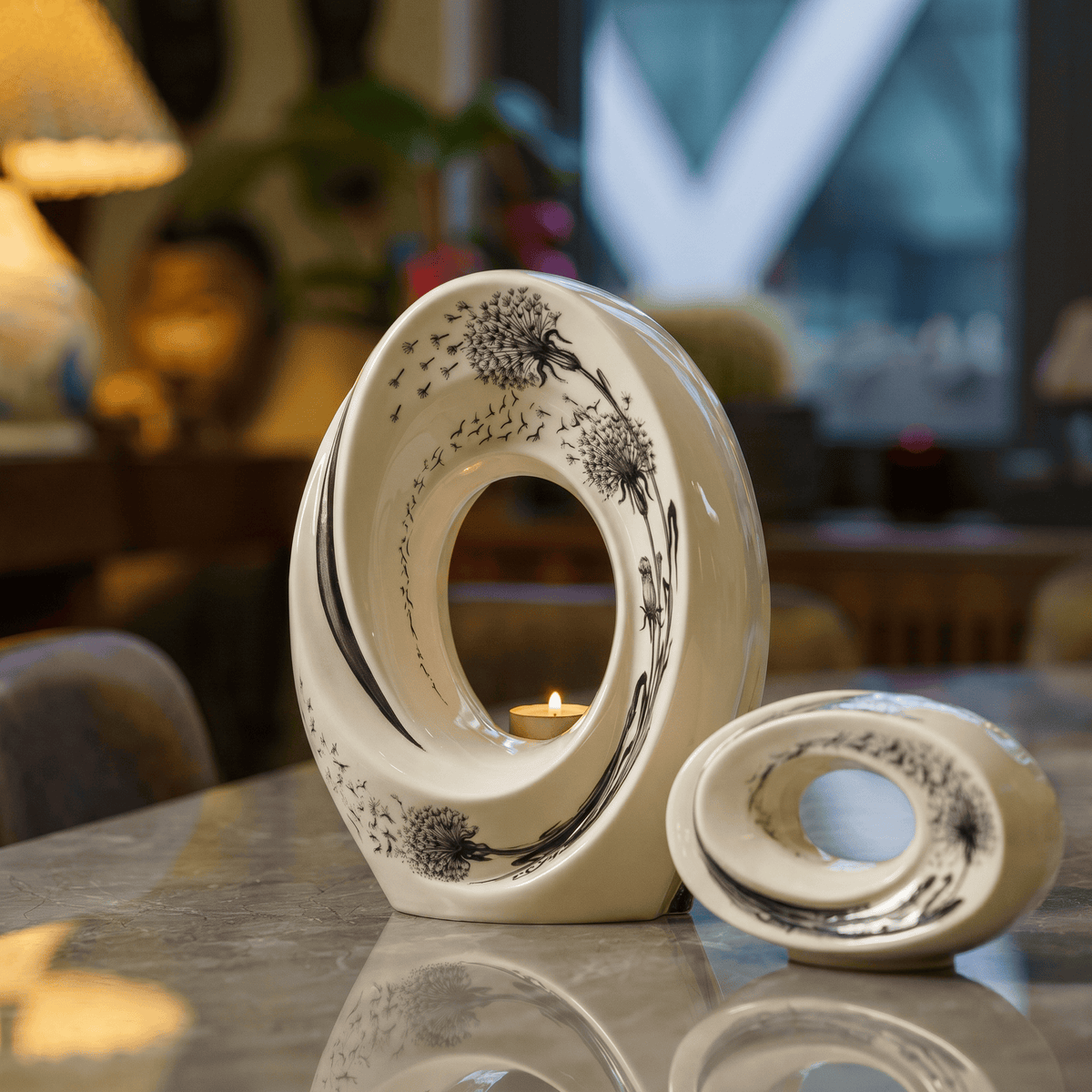
Why Do People Light Candles for the Dead?
Discover the meaning behind lighting candles for the dead, exploring the traditions, beliefs, and emotions that make this simple ritual a lasting expression of remembrance, comfort, and connection within the home.

The Pet as a Witness to a Human Life
Our pets witness far more of our lives than we realise. Explore what it means for an animal to become a quiet witness to our changing homes, relationships, routines and identities — and how a memorial urn can remain as a physical connection to the life they witnessed.

Can You Inherit a Pet’s Memory?
Can we remember a pet we never knew? Explore how stories, photographs, objects and memorials can carry an animal’s memory across generations, turning a private life into part of a family’s shared history.


Share:
Why Cremation Is Becoming the World’s Preferred Choice Over Burial
Choosing the Right Style of Urn: Classic vs. Modern Designs
1 comment
Thank you to the author for providing such rich content! I am also a believer in Chinese culture, and I love Taoist culture. Of course, I am a Chinese art practitioner, and I’d like to share an article with everyone to help you better understand Chinese festival culture.https://www.paintinglantern.com/chinese-lantern-a-chinese-heart/