


Here for you: art@pulvisurns.com | (562) 609-4019
7% off your order
Use this code at checkout:
There are certain moments in life that seem completely ordinary when they happen. They do not arrive with a warning. There is no announcement telling us, “Remember this moment because it will matter forever.” There is no sign telling us to slow down, pay closer attention, or hold on a little longer.
A person walks out of a room. A phone call ends. A hug is exchanged at the door. Someone says, “See you soon.” Life continues.
And then, sometimes, we discover that it was the last time.
The last conversation.
The last hug.
The last goodbye.
These moments have a strange and powerful place in the human heart because they exist between two realities: the reality of the moment itself and the reality of what we later understand it to mean. When we experience them, they are often ordinary. When we look back on them, they become priceless.
A final moment is rarely special because of what happened during those few seconds. It becomes special because of everything that came before it. A last conversation carries the weight of every conversation shared throughout a relationship. A last hug carries the warmth of every embrace that came before. A last goodbye carries the history, love, and memories of everything two people experienced together.
The emotional weight of a “last” is not simply the pain of losing something. It is the recognition that something meaningful existed.
We feel the weight because we cared.
We feel the sadness because there was love.
We remember because someone or something mattered.

One of the most difficult parts of being human is that we live as if we have more time than we actually do.
We make plans for next week. We think about future holidays, future conversations, future visits, and future opportunities. We naturally assume that the people who matter to us will continue to be part of our lives in familiar ways.
This assumption is necessary. Without it, daily life would become overwhelming. We cannot constantly think about endings. We cannot live every moment believing it might be the final one.
But this also means we often overlook the beauty of ordinary moments.
We underestimate the importance of a simple conversation. We underestimate the meaning of a familiar touch. We underestimate the value of simply being together.
Most people do not realize they are living a final moment until afterward. The mind only recognizes the significance once the opportunity has passed.
A person may remember a final conversation years later and think, “I had no idea that would be the last time I heard those words.”
Someone may remember a final hug and think, “I wish I had held on for just a few seconds longer.”
Someone may remember a goodbye and think, “If I had known, I would have said something different.”
This is one of the deepest emotional struggles connected to last moments: we judge the past using knowledge we only gained later.
At the time, it was not a last. It was simply a moment. It was simply a conversation. It was simply a hug. It was simply goodbye.
Memory works differently when something becomes emotionally significant. The human mind does not store every experience equally. Some moments disappear quickly, while others remain vivid for years or even decades.
The moments that involve deep emotion often become the ones we remember most clearly.
A wedding day. The birth of a child. A major life change. A painful loss. A final goodbye.
These experiences become part of our personal story. They become markers in time that divide life into “before” and “after.”
A last moment often creates this same division.
Before the last conversation, the relationship still exists in its familiar form. After the last conversation, something has changed. Before the last hug, there is still physical closeness.
After the last hug, there is distance. Before the last goodbye, there is still the possibility of another meeting. After the last goodbye, there is only memory.
This is why last moments can feel almost unreal. The world around us may continue normally, but internally something has shifted forever.
Among all the “lasts” we experience, the last conversation often carries a unique emotional burden because words have such lasting power.
A conversation is more than an exchange of information. It is an exchange of emotions, thoughts, memories, and pieces of ourselves.
Through conversation, people reveal who they are. They share their fears, dreams, stories, opinions, jokes, and experiences. Over time, conversations become the foundation of relationships.
This is why a final conversation can feel so significant.
People often remember details that seemed meaningless at the time. They remember the sound of the person’s voice. They remember the expressions they used.
They remember what they were talking about. They remember whether they laughed They remember whether they said “I love you.” They remember whether they said goodbye.
Sometimes the last conversation is beautiful because it contains exactly what someone needed to hear.
A parent’s final words of encouragement. A partner’s final expression of love. A friend’s final message reminding someone that they mattered.
These words can become emotional anchors. They can provide comfort during moments of grief because they represent the relationship continuing through memory.
Words spoken with love do not disappear when the person is gone. They become part of the person who remains.
However, not every final conversation feels complete. Sometimes the last words exchanged are ordinary. Sometimes they happen during an argument. Sometimes they happen quickly. Sometimes they happen without the opportunity for explanation or closure.
This can create a painful emotional conflict.
People may replay the conversation repeatedly: “Why did I end it that way?” “Why did I not say more?” “Why did I let that be the last thing we talked about?”
The desire to change the final conversation is a deeply human response. The mind searches for control in a situation where control is impossible.
But a relationship cannot be reduced to its final words. A lifetime of love is not erased by one difficult conversation.
A meaningful connection is not defined by one final exchange. The last conversation is only one page in a much larger story.

Perhaps one of the heaviest emotional experiences connected to final conversations is the presence of unspoken words.
Human beings carry many feelings that they never express.
“I love you.” “I forgive you.” “I am proud of you.” “I appreciate everything you did.” “Thank you.”
Sometimes we assume there will always be another opportunity. We believe there will be another visit. Another phone call. Another chance.
But life does not always provide another moment.
This is why last moments teach such an important lesson about communication. The words we keep inside may become the words we most wish we had shared.
Many people believe that love should be obvious without being spoken. While love can certainly be shown through actions, words still matter. Hearing someone express care, appreciation, and affection can become one of the greatest gifts we give another person.
The lesson is not to make every conversation dramatic or emotional. It is simply to avoid leaving important feelings permanently unspoken.
Sometimes a simple sentence can become someone’s most treasured memory.
If conversations connect us through language, hugs connect us through presence.
A hug communicates something ancient and deeply human. It says:
“You are safe.”
“You matter.”
“You are not alone.”
“I am here.”
Unlike words, which must be remembered intellectually, physical connection is often remembered emotionally. The body remembers closeness. The heart remembers comfort.
This is why a last hug can become one of the strongest memories someone carries.
A person may forget many details about a specific day, but they may remember the feeling of holding someone they loved.
They may remember the warmth.
They may remember the familiarity.
They may remember the moment they let go.
And sometimes, that memory becomes something they return to for years.
A final embrace can happen in countless situations. It may be shared between family members before a move. It may happen between friends whose lives are changing. It may happen before a journey, a separation, or an unexpected goodbye.
The sadness comes from knowing that the moment cannot be recreated.
A thousand hugs may have happened before it, but this one becomes different because it was the last.

When someone important is no longer physically present, humans naturally search for ways to maintain connection.
We keep photographs. We save letters. We hold onto belongings. We revisit familiar places. We create memorials.
These objects are not valuable because of what they are physically. They are valuable because of what they represent.
A photograph is not just paper or pixels. It is a doorway into a memory.
A piece of clothing is not just fabric. It can carry the feeling of someone’s presence.
A memorial keepsake is not just an object. It is a symbol of love continuing beyond physical separation.
For some families, remembrance pieces such as pulvis art urns become meaningful ways to honor someone’s life. They represent the idea that although a person’s physical presence has changed, the connection, memories, and influence they left behind continue.
The purpose of remembrance is not to remain trapped in the past. It is to recognize that love does not disappear when circumstances change.
The people we love continue through the stories we tell, the lessons they taught us, and the ways they shaped who we are.
Among all the experiences humans face, few carry as much emotional weight as a final goodbye. A goodbye represents transition. It marks the space between what was familiar and what comes next. It reminds us that life is constantly moving, even when our hearts wish we could remain in one particular moment forever.
Most goodbyes in life are temporary. We say goodbye knowing we will likely meet again. We leave a place knowing we can return. We end a conversation knowing another one will happen.
But a last goodbye is different.
A last goodbye carries the awareness, whether immediate or discovered later, that something has permanently changed.
It is the goodbye before a loved one moves away and the relationship changes forever.
It is the goodbye before someone begins a completely different chapter of life.
It is the goodbye before a person passes away.
It is the goodbye that separates the life we knew from the life we must now learn to live.
The emotional difficulty of a last goodbye comes from the human struggle with finality. People are naturally drawn toward hope, continuation, and possibility. Accepting that something has truly ended requires us to face one of the most difficult realities of existence: some things cannot be returned to the way they were.
A final goodbye closes a door that we may still wish to open.

Not every last goodbye looks the same.
Some goodbyes are filled with tears. Some are quiet. Some happen unexpectedly. Some happen after years of preparation. Some happen between people who love each other deeply. Others happen between people who never had the chance to resolve their differences.
A goodbye does not need to be dramatic to be meaningful.
Sometimes the most emotional goodbyes are the simplest ones.
A person saying, “Drive safely.”
A parent waving from the doorway.
A friend offering one final smile.
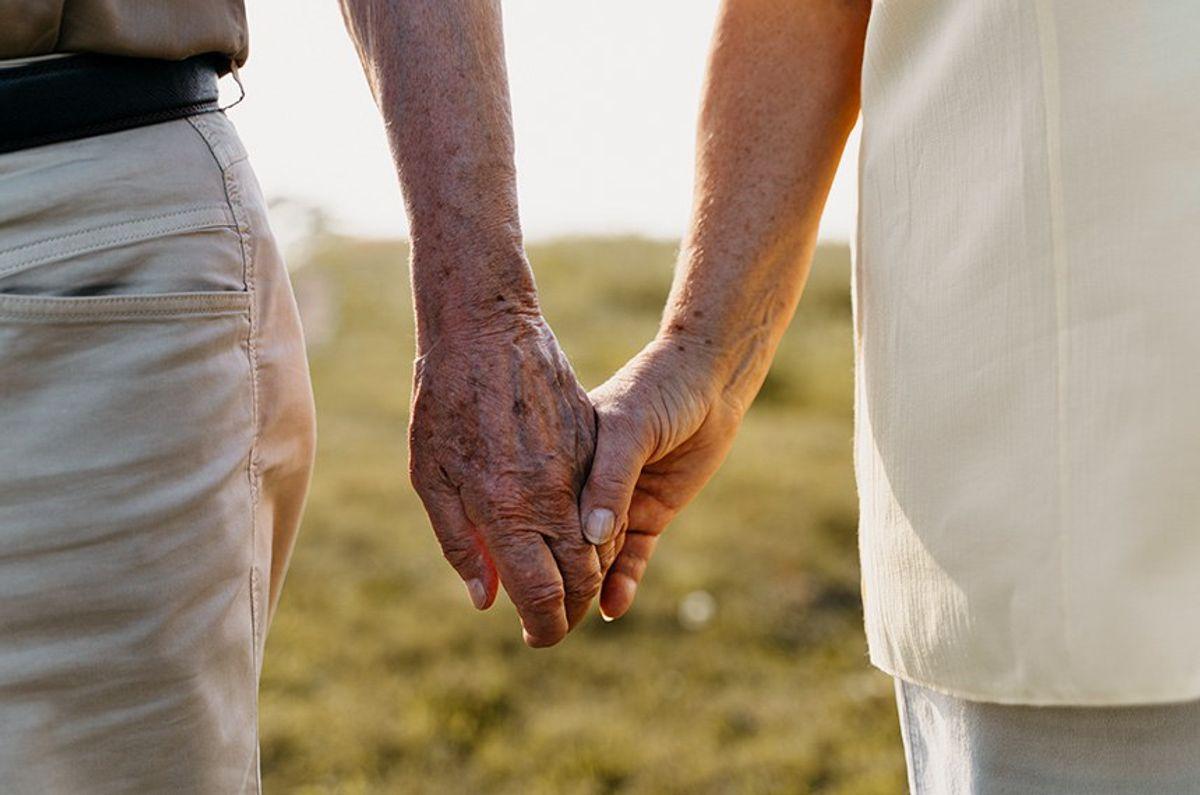
A partner holding someone’s hand before leaving.
These moments appear ordinary because they are part of everyday life. Yet their emotional meaning can become enormous when they become final.
This is why many people later realize that the most valuable moments were not always the big celebrations or important events. Often, they were the small moments of connection that seemed insignificant at the time.
Life is usually remembered through details.
A voice.
A laugh.
A familiar expression.
A gesture of kindness.
A simple goodbye.
One of the most painful parts of a final moment is uncertainty.
If we knew exactly when something would be our last, we would probably behave differently.
We might listen more carefully. We might hold someone longer. We might say more. We might choose forgiveness instead of anger.
We might put aside distractions and fully appreciate the person in front of us. But life rarely gives us that information.
The last conversation usually does not feel like a last conversation. The last hug usually feels like an ordinary hug. The last goodbye usually feels temporary.
This is why these moments can be emotionally overwhelming. We are not only grieving the loss itself; we are grieving the fact that we did not recognize the importance of the moment while we were living it.
Many people experience a painful thought after loss:
“If I had known, I would have done things differently.”
This thought is a natural expression of love. It comes from wishing we could have protected something important.
However, it is also important to remember that we acted based on what we knew at the time. We were not ignoring the importance of the moment—we simply did not know it would become a final one.
A common emotional struggle after a last conversation, last hug, or last goodbye is the feeling that the final moment defines everything.
People often become focused on the ending. They remember the final words. They remember the final interaction. They remember the final image. But a relationship is not a single moment.
A person’s life is not summarized by one conversation. Love is not measured by one goodbye. A relationship is built from thousands of small moments accumulated over time. It is built from shared experiences. From laughter. From support.
From forgiveness.
From ordinary days spent together. The final moment is simply the last piece of a much larger story. A beautiful relationship does not become less meaningful because its ending was painful. A lifetime of love cannot be erased by a difficult goodbye.
When people experience loss, the mind often returns repeatedly to the final moments.
This is not because those moments are the only ones that mattered.
It is because the brain recognizes them as important turning points.
The final interaction represents a moment of change. It is the place where life shifted from one reality into another.
Before that moment, the person or experience existed in a familiar way.
After that moment, everything was different.
The mind revisits these memories because it is trying to process the transition.
It asks questions.
It searches for meaning.
It tries to understand something that feels impossible to understand.
This process is part of how humans adapt to change and grief. Remembering is not simply looking backward. It is a way of maintaining connection while learning to live with absence.
Memory becomes a bridge between the past and the present.

Many people replay their last interactions with someone they lost.
They remember the conversation repeatedly. They imagine different outcomes. They wonder what they could have done differently This happens because the human mind dislikes unfinished stories. We naturally seek resolution.
A final moment without closure can feel like an incomplete sentence. We want one more conversation. One more explanation. One more opportunity.
But sometimes life leaves us with unfinished endings. Learning to live with that reality is one of the hardest emotional challenges people face.
The goal is not to forget the final moment. The goal is to understand that the final moment was only one part of the relationship.
The love existed before it. The memories existed before it. The connection existed before it.
Keeping memories alive is an important part of healing. Remembering someone is a way of honoring their importance.
However, there is a difference between remembering and becoming trapped in the past. Memories should be places we visit, not places where we permanently live.
The purpose of remembering a last conversation, last hug, or last goodbye is not to constantly relive the pain. It is to recognize the love behind the pain. Grief exists because something mattered. Missing someone is evidence of connection. The sadness of a final goodbye reflects the depth of the relationship that came before it.
Over time, many people discover that painful memories can transform. The sharpness of loss may soften, allowing gratitude to exist alongside sadness. The memory of a last hug may eventually bring comfort. The final words someone spoke may become a source of strength. The goodbye may become a reminder of love rather than only loss.

Although last moments are painful, they also teach us some of life’s most important lessons. They teach us not to take people for granted. They teach us that time is valuable.
They teach us that ordinary moments deserve attention. They teach us that love should be expressed, not simply assumed.
Many people spend their lives waiting for the perfect moment to say something meaningful. They wait for the right occasion. The right time. The right opportunity.
But often, the most meaningful expressions of love happen in ordinary moments. A message sent unexpectedly. A phone call just to check in. A hug that lasts a little longer.
A simple “I appreciate you.” These small actions may seem insignificant, but they are the moments people often remember most.
Understanding that any moment could become a last does not mean living with anxiety. It does not mean constantly worrying about endings.
Instead, it means living with awareness. It means paying attention.
It means recognizing that the people around us are not guaranteed to always be there in the same way. Awareness encourages presence.
When we are present, we listen more deeply. We appreciate more fully.
We love more openly. We become less focused on distractions and more focused on what truly matters. The awareness of “lasts” can actually make life richer because it reminds us that every moment has value.
The last conversation is not important because it was the final time words were exchanged. It is important because it represents all the conversations that created a connection.
The last hug is not important only because it was the final physical touch. It is important because it represents every moment of comfort and affection shared before.
The last goodbye is not important only because it marked separation. It is important because it proves that there was something meaningful enough to miss.
Final moments carry emotional weight because they are filled with everything that came before them. They contain love.
They contain history. They contain memories.
They contain pieces of people who changed our lives. Perhaps the greatest lesson of all is that we should not wait until something becomes a last before recognizing its value.
We should appreciate conversations while they are happening. We should embrace people while we still can.
We should say what matters while we still have the opportunity. Because one day, an ordinary moment may become the moment we treasure most.
One day, a simple conversation may become the voice we remember forever. One day, a familiar hug may become the feeling we carry for the rest of our lives.
One day, a goodbye may become the memory that reminds us how deeply we loved. And that is the true emotional weight of lasts: they reveal the extraordinary meaning hidden inside ordinary moments.

Which urn size do I need?
A simple rule: about 1 cubic inch of urn per pound of body weight.
Every product page lists the urn's capacity. Keepsake urns hold a small portion of ashes to share.
Need it by a specific date?
Free shipping · Delivery in 3–5 business days
Express delivery in up to 3 business days – choose it at checkout
Need help choosing?
Talk to our team – we're happy to help you find the right urn.
(562) 609-4019 art@pulvisurns.comSend us a message
Can You Grieve a Life That Never Had Words?
Discover why losing a beloved pet can be so profound, how wordless bonds shape our lives, and how Pulvis Art Urns brings craftsmanship and thoughtful design to the art of remembering an animal companion.

What Does the Bible Say About Cremation?
Explore what the Bible says about cremation, Christian beliefs about resurrection, and meaningful ways to honor a loved one’s memory through a thoughtful memorial.
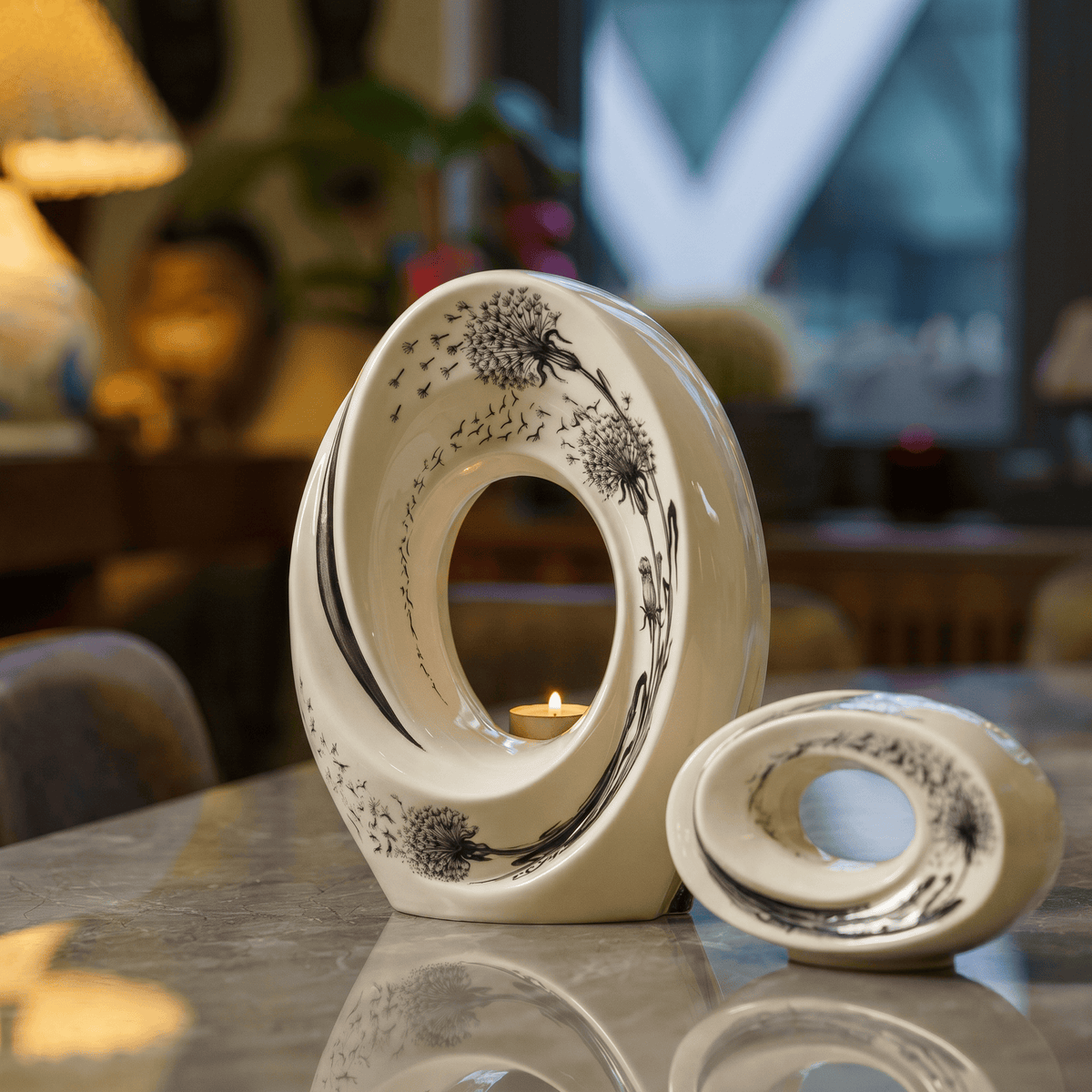
Why Do People Light Candles for the Dead?
Discover the meaning behind lighting candles for the dead, exploring the traditions, beliefs, and emotions that make this simple ritual a lasting expression of remembrance, comfort, and connection within the home.

The Pet as a Witness to a Human Life
Our pets witness far more of our lives than we realise. Explore what it means for an animal to become a quiet witness to our changing homes, relationships, routines and identities — and how a memorial urn can remain as a physical connection to the life they witnessed.

Can You Inherit a Pet’s Memory?
Can we remember a pet we never knew? Explore how stories, photographs, objects and memorials can carry an animal’s memory across generations, turning a private life into part of a family’s shared history.





Share:
The First Holiday Without Someone: Why It Feels So Different
Ways to Honour a Loved One Without Visiting a Cemetery