

Here for you: art@pulvisurns.com | (562) 609-4019
We often think about what a pet means to a person. We talk about companionship, loyalty, routine and the quiet comfort of having another living being nearby. But there is another way to understand the relationship — one that begins from the opposite direction.
A pet is also a witness.
It watches us grow older. It sees us leave one home and move into another. It is there through relationships that begin and end, through birthdays, holidays, difficult years and ordinary mornings that seem insignificant until they become memories. An animal may spend ten or fifteen years beside a person without understanding the story of that life in the way a human would, yet it is physically present for an extraordinary amount of it.
In that sense, a pet can become one of the most constant witnesses to a human life.
Human lives are filled with documentation. We photograph important occasions, save messages, write dates in calendars and record milestones. Yet much of what actually makes up a life is never documented.
The morning coffee. The quiet evening after a difficult day. The moment someone came home crying. The first night in a new apartment. The Sunday afternoon spent doing nothing.
A pet witnesses these moments without recording them.
It does not take photographs or write down dates. It does not know that one particular morning will eventually become meaningful. It simply remains there, experiencing the rhythm of life alongside its person.
This makes the animal a strange kind of witness: one that remembers through presence rather than documentation.

A pet can be present for enormous changes in a person's life.
A puppy may arrive when someone is a child and remain until they are an adult. A cat may live through university years, a first job, a marriage, a move or the arrival of children. The animal may sleep in the same room while everything else around it changes.
From the human perspective, these are separate chapters.
From the pet's perspective, they are simply life.
The furniture changes. People come and go. The home changes. The person changes. Yet the animal remains part of the continuity connecting one version of that life to another.
This is one of the quietest forms of companionship: not simply being present for a moment, but being present for transformation.
There are things a pet may know about a person that even close friends do not.
It knows the sound of their footsteps. It recognises the way they open the front door. It may know the difference between their ordinary silence and the silence that comes after a difficult day. It knows their morning routine, their sleeping habits and the particular gestures they repeat without thinking.
None of this is knowledge in the human sense.
It is familiarity built through repetition.
An animal learns the rhythms of a person simply by living beside them. Over thousands of ordinary days, those rhythms become part of its world.
This is why the relationship between a person and a pet can feel so intimate. The animal does not necessarily know the details of the human's life, but it knows the texture of that life.

We often measure human change through milestones.
We remember the year someone graduated, moved abroad, changed careers or started a family. But change is also visible in smaller ways: a different hairstyle, a new sleeping schedule, a different voice, a different pace of walking through the house.
A pet experiences these changes without categorising them.
It does not know that its person has entered a new phase of life. It simply encounters the new version of them.
Perhaps this is one reason animals can feel like anchors. They do not require us to explain who we have become. Their relationship with us is built on familiarity rather than biography.
The person may look back and see ten different versions of themselves.
The pet may simply have seen one person growing through all of them.
There are moments in a human life that nobody else witnesses.
A person may sit alone in a room late at night while their pet sleeps nearby. They may cry without telling anyone why. They may celebrate something quietly before announcing it to the world. They may experience uncertainty, boredom, excitement or relief in complete silence.
The pet may be there for all of it.
This does not make the animal a confidant in the conventional sense. It does something subtler.
It provides continuity.
The animal is present when the person is performing no role for anyone else. There is no need to explain, impress or behave differently. The relationship exists without an audience.
In a world where so much of human life is increasingly documented and shared, this private form of companionship becomes even more remarkable.
A pet also experiences the home differently from the humans who live there.
It knows the sound of the heating system, the sunlight that reaches a particular corner in the afternoon, the floorboard that makes a noise, the room where someone usually sits. It develops its own geography of the house.
But the home itself changes with the human life taking place inside it.
New furniture appears. Paint colours change. Rooms are renovated. Boxes arrive before a move. Another person moves in. A child's toys begin appearing on the floor.
The animal witnesses these transformations without needing to understand them.
Years later, when a person remembers a particular home, their memory may include the pet moving through it — sitting by the window, waiting near the door or sleeping in the same familiar place.
The animal becomes part of the architecture of memory.

Perhaps one of the most interesting things about long-lived pets is that they can know versions of us that no one else currently knows.
A childhood dog may have known a person before they became an adult. A family cat may have been present before a relationship, a career or a particular identity existed.
The animal therefore becomes connected to a version of the person that has disappeared.
When we look at an old photograph, we may see ourselves as we were.
When we remember a pet from that period, we may remember ourselves through the animal's presence.
The pet becomes a kind of temporal marker — a living connection to an earlier self.
This is perhaps where the meaning of the relationship becomes most apparent.
When a pet dies, we lose not only a companion but also one of the beings that occupied the same years as us. There is suddenly no longer anyone who was physically present for certain parts of our lives in quite the same way.
A childhood pet cannot tell us what our childhood was like.
A dog cannot remind us of the first apartment it shared with us.
A cat cannot confirm that a particular period really happened exactly as we remember it.
The memories remain, but one of the witnesses to them is gone.
This can make loss feel strangely layered. We are not only mourning the animal. We are also losing a living connection to a version of ourselves.
Unlike a human witness, a pet leaves behind no written testimony.
What remains are traces.
Photographs. Videos. Toys. Collars. Stories. Places. Habits. The shape of a memory that becomes attached to an ordinary object.
And sometimes, something more permanent remains: the ashes of the animal, held within an urn.
An urn occupies a fascinating position among these traces. It does not preserve the animal's personality or recreate its physical presence. Instead, it preserves something materially connected to the life that existed.
The distinction matters.
A photograph shows us what the animal looked like. A collar reminds us of something it wore. A story tells us something it did. An urn does something different: it contains what physically remains of the animal itself.
That gives the memorial object a particular kind of significance.
Perhaps an urn can be understood as a kind of second witness.
The animal was a witness to our life while it was alive. It saw the years unfold from within the home. It experienced our routines and became part of our changing world.
After its death, that relationship is reversed.
The animal can no longer witness our life, but the urn remains within the environment that the animal once inhabited. It becomes a quiet physical reminder of the years that were shared there.
In this sense, the urn does not simply commemorate an animal. It also marks a relationship between two lives.
It can represent the years in which the animal was present, the home it occupied, the person it accompanied and the version of that person it knew.
The object becomes a physical witness to something that can no longer be witnessed directly.

This is where the design of a memorial object becomes more significant than it might initially appear.
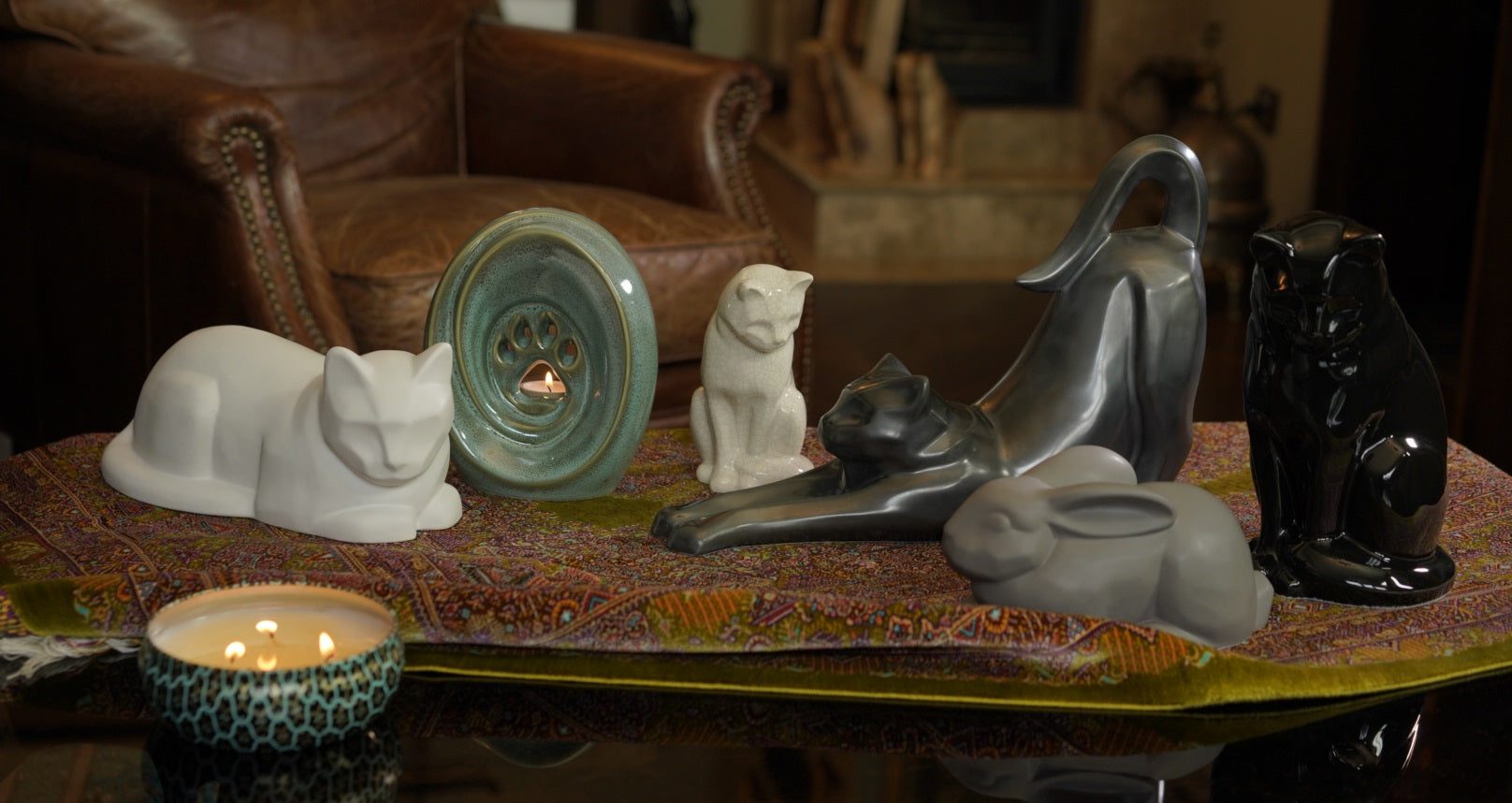
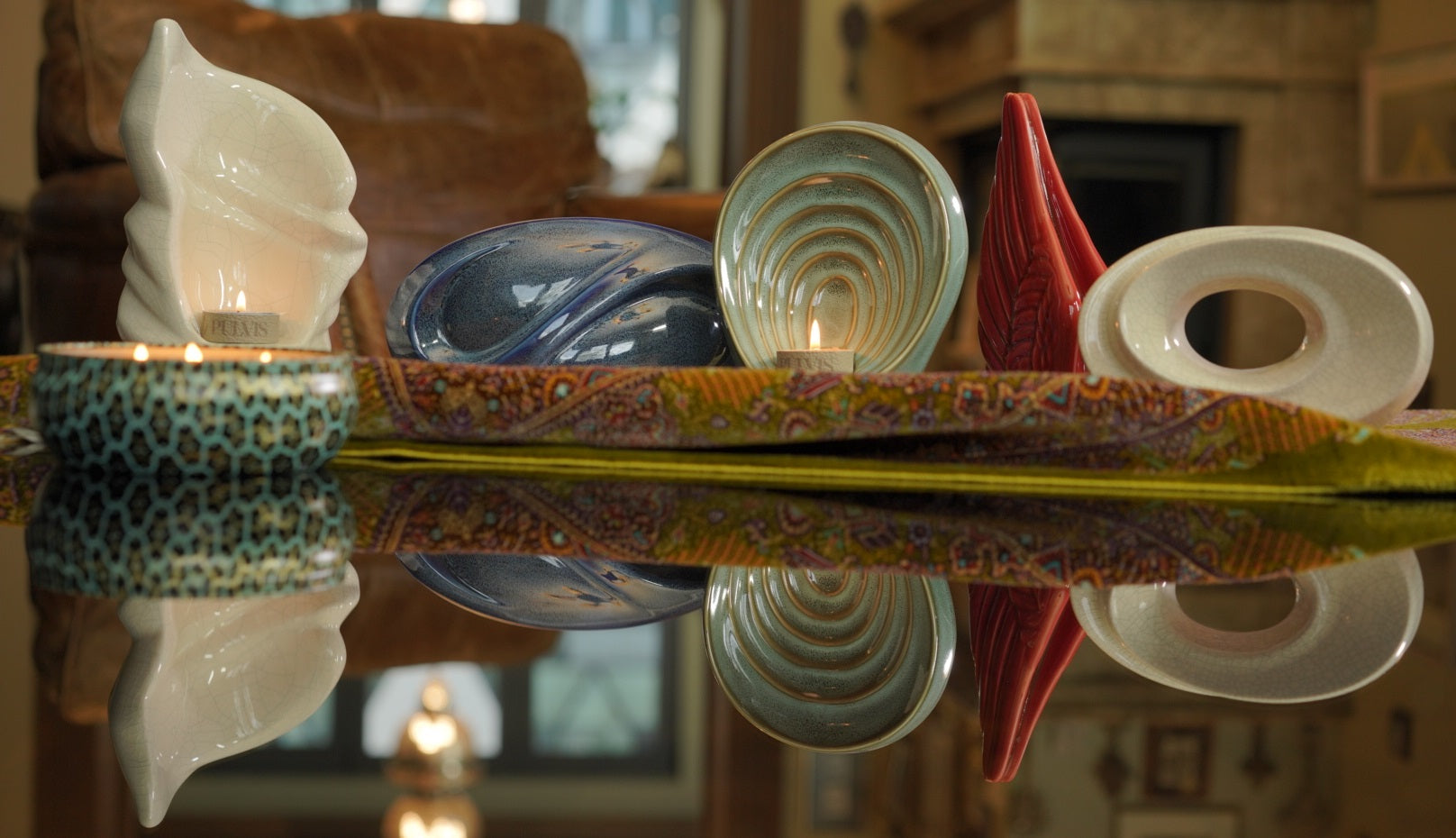
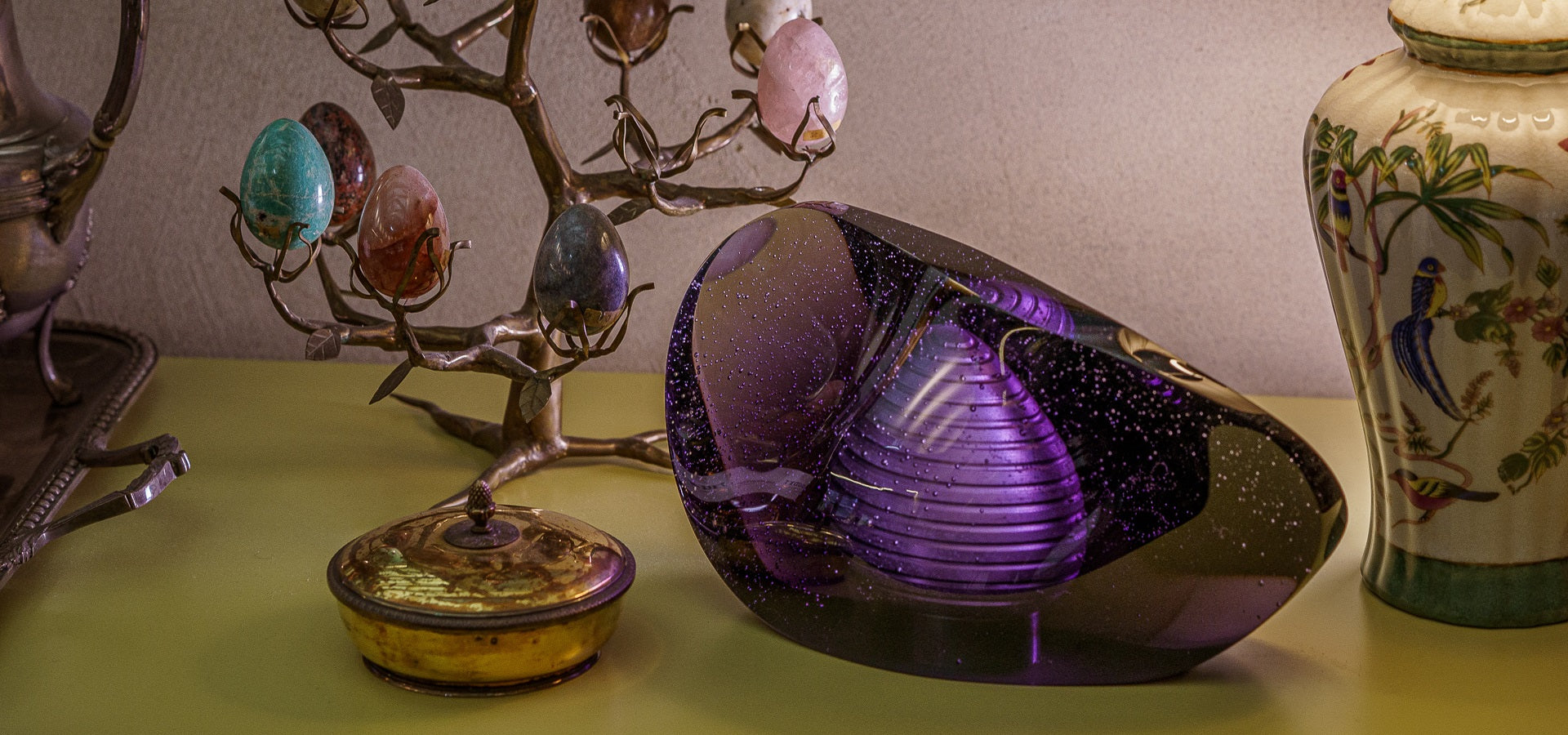
An urn does not necessarily need to look like an object that exists only because someone has died. It can become part of a home, surrounded by the photographs, books, furniture and objects that make up everyday life.
The philosophy behind Pulvis is particularly relevant to this idea. Pulvis approaches the urn not simply as a practical vessel, but as an object capable of carrying memory through form, material and craftsmanship.
The ceramic itself becomes part of the story. Its surface, weight, shape and presence give something invisible — the relationship between a person and an animal — a physical point of reference.
This creates an interesting reversal. During life, the pet becomes part of the home. After death, the urn can become part of the home's continuing memory of the pet.
Through its artistic approach to ceramic craftsmanship, Pulvis allows the memorial object to exist within that story rather than standing outside it. The urn can become something that belongs naturally among the objects of a lived-in home, while still carrying an unusually profound purpose.
It does not preserve every moment.
It preserves a place for remembering.
Perhaps the most remarkable thing about the human-pet relationship is how little needs to be recorded for it to become significant.
There may be no complete history of the animal's life. No list of every morning spent together. No record of every walk, every meal, every afternoon by the window.
There is simply the accumulation of ordinary days.
And those ordinary days are often what become most precious in retrospect.
We tend to think that important memories should be dramatic. But a pet's significance is often built from repetition: the same greeting, the same sleeping place, the same sound at the door.
The extraordinary thing is not that the animal witnessed a few important moments.
It is that it witnessed so many unimportant ones.

A pet cannot tell us what our life meant.
It cannot write our history or explain the person we became.
But it can be there while that life happens.
It can occupy the same rooms while we change. It can witness our routines, our absences, our returns and the quiet periods in between. It can become part of years that we only fully understand when we look back.
Perhaps that is why losing a pet can feel like losing more than a companion.
It can feel like losing a witness to a part of ourselves.
And perhaps this is one of the deepest things an animal can leave behind: not simply the memory of who they were, but the knowledge that they were there.
They saw the ordinary days.
They were present for the chapters.
They witnessed a life.
And when they are gone, the urn can remain as one of the few physical objects connected directly to that witness — quietly holding what remains of the animal while also holding a place within the story of the life they shared.
The pet witnessed a human life.
The urn becomes a witness to the memory of theirs.
The Pet as a Witness to a Human Life
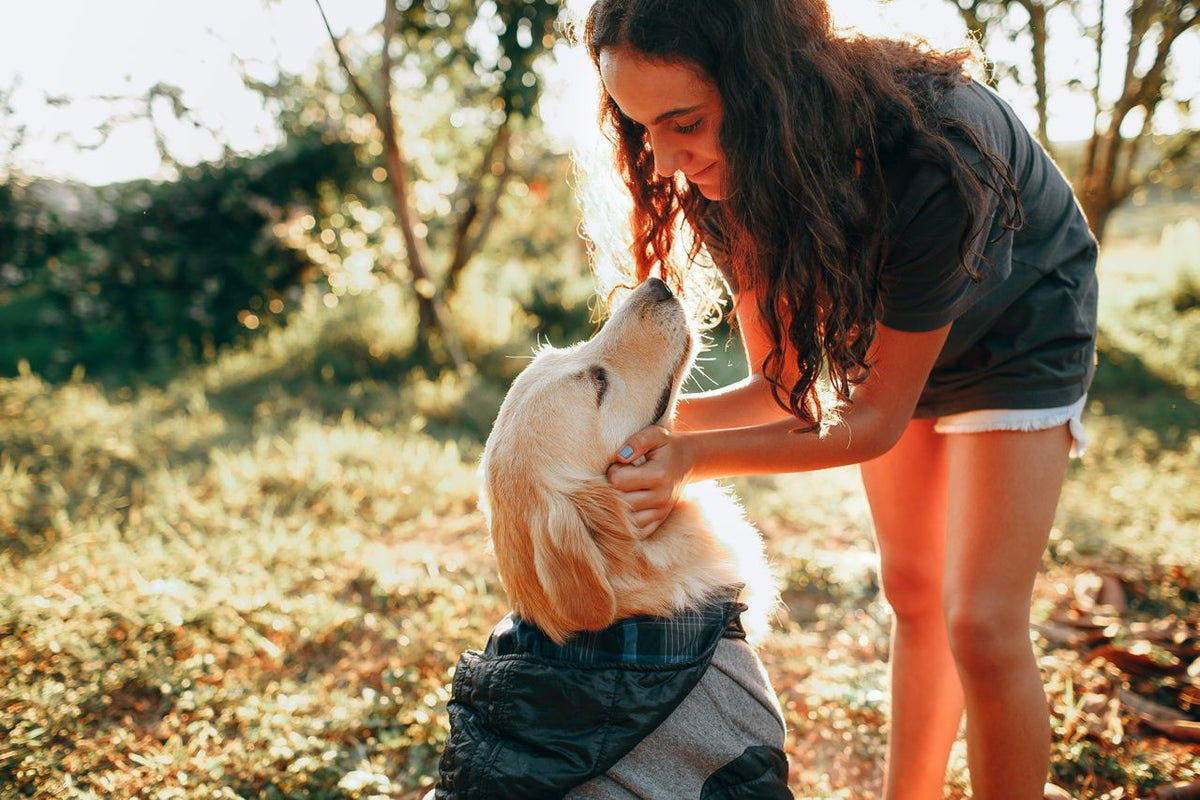
Our pets witness far more of our lives than we realise. Explore what it means for an animal to become a quiet witness to our changing homes, relationships, routines and identities — and how a memorial urn can remain as a physical connection to the life they witnessed.
Can You Inherit a Pet’s Memory?
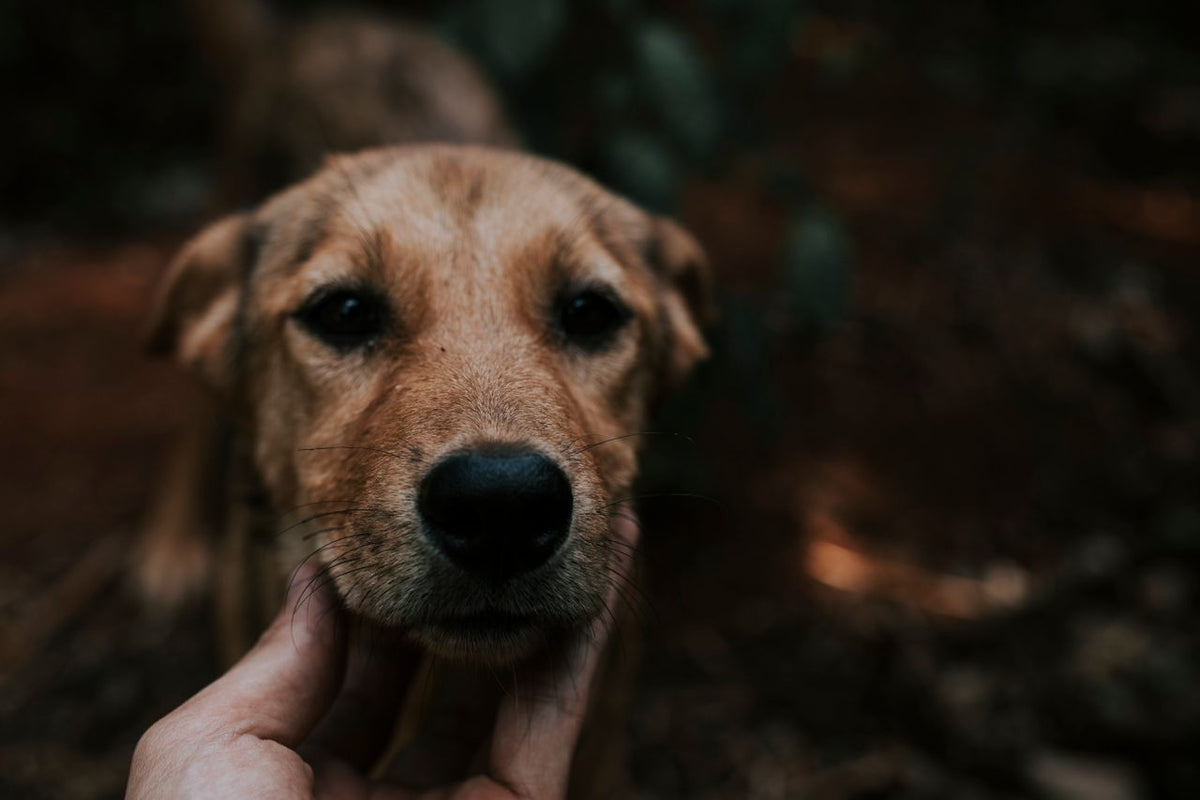
Can we remember a pet we never knew? Explore how stories, photographs, objects and memorials can carry an animal’s memory across generations, turning a private life into part of a family’s shared history.
What a Pet Teaches Us About Impermanence
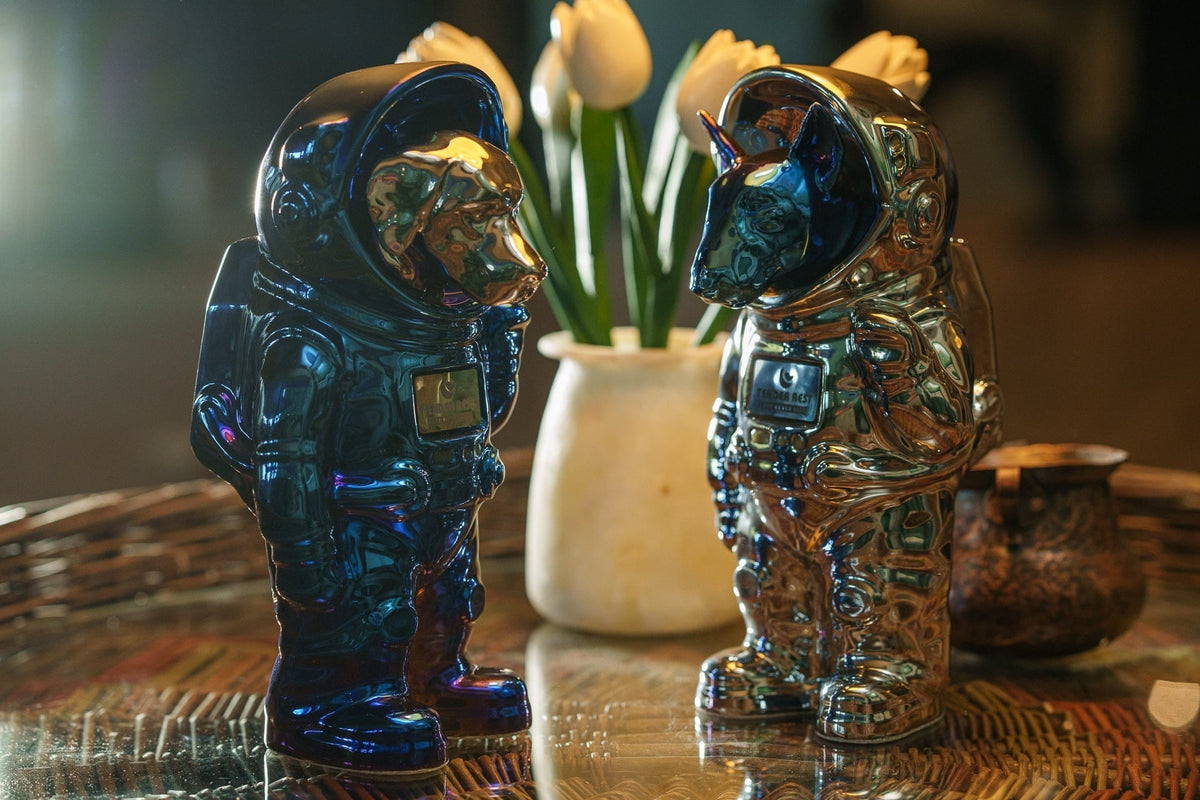
Living alongside a pet teaches us that the most meaningful parts of life are often temporary. Explore how animals shape our understanding of time, impermanence a quiet, lasting expression of what remains.
Why the Best Pet Memorials Don't Always Look Like Pet Memorials
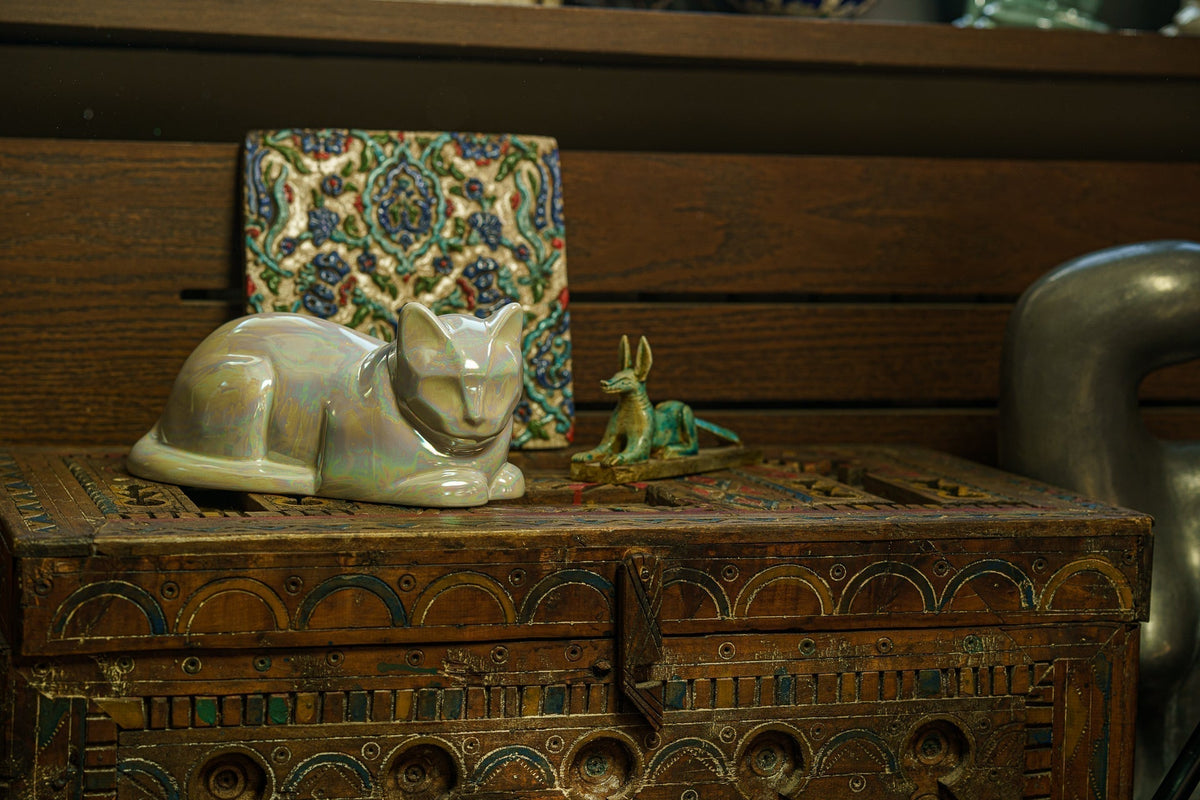
The most meaningful pet memorials do not always rely on familiar symbols. Discover how contemporary pet urn design uses form, material, colour, and craftsmanship to create personal memorials that quietly belong within the home.
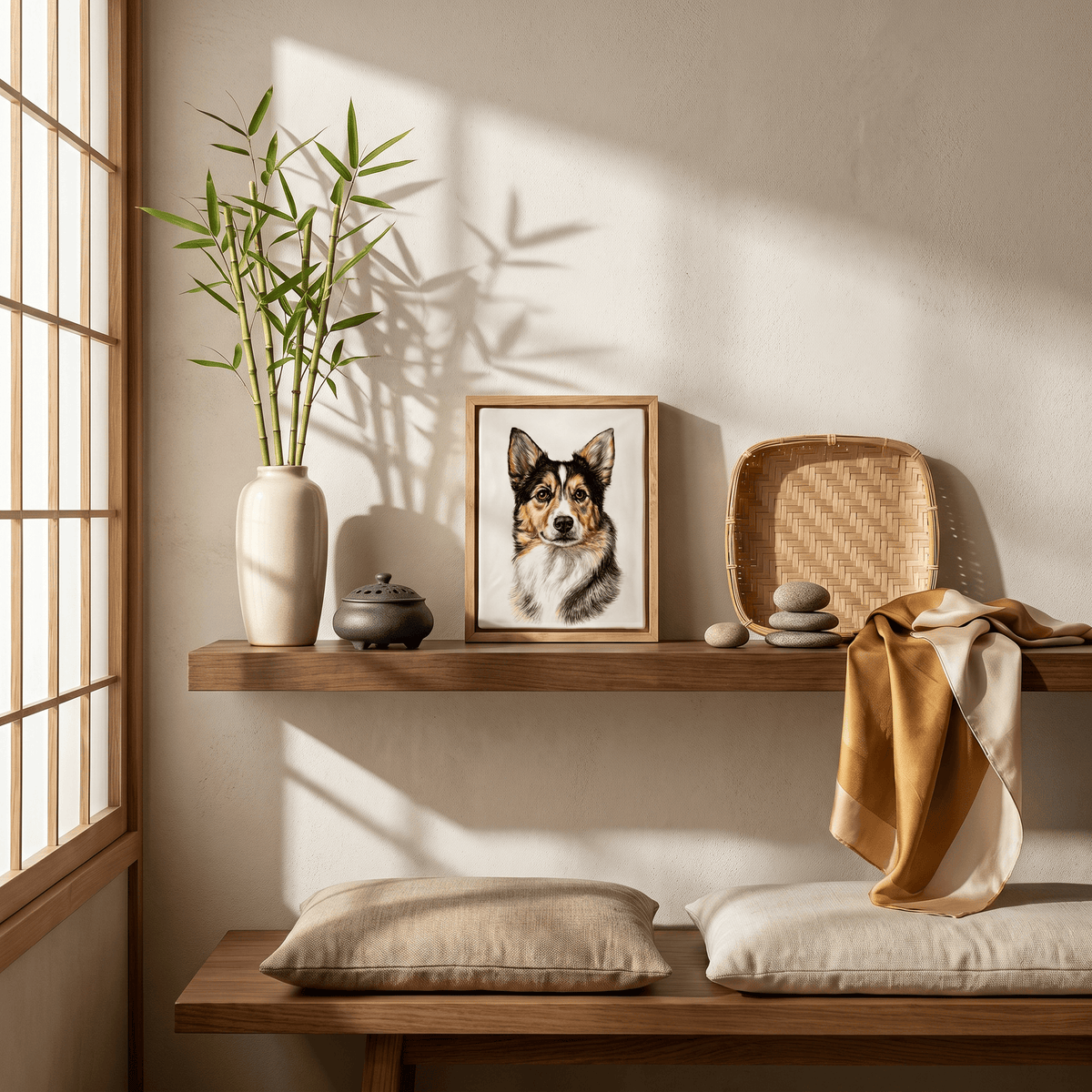
The Urn as a Bridge Between Presence and Absence
What happens when a pet is no longer physically present, but something of that life remains? Explore how a memorial urn can become a bridge between absence and presence, giving memory a tangible form and a lasting place within the home.


Share:
Can You Inherit a Pet’s Memory?