

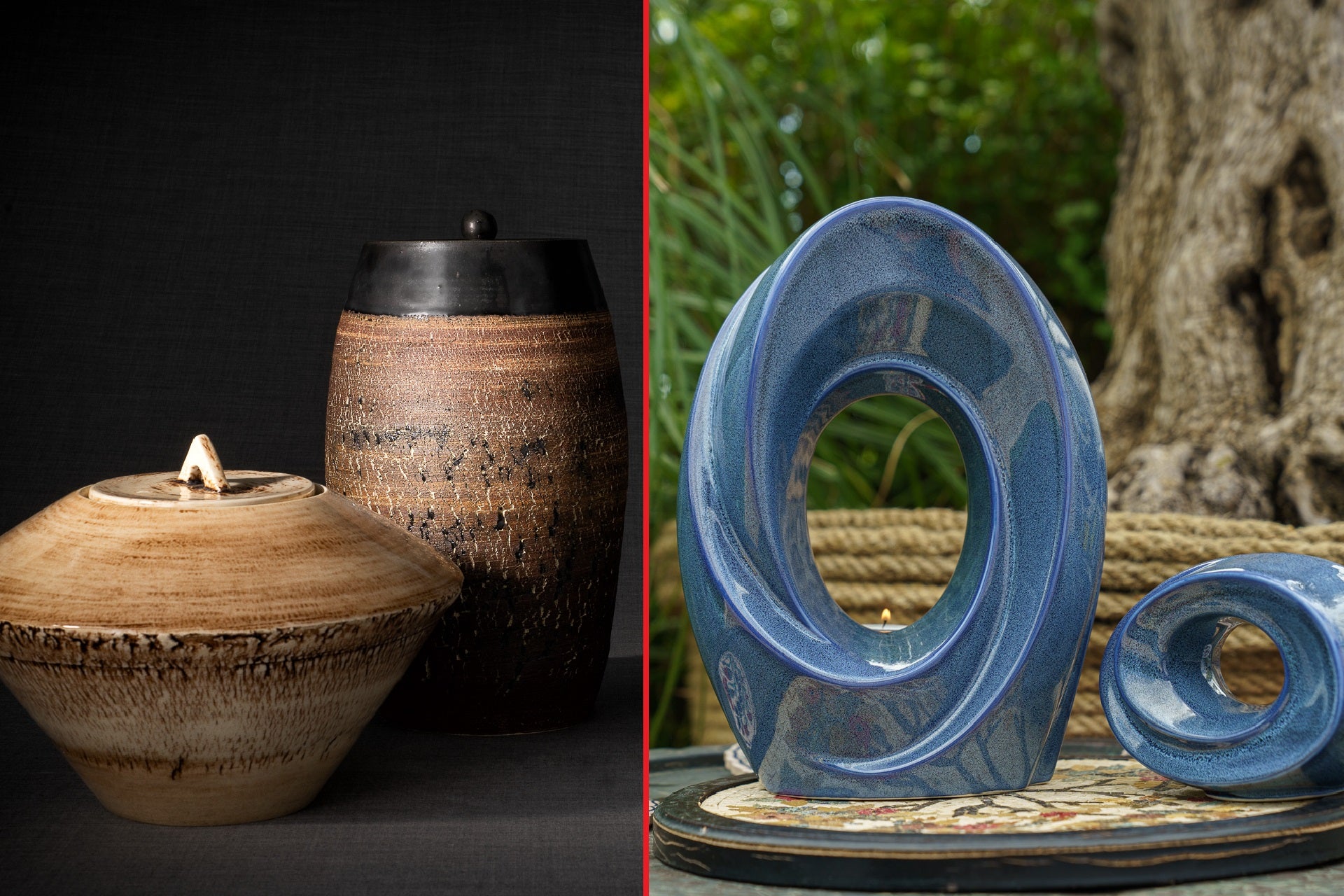
Selecting a cremation urn is a highly personal experience. In many cases, when you see the right urn – you feel it immediately. Traditional cremation urns often have a generic appearance that can be hard to trigger an emotional response, whereas artisan urns with contemporary styles can provide that distinct look and feel that strikes you immediately and feels right.
There’s no right or wrong answer when choosing a cremation urn – it simply depends on staying true to your own emotional response. By summarizing the main design differences between traditional and contemporary cremation urns, this article can help point you in the right direction as you get started on your search for the perfect urn.

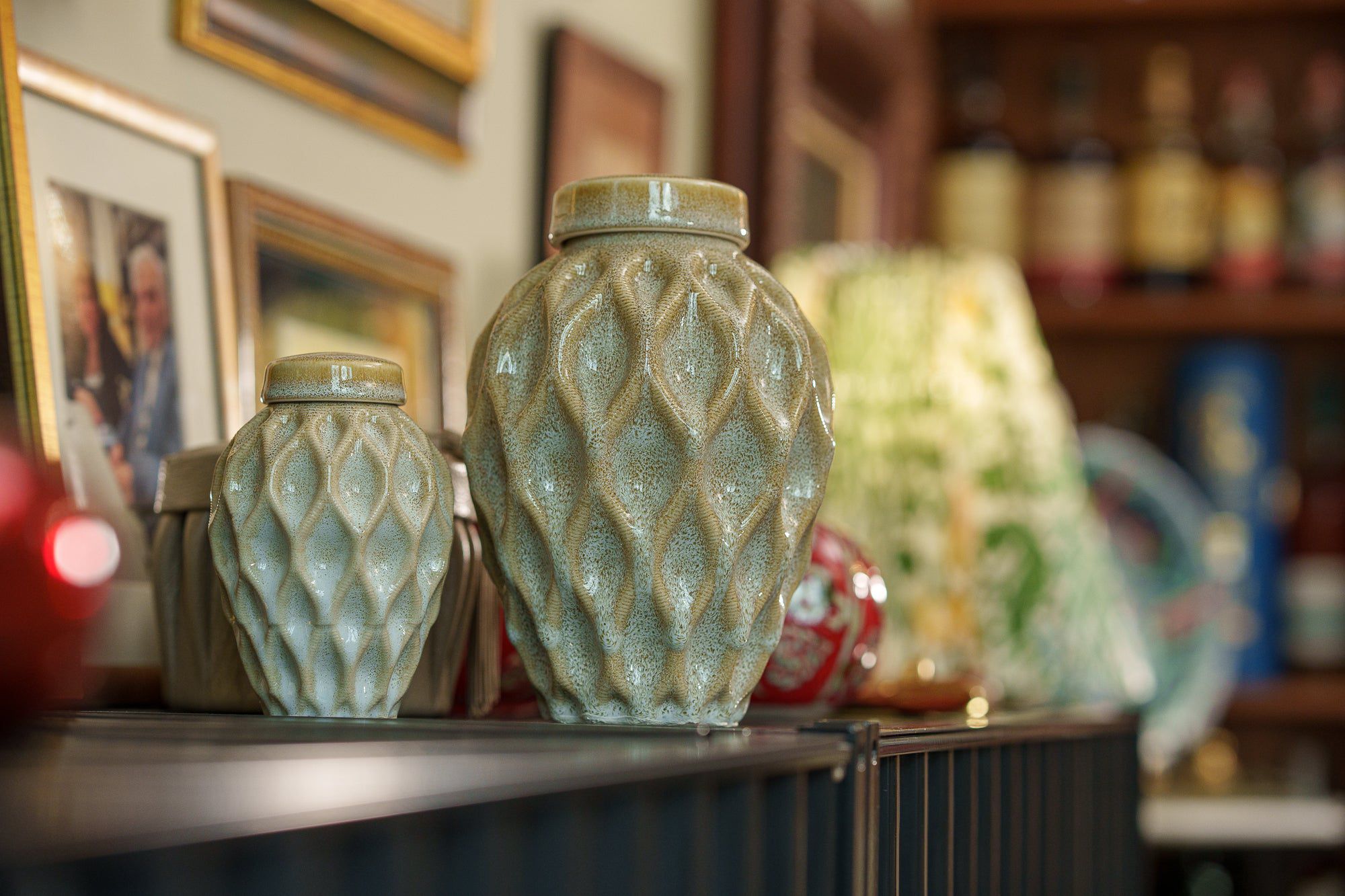
Traditional cremation urns have a vase or jug-like shape with a round lid and smooth surface. They’re often gently rounded in form and symmetrical, as if shaped on a pottery wheel. Colors are typically subdued with monochromatic neutral tones. Beige, pewter, and gray are common color choices for traditional urns.
Traditional designs tend to be generalized and standard. They’re quite easy to find because they are so similar in style. In fact, many traditional cremation urns are mass-produced, giving them an identical appearance. People who prefer traditional cremation urns are often looking for something understated that won’t grab a lot of attention or stand out.

And while this can be considered an advantage for some, others may find that traditional cremation urns lack character and don’t capture the full essence of the loved one’s life and memory. Another common complaint with traditional cremation urns is that they can easily be mistaken for other household décor items, like cookie jars, flower vases, and storage bins.
This can lead to some uncomfortable situations when a cremation urn is confused for something else! With that said, a traditional urn may be better for passing down through the family line, since the design is often modest and easy to display anywhere.
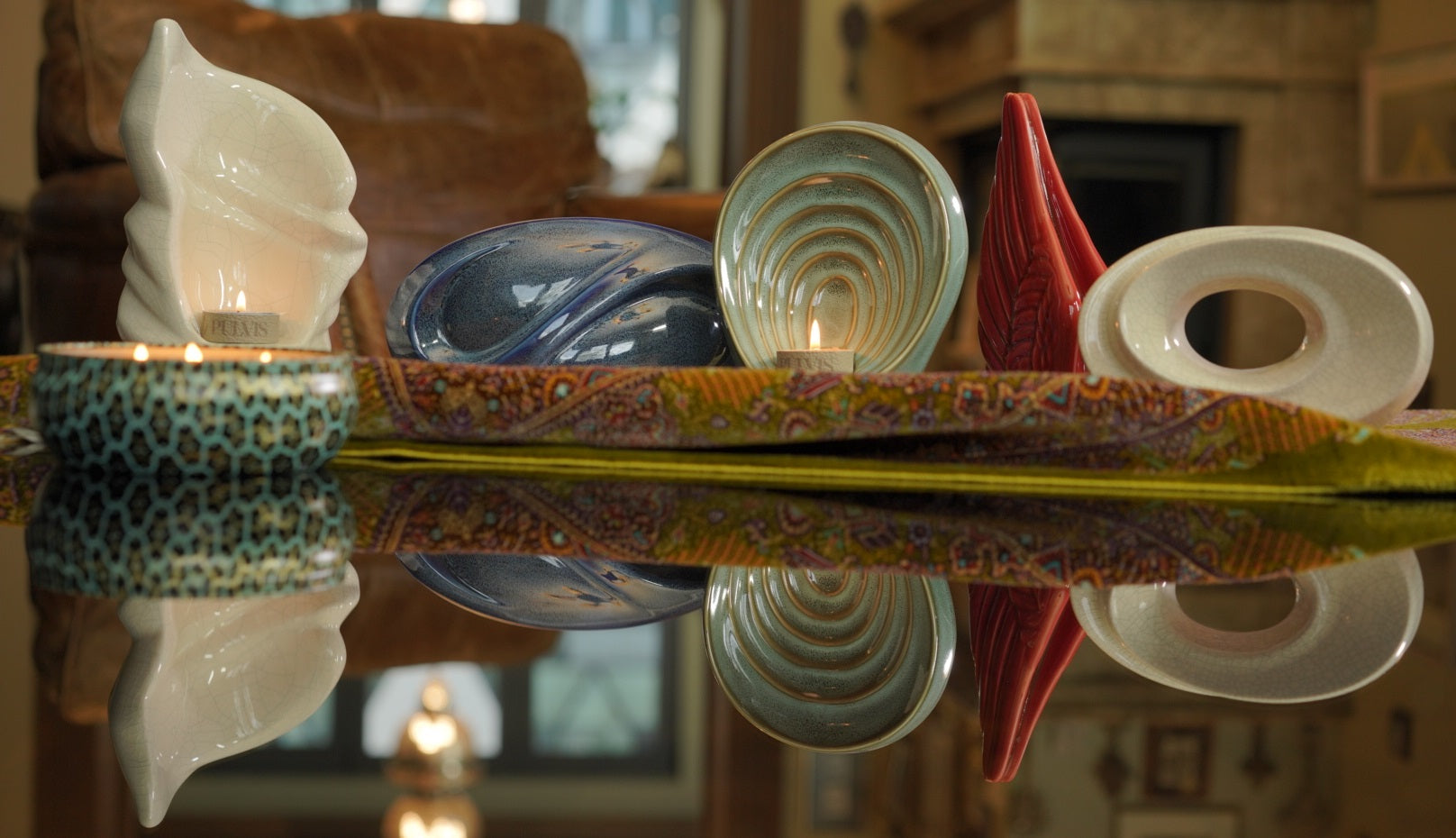
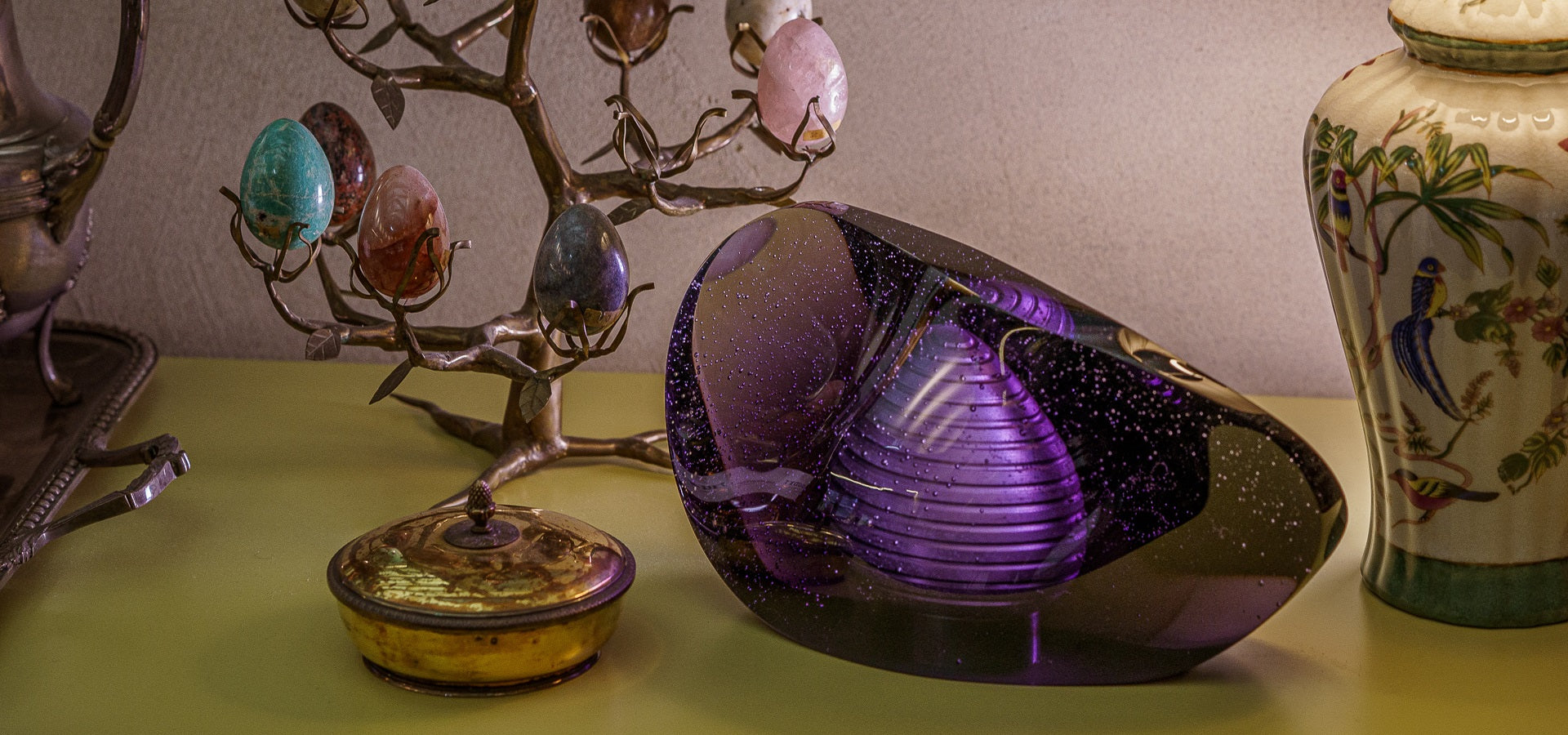
Contemporary cremation urns are much flashier in appearance, and there is such vast variety available, that the designs can’t be summarized in a succinct way. Abstract, ornate, minimalist – contemporary urns cover all the bases. From candlelight elements to colorful ceramic finishes and dynamic shapes, contemporary cremation urns provide a wealth of different design styles to consider.
This variety actually leads to one of the biggest advantages, which is that contemporary cremation urns offer personalized styles that feel much more expressive. These distinct designs tend to capture the spirit and memory of the deceased better than traditional urns. If you prefer a vessel that reflects the life and personality of your loved one, you’ll definitely want to look at artisan urns with distinct styles.
Abstract shapes and bold colors can also strike reflection in a way that traditional jug-style urns don’t. A votive candle feature built into the urn design adds iconic beauty and solemnity to the display, helping it stand out from other home décor pieces. Antique ceramic finishes, dynamic wood elements, recognizable shapes and symbols – contemporary cremation urns truly spark the spirit. Creative and captivating, these artisan urns won’t be mistaken for other décor, especially since they’re each handcrafted individually.

Remember – there’s no right or wrong when it comes to choosing the best cremation urn for your loved one. Hopefully, this article helps guide you in the right direction to find exactly what you’re looking for in a cremation urn.
Join us in helping families honor the memory of their loved ones and pets through art!
Our Affiliate Program is now available at https://www.pulvisurns.com/pages/affiliate-program-by-pulvis-art-urns
3D-Printed Urns with Parametric Design: The Future of Memorial Art
The world of memorial design is evolving. This in-depth guide explores how 3D-printed parametric urns combine mathematics, nature, and ceramic craftsmanship to create deeply personal and lasting tributes. From ancient traditions to cutting-edge technologies like AI, NFC, and sustainable materials, discover how the Echo Collection by Pulvis Art Urns is redefining remembrance.

The Legal Maze of Final Disposition: Who Has the Right to Ashes After Cremation?
Disputes over cremation ashes can quickly become emotional and complex. This in-depth guide explains who has the legal right to cremated remains, why conflicts arise, and how to prevent them through proper planning. From statutory hierarchy to modern memorial solutions, gain clarity on one of the most sensitive aspects of final arrangements.

The Definitive Guide to the Cremation Process: Ethics, Science, and Memorialization
Cremation is more than a practical choice—it shapes how we remember, honor, and say goodbye. This comprehensive guide explores every stage of the cremation process, from legal protections and scientific details to modern memorial options and emotional considerations. Whether you are planning ahead or navigating a recent loss, gain the clarity and confidence to make informed, meaningful decisions.

5 Reasons for the Rise of Cremation in 2026
In 2026, the U.S. cremation rate has reached a record 63.4%, officially doubling the rate of traditional burials. This transformation is driven by a move toward "Legacy Portability," allowing families to keep loved ones close in artistic ceramic vessels that travel with them. Beyond the significant cost savings, modern families are prioritizing environmental ethics, with over 61% now seeking sustainable "green" options and tech-integrated memorials.

Easy Guide to Funeral Homes in Maine
In 2026, Maine’s cremation rate exceeds 77%, reflecting the state's preference for simple, eco-conscious legacies. Key for the "Pine Tree State" is the mandatory 48-hour waiting period before cremation can occur. While traditional burials average $8,453, direct cremation offers a pragmatic alternative at an average of $2,348. Maine’s unique laws also protect the "Right to Direct" your own wishes and allow for private home burials. Whether you choose a coastal scattering or a sculptural ceramic urn, Maine provides a dignified landscape for a final return to nature.


Share:
How to Write an Obituary
Preserving Ashes: Understanding Different Materials Used in Cremation Urns