



Here for you: art@pulvisurns.com | (562) 609-4019
7% off your order
Use this code at checkout:
In the flicker of a flame, the ancient meets the modern, the earthly touches the divine, and through cremation, we witness a transformation that is at once poetic and profoundly personal. Long tethered to rituals and traditions, religion is often seen as a steadfast guardian of human rites, yet it too evolves, embracing new forms of reverence and remembrance.
Cremation is not merely the burning of a body but a symbolic journey. Fire, one of humanity's oldest elements, holds power in many spiritual traditions—purifying, transforming, releasing. In Hinduism, the ritual of cremation is essential, allowing the soul to break free from earthly bonds and ascend to its next incarnation. Ashes are often scattered in sacred rivers, their dissolution symbolizing a return to the universal flow of life. One of the most sacred places for the Hindu world is Varanasi - a city on the Ganges river in northern India that has a central place in the traditions of pilgrimage, death, and mourning. There you can witness a more than a thousand years tradition in cremation and honoring the departed ones.
In Buddhism, cremation symbolizes the fleeting nature of life, a key belief in the faith. The body is seen as a temporary vessel, and burning it highlights the idea that nothing lasts forever. Tibetan sky burials, a unique alternative, show that even without cremation, the focus on letting go and transformation remains central.

Christianity, however, has had a more complex relationship with cremation. For centuries, burial was preferred, echoing the belief in bodily resurrection. Yet, in the 20th century, perceptions began to shift. The Catholic Church, for instance, once wary of cremation, now permits it, provided that ashes are treated with the same reverence as a body. This evolution speaks to a broader conversation about spirituality in a modern world, where practicality often intertwines with tradition.
Even Judaism, with its deep burial customs, has seen times of acceptance. Though Orthodox Jews generally maintain burial as a sacred duty, Reform and Liberal communities are beginning to explore cremation as an option, seeing in it a reflection of contemporary values while still honoring ancestral wisdom.
Cremation, therefore, has become a canvas where faith and modernity paint new expressions of grief and transcendence. The scattering of ashes, for some, is a form of sacred art—whether into the vastness of the sea, the serenity of a forest, or into memorial gardens where life continues to bloom.
Nowadays even religions where burial was the only option, see that change is inescapable. Putting the emphasis on the spirit is the most important thing of the modernization of the religions. That’s why when we talk about honoring our lost loved ones, we should focus on the spirit and the spirituality of the rituals and not so much about the physical body.
In a world where boundaries between sacred and secular blur, cremation is not a rejection of tradition but a reinvention of it. Each spark and ember holds stories of faith, culture, and the universal yearning to honor life, even in death. To embrace cremation is to participate in a ritual as old as fire itself, one that continues to evolve, connecting the ancient reverence for the elements with the deeply human desire for remembrance and legacy.

Which urn size do I need?
A simple rule: about 1 cubic inch of urn per pound of body weight.
Every product page lists the urn's capacity. Keepsake urns hold a small portion of ashes to share.
Need it by a specific date?
Free shipping · Delivery in 3–5 business days
Express delivery in up to 3 business days – choose it at checkout
Need help choosing?
Talk to our team – we're happy to help you find the right urn.
(562) 609-4019 art@pulvisurns.comSend us a message
Can You Grieve a Life That Never Had Words?
Discover why losing a beloved pet can be so profound, how wordless bonds shape our lives, and how Pulvis Art Urns brings craftsmanship and thoughtful design to the art of remembering an animal companion.
What Does the Bible Say About Cremation?
Explore what the Bible says about cremation, Christian beliefs about resurrection, and meaningful ways to honor a loved one’s memory through a thoughtful memorial.
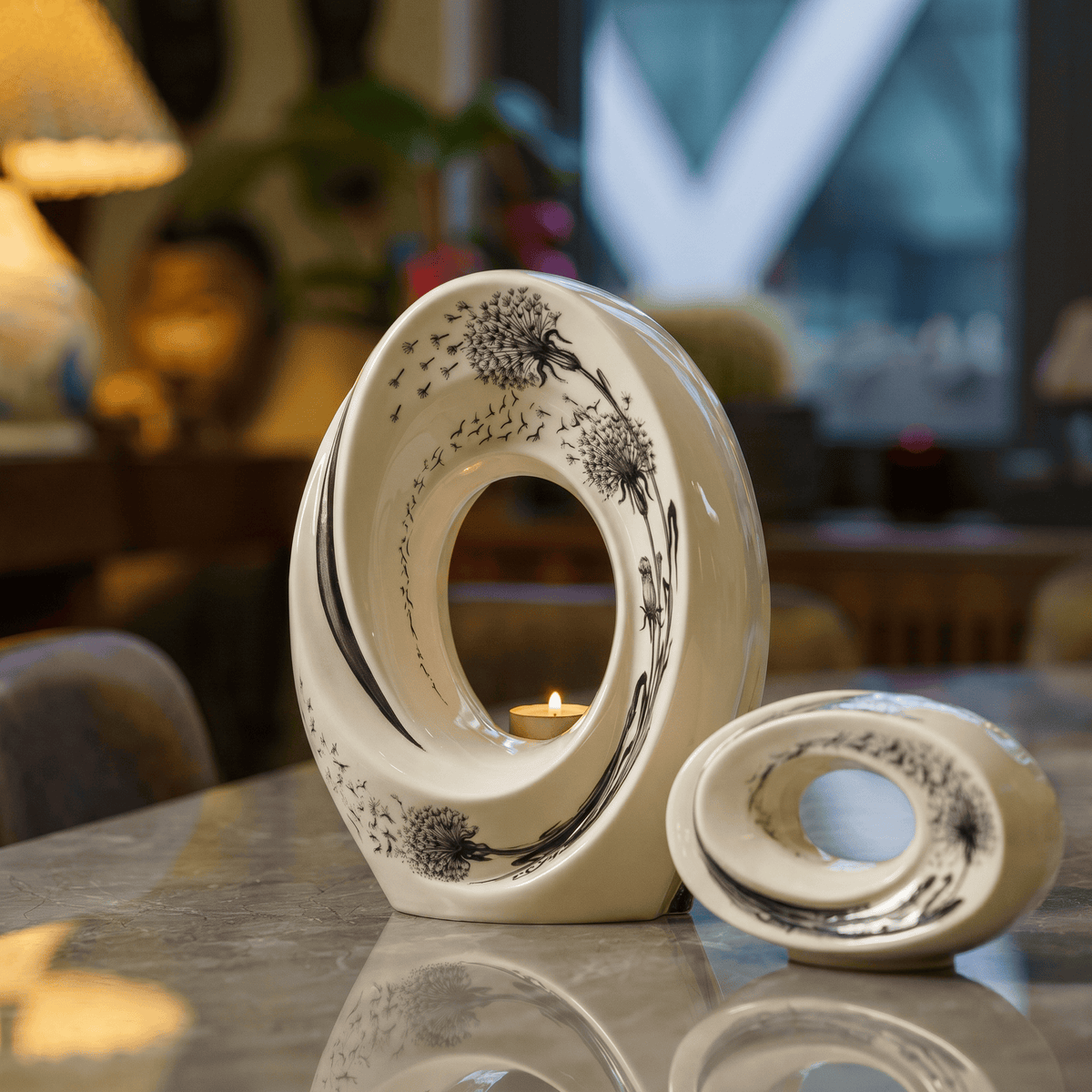
Why Do People Light Candles for the Dead?
Discover the meaning behind lighting candles for the dead, exploring the traditions, beliefs, and emotions that make this simple ritual a lasting expression of remembrance, comfort, and connection within the home.

The Pet as a Witness to a Human Life
Our pets witness far more of our lives than we realise. Explore what it means for an animal to become a quiet witness to our changing homes, relationships, routines and identities — and how a memorial urn can remain as a physical connection to the life they witnessed.

Can You Inherit a Pet’s Memory?
Can we remember a pet we never knew? Explore how stories, photographs, objects and memorials can carry an animal’s memory across generations, turning a private life into part of a family’s shared history.


Share:
Memorializing Loved Ones Through Travel
The Therapeutic Power of Writing Letters to the Deceased