



Here for you: art@pulvisurns.com | (562) 609-4019
7% off your order
Use this code at checkout:
Grief is a universal experience, yet the ways people navigate the emotional and psychological challenges of losing a loved one vary widely. The process of grieving is deeply personal, shaped by cultural, religious, and individual factors. When the loss involves cremation, it adds another layer of complexity to this journey.
The Kubler-Ross model, widely known as the "five stages of grief"—denial, anger, bargaining, depression, and acceptance—provides a general framework. However, many individuals do not experience these stages in a linear progression, and some may not experience all of them at all. Grief can ebb and flow, often resurfacing unexpectedly, particularly around anniversaries or milestones.
Cultural and religious beliefs significantly influence how people perceive and process the loss of a loved one. These beliefs often dictate rituals surrounding death, burial, and cremation, providing structure and meaning to those in mourning. For instance, in Hinduism, cremation is seen as a necessary step for the soul's liberation, with rituals designed to ensure a smooth transition to the afterlife. The process can offer solace, as mourners believe they are aiding their loved one’s spiritual journey. Similarly, Buddhism views cremation as an important ritual that aligns with the impermanence of life, helping the bereaved find peace through meditation and reflection.
In contrast, some Christian denominations, particularly Orthodox Christianity, traditionally prefer burial over cremation, emphasizing the resurrection of the body. However, cremation has become more accepted in recent years, with many believers focusing on the symbolic aspects of the process rather than strict adherence to tradition.
The Role of Cremation in Modern Grieving
Cremation has gained popularity worldwide due to its practicality and environmental considerations. For many, it offers a way to keep their loved one close—whether through an urn, jewellery containing ashes, or scattering ceremonies in meaningful locations. This physical connection can provide a tangible source of comfort and a focal point for grief.
The loss of a loved one often triggers a wide range of emotions, from sadness and anger to guilt and relief. These feelings are normal and can coexist in complex ways. Understanding and addressing these emotions is crucial for healthy grieving.

Acceptance and Reconciliation
For many, acknowledging the reality of loss is the first step toward healing. This can involve speaking about the deceased, revisiting cherished memories, or finding ways to honour their legacy. Support systems play a vital role in navigating grief. Friends, family, or support groups can provide comfort and understanding. Professional counselling is also a valuable resource for those who struggle to cope.
Rituals help provide structure and meaning during times of chaos. For instance, lighting candles, writing letters to the deceased, or participating in cultural practices can offer solace and a sense of connection. Expressive outlets such as writing, painting, or composing music allow individuals to process their emotions in a non-verbal manner. These activities can serve as a bridge between internal feelings and external expression.
Finding Meaning Amid Loss
Grieving the loss of a loved one is undoubtedly one of life’s most challenging experiences. For many, the process of mourning becomes a journey of self-discovery and resilience. The rituals and practices surrounding cremation, though diverse, share a common thread: they provide a means to honour the deceased and find closure.
By embracing the individual nature of grief and recognizing the diverse cultural and emotional factors at play, we can create a more compassionate and supportive environment for those in mourning. Whether through shared memories, meaningful rituals, or simply being present, the path to healing begins with understanding and empathy.
In the end, grief is not about forgetting but about finding ways to carry the love and memories of the departed into the future.

Which urn size do I need?
A simple rule: about 1 cubic inch of urn per pound of body weight.
Every product page lists the urn's capacity. Keepsake urns hold a small portion of ashes to share.
Need it by a specific date?
Free shipping · Delivery in 3–5 business days
Express delivery in up to 3 business days – choose it at checkout
Need help choosing?
Talk to our team – we're happy to help you find the right urn.
(562) 609-4019 art@pulvisurns.comSend us a message
Can You Grieve a Life That Never Had Words?
Discover why losing a beloved pet can be so profound, how wordless bonds shape our lives, and how Pulvis Art Urns brings craftsmanship and thoughtful design to the art of remembering an animal companion.
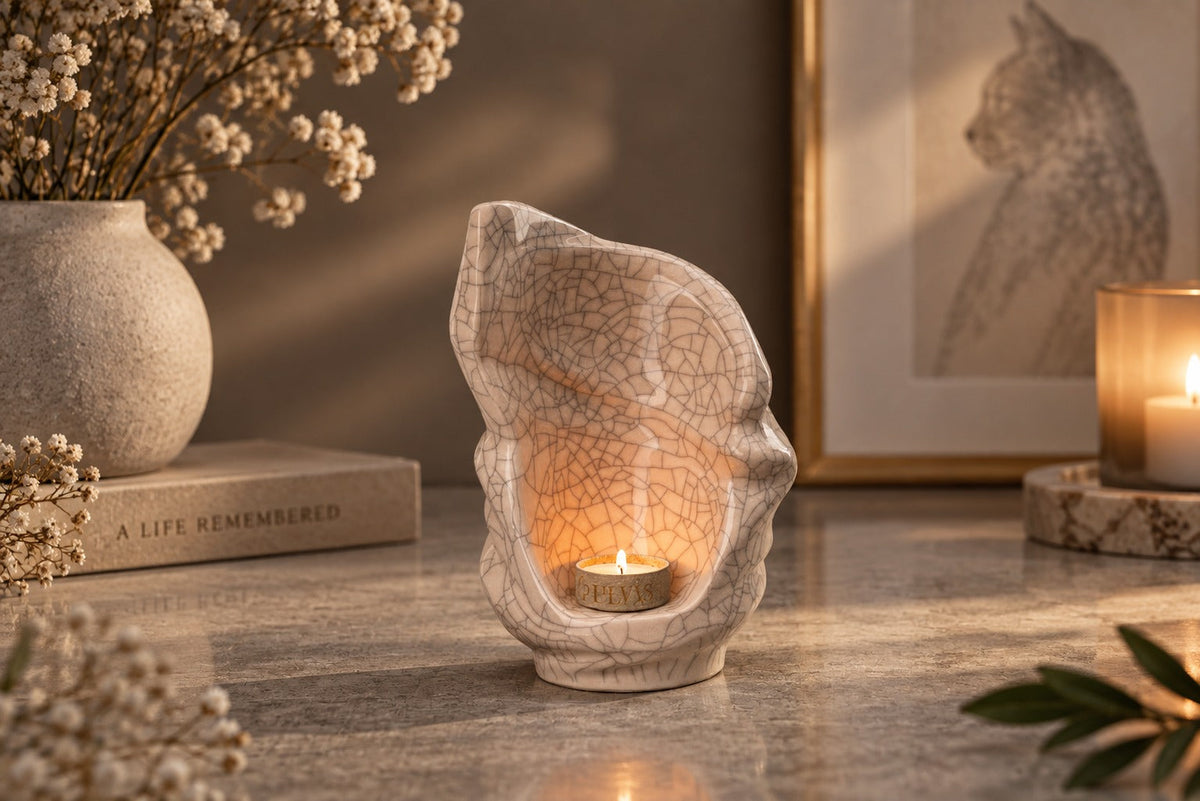
What Does the Bible Say About Cremation?
Explore what the Bible says about cremation, Christian beliefs about resurrection, and meaningful ways to honor a loved one’s memory through a thoughtful memorial.
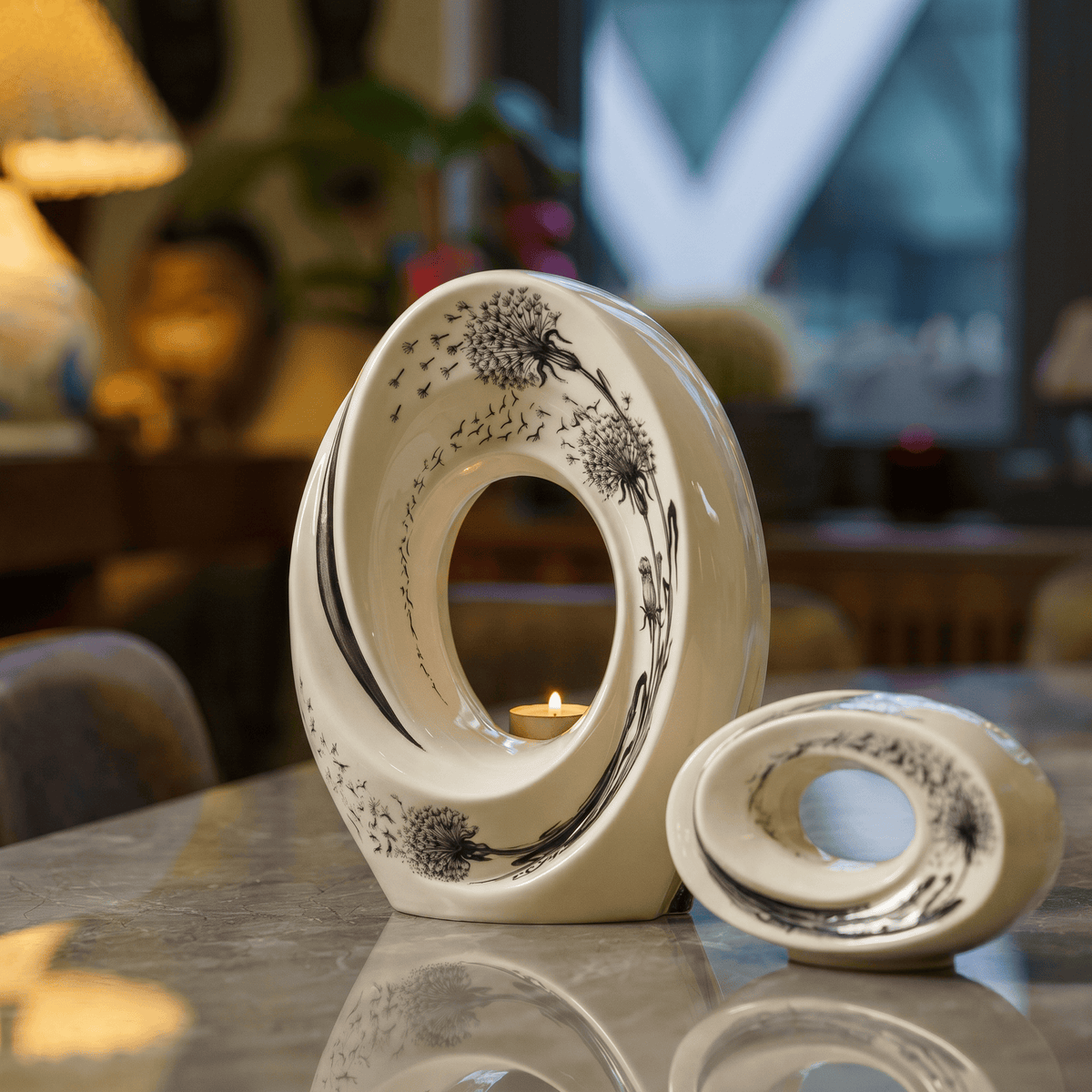
Why Do People Light Candles for the Dead?
Discover the meaning behind lighting candles for the dead, exploring the traditions, beliefs, and emotions that make this simple ritual a lasting expression of remembrance, comfort, and connection within the home.

The Pet as a Witness to a Human Life
Our pets witness far more of our lives than we realise. Explore what it means for an animal to become a quiet witness to our changing homes, relationships, routines and identities — and how a memorial urn can remain as a physical connection to the life they witnessed.

Can You Inherit a Pet’s Memory?
Can we remember a pet we never knew? Explore how stories, photographs, objects and memorials can carry an animal’s memory across generations, turning a private life into part of a family’s shared history.




Share:
A Guide to Home Memorials: Displaying Urns with Dignity & Style
How to Choose the Perfect Cremation Urn: A Guide to Styles, Materials, and Memorial Keepsakes