


Here for you: art@pulvisurns.com | (562) 609-4019
7% off your order
Use this code at checkout:
After someone we love dies, the world around us often feels different. Familiar rooms become quieter, everyday routines change, and objects that once seemed ordinary suddenly carry a completely new meaning.
A favourite sweater left hanging in a wardrobe. A handwritten note tucked inside a drawer. A watch that was worn every day for decades. A recipe book filled with personal notes and memories. A chair where someone always sat at the end of the day.
These objects are not valuable because of what they are made of. Their importance comes from the person connected to them.
For many people experiencing grief, letting go of personal belongings can feel far more difficult than expected. Friends or relatives may see them as simple possessions, but to the person grieving, they can feel like physical reminders of a relationship that continues even after death.
The decision of what to keep, what to give away, and what to preserve is deeply personal. Some people keep only a few meaningful objects. Others need more time before they can consider changing anything. Some belongings remain treasured for a lifetime.
There is no correct way to handle these decisions because grief itself is not experienced in one universal way.
The objects we keep after a loss are not signs that we are unable to move forward. Instead, they often represent something much deeper: the human need to maintain connection, preserve memories, and honour the life of someone who mattered.

One of the most powerful aspects of grief is the way ordinary objects can suddenly become emotionally significant.
Before someone dies, their belongings are usually part of everyday life. A jacket is simply a jacket. A coffee cup is just something used every morning. A pair of glasses is an object that helps someone see.
After a loss, these same items become connected to memories.
The jacket reminds us of the person who wore it. The coffee cup brings back memories of quiet mornings together. The glasses represent the moments when someone sat nearby reading, working, or simply being present. The object itself has not changed. What has changed is the meaning attached to it.
Human beings naturally create emotional connections between memories and physical surroundings. Our brains store experiences through associations. A smell, a texture, a place, or an object can bring back emotions connected to a specific person or moment.
This is why a small belonging can sometimes create a stronger emotional reaction than a much more expensive possession.
The value of an object after loss is not measured financially. It is measured through the memories it carries.
When someone dies, one of the hardest things to accept is that everyday expressions of their personality are no longer physically present.
Their voice is no longer heard in the home. Their routines disappear. The small habits that once seemed unimportant become the things people miss most.
Personal belongings help preserve those details.
A gardener's tools tell a story about patience and love for nature. A musician's instrument represents creativity and passion. A collection of books reveals interests and curiosity. A handwritten recipe card shows family traditions and care.
Objects preserve pieces of identity. They remind us not only that someone existed, but who they were.
This is especially meaningful for future generations. Children and grandchildren often connect with relatives they never had the chance to know through the objects they leave behind. A grandfather's watch, a grandmother's jewellery, a parent's favourite book, or a family recipe can become a way for future generations to understand the person behind the memory.
In this sense, belongings become storytellers. They carry information that photographs alone cannot always provide.

Modern grief psychology recognises that people do not simply stop loving someone when they die. Instead, the relationship changes.
This idea is often described as a continuing bond.
Rather than viewing grief as a process of completely letting go, many psychologists now understand that maintaining a connection with someone who has died can be a healthy and meaningful part of grieving.
Personal belongings often support this continuing bond.
A person may keep a loved one's clothing because it provides comfort. Someone may continue using a family member's favourite recipe because it keeps a tradition alive. A piece of jewellery may be worn because it represents a relationship that remains important.
These actions do not mean someone is refusing to accept the loss. They mean that love has found a new form.
The physical presence of an object can provide reassurance during moments when the absence of the person feels especially painful.
Grief is not only emotional. It is also physical.
Many people naturally seek physical reminders after losing someone. They hold a familiar sweater, touch an old photograph, wear a loved one's watch, or keep a meaningful object close by.
Touch creates a sense of comfort and familiarity.
Unlike digital photographs or memories stored online, physical objects have texture, weight, and presence. They exist in the same physical world that we do.
A person cannot touch a memory on a screen, but they can hold a handwritten letter or feel the fabric of a scarf that once belonged to someone they loved.
This physical connection can be especially meaningful during periods of intense grief because it provides something stable when life feels uncertain.
The object does not replace the person.
Instead, it becomes a gentle reminder of the relationship that still exists emotionally.

Many people are surprised by the objects they become attached to after a loss.
Often, they are not the valuable possessions.
They are the everyday things. A favourite mug. An old pair of slippers. A handwritten shopping list. A cookbook covered with notes. A scarf worn during winter walks. A notebook filled with familiar handwriting.These objects represent the ordinary moments that made up a shared life.
When someone dies, people often realise that what they miss most are not only major events, celebrations, or milestones. They miss everyday routines. They miss morning conversations, shared meals, familiar jokes, and the simple comfort of knowing someone was there.
Ordinary belongings become powerful because they represent ordinary life—the life that quietly created the strongest memories.
For many families, sorting through personal possessions after a death becomes one of the most emotional parts of the grieving process.
It is not simply a matter of organising a house.
Every decision can feel meaningful.
Should their clothes be donated? Should their bedroom be changed? Who should receive certain belongings? Is throwing something away the same as losing another connection?
These questions can create feelings of guilt, sadness, and uncertainty.
Many people describe the process as feeling like saying goodbye again.
This is why there is rarely a need to rush.
Grief does not follow a schedule, and decisions about belongings should be made when people feel emotionally ready.
Some people find comfort in keeping many things for a long time. Others eventually feel ready to preserve only a small collection of meaningful items.
Both choices are valid. The purpose is not to keep everything forever. The purpose is to protect what carries meaning.
A common challenge after a loss is that family members often have different emotional connections to different belongings.
One person may treasure a watch. Another may prefer a collection of photographs. Someone else may feel connected to handwritten letters, books, or clothing.
These differences do not mean one person loved the deceased more than another.
They simply reflect different relationships.
Every family member experienced that person in a unique way. A daughter may value her mother's recipe book because of years spent cooking together, while a son may value his father's tools because of weekends spent working side by side.
The object matters because of the story behind it.
Understanding this can help families make decisions with more compassion and less conflict.

Over time, personal possessions often become part of family traditions.
A piece of jewellery may be worn on important occasions. A recipe may continue to be prepared every holiday. A watch may be passed from one generation to the next.
The object becomes part of a larger story.
Its meaning grows because every generation adds new memories to it.
This is how belongings become more than reminders of the past. They become active parts of family life.
They connect different generations and allow people who are no longer physically present to continue influencing the lives of those who come after them.
Although belongings can provide comfort, keeping everything is not always necessary.
Sometimes people feel pressure to preserve every item because letting something go feels like letting go of the person.
But memories do not exist only inside objects.
A person can honour someone deeply while choosing to keep only a few meaningful belongings.
Many families create memory boxes or small collections containing the items that best represent the person's life. These may include letters, photographs, jewellery, favourite books, or other objects with special meaning.
The goal is not to preserve an entire household.
The goal is to preserve the story.
Sometimes donating belongings can also become a meaningful act. Giving clothing, books, or other items to someone who needs them can transform loss into an act of generosity and continuation.
The object leaves the home, but the meaning remains.
Alongside personal belongings, many families also choose dedicated memorial objects that create a lasting place for remembrance.
These objects are different from everyday possessions because they are intentionally chosen to honour someone's life and create a meaningful connection.
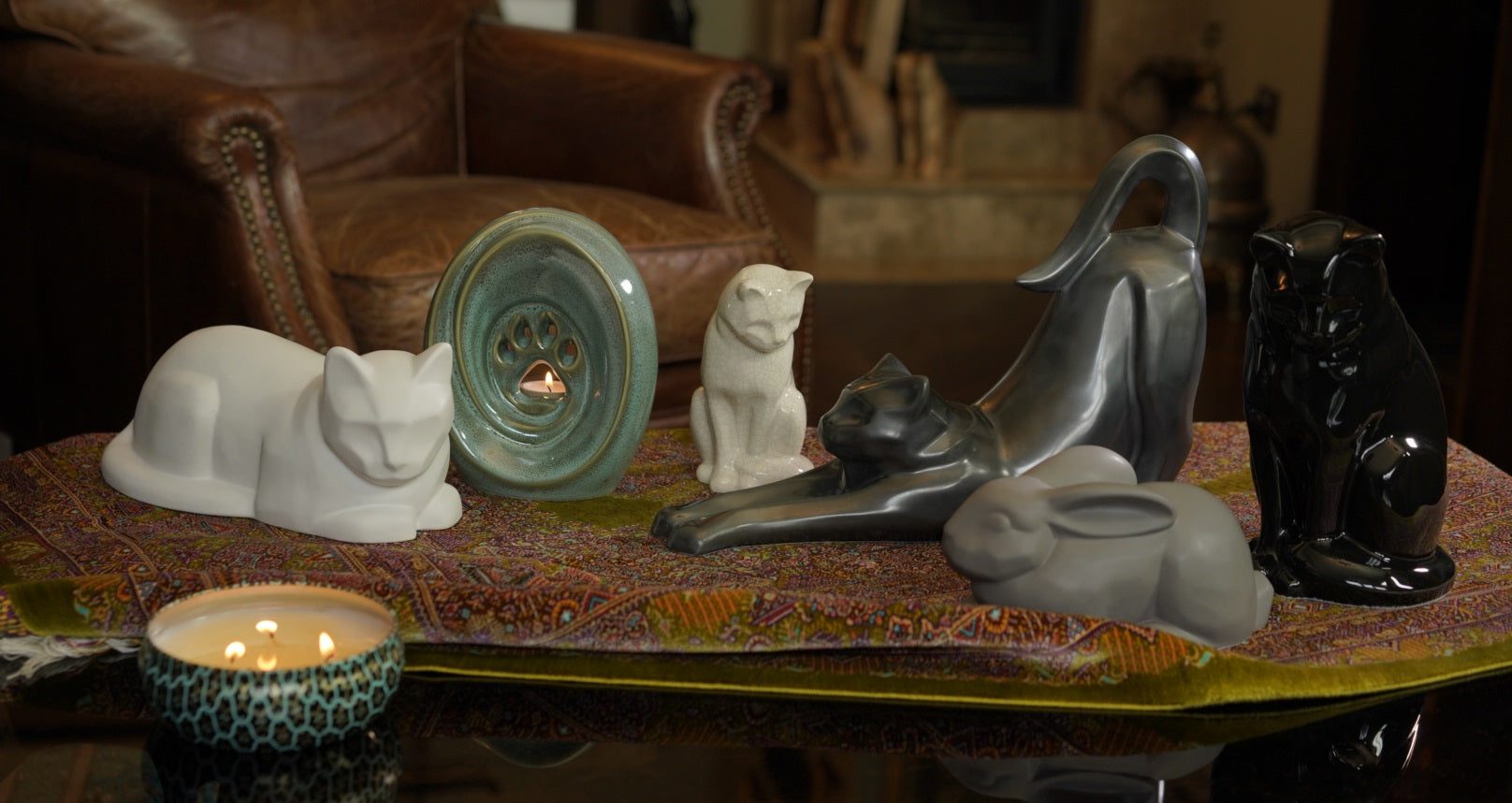
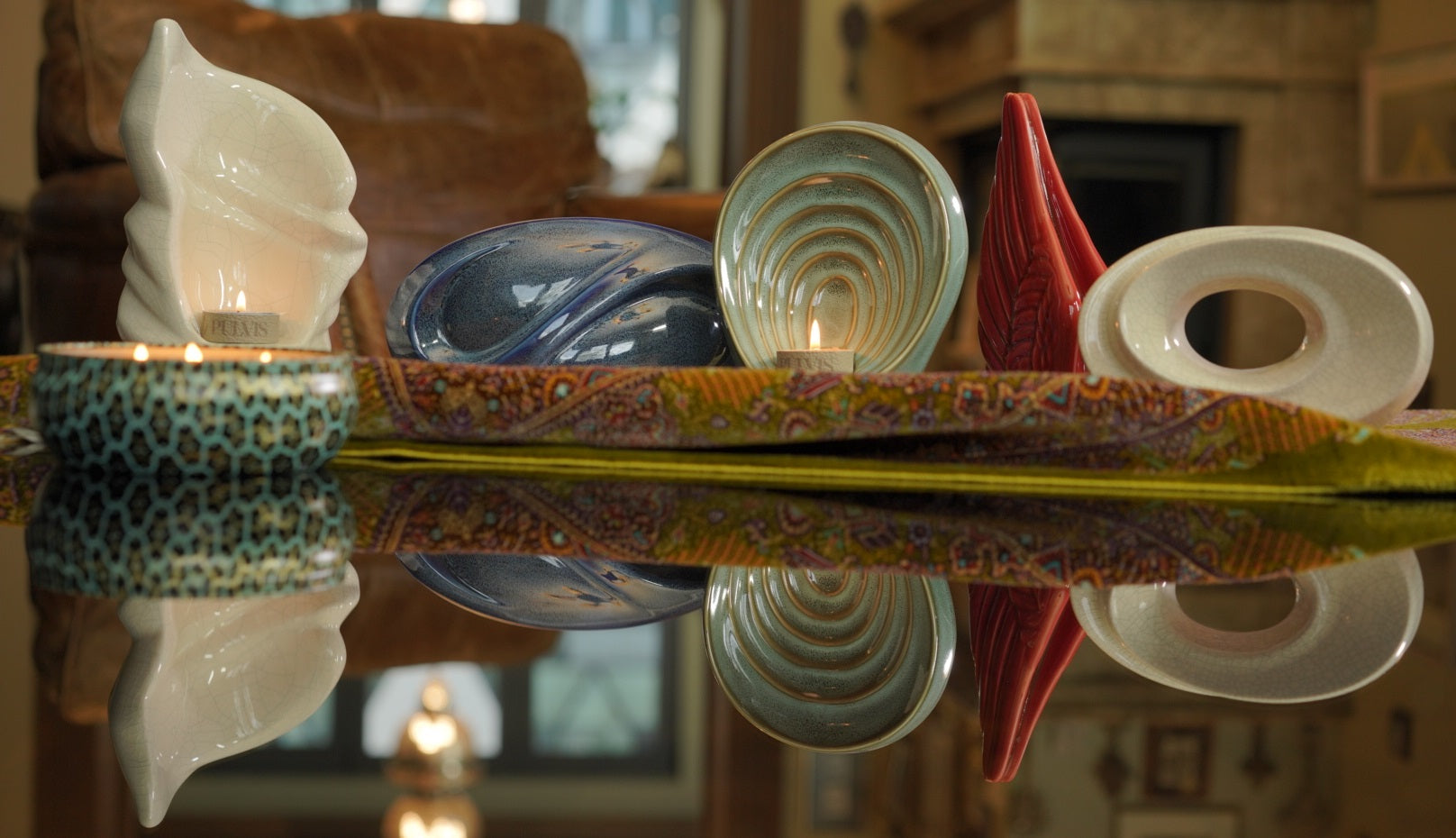
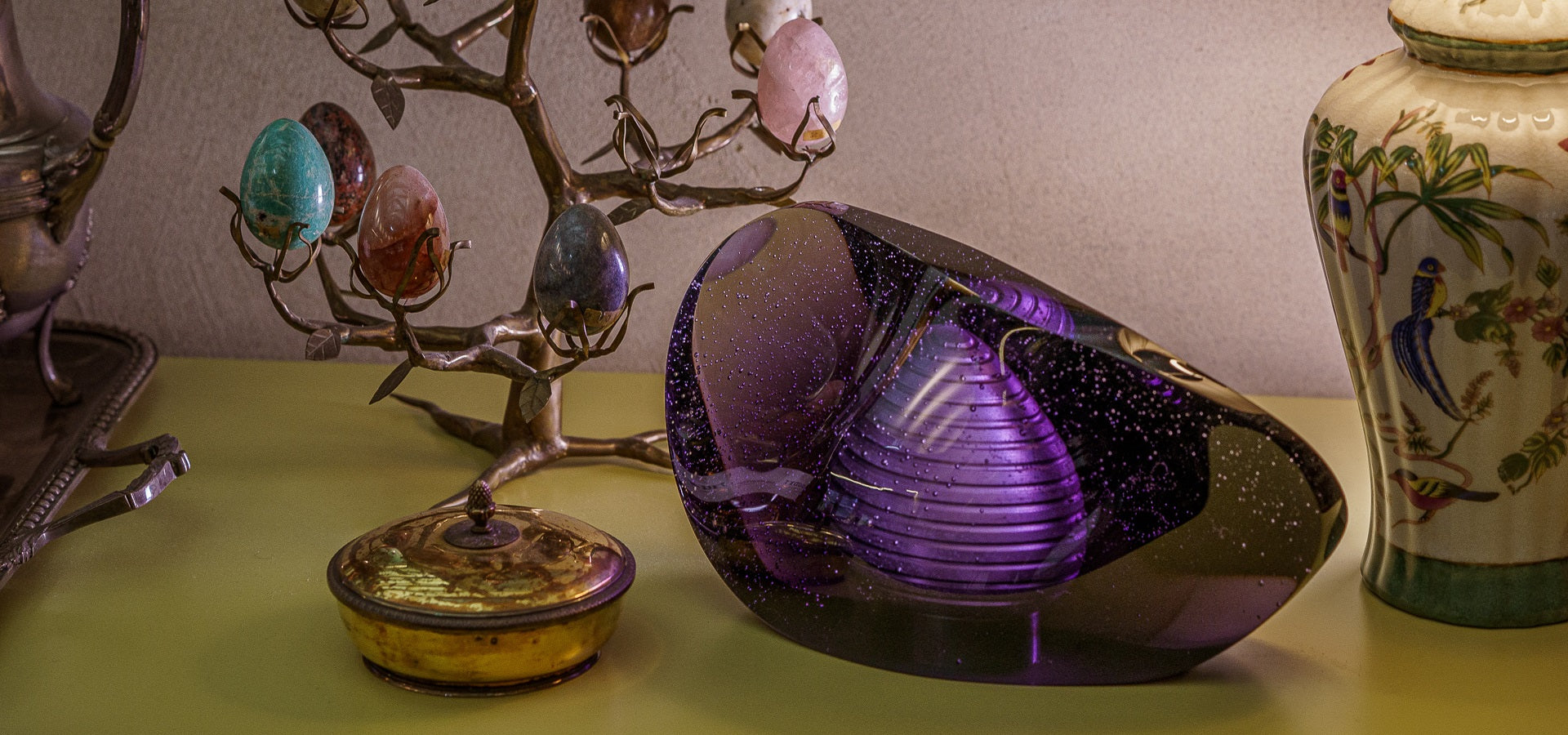
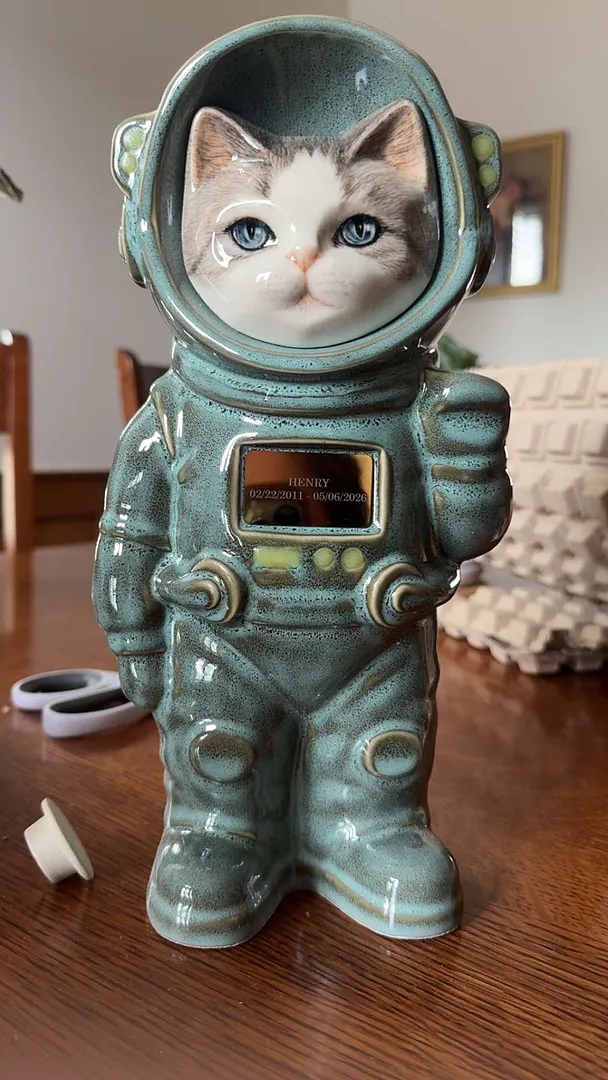
A memorial piece, such as a keepsake or urn, can become part of a family's remembrance space alongside photographs, letters, heirlooms, and other treasured belongings.
Together, these objects create a physical representation of a person's story.
They remind families that remembrance is not only about looking back. It is also about carrying love, values, and memories into the future.

The things we keep after someone dies are rarely important because of the objects themselves.
They matter because of the person connected to them.
A sweater represents warmth. A recipe book represents family. A watch represents time shared together. A handwritten note represents a voice that can no longer be heard but is still remembered.
Personal belongings allow people to maintain a connection with those they have lost. They provide comfort, preserve identity, and help transform grief into remembrance.
The objects left behind are not replacements for the people who are gone. They are reminders of the lives they lived, the love they gave, and the moments they shared with us.
In the end, the things we keep are not really about possessions. They are about stories.
And through those stories, the people we love continue to remain part of our lives.
Which urn size do I need?
A simple rule: about 1 cubic inch of urn per pound of body weight.
Every product page lists the urn's capacity. Keepsake urns hold a small portion of ashes to share.
Need it by a specific date?
Free shipping · Delivery in 3–5 business days
Express delivery in up to 3 business days – choose it at checkout
Need help choosing?
Talk to our team – we're happy to help you find the right urn.
(562) 609-4019 art@pulvisurns.comSend us a message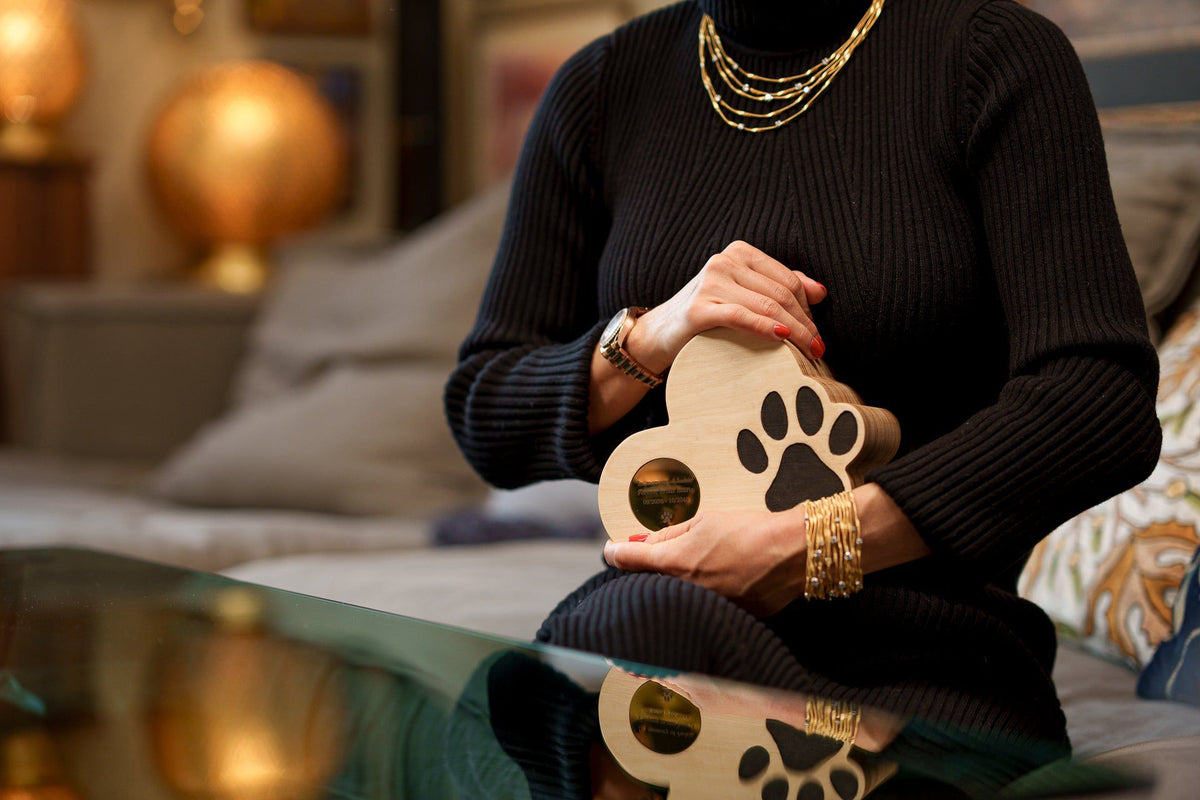
Can You Grieve a Life That Never Had Words?
Discover why losing a beloved pet can be so profound, how wordless bonds shape our lives, and how Pulvis Art Urns brings craftsmanship and thoughtful design to the art of remembering an animal companion.
What Does the Bible Say About Cremation?
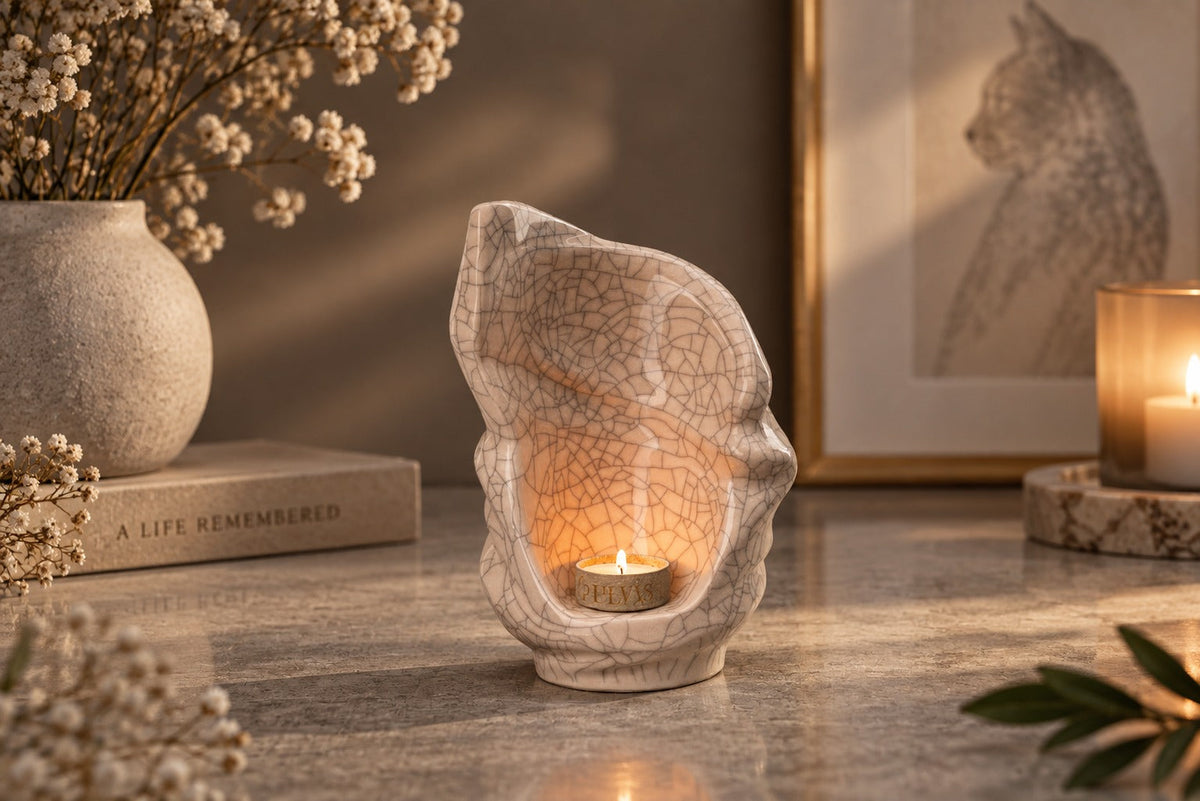
Explore what the Bible says about cremation, Christian beliefs about resurrection, and meaningful ways to honor a loved one’s memory through a thoughtful memorial.
Why Do People Light Candles for the Dead?
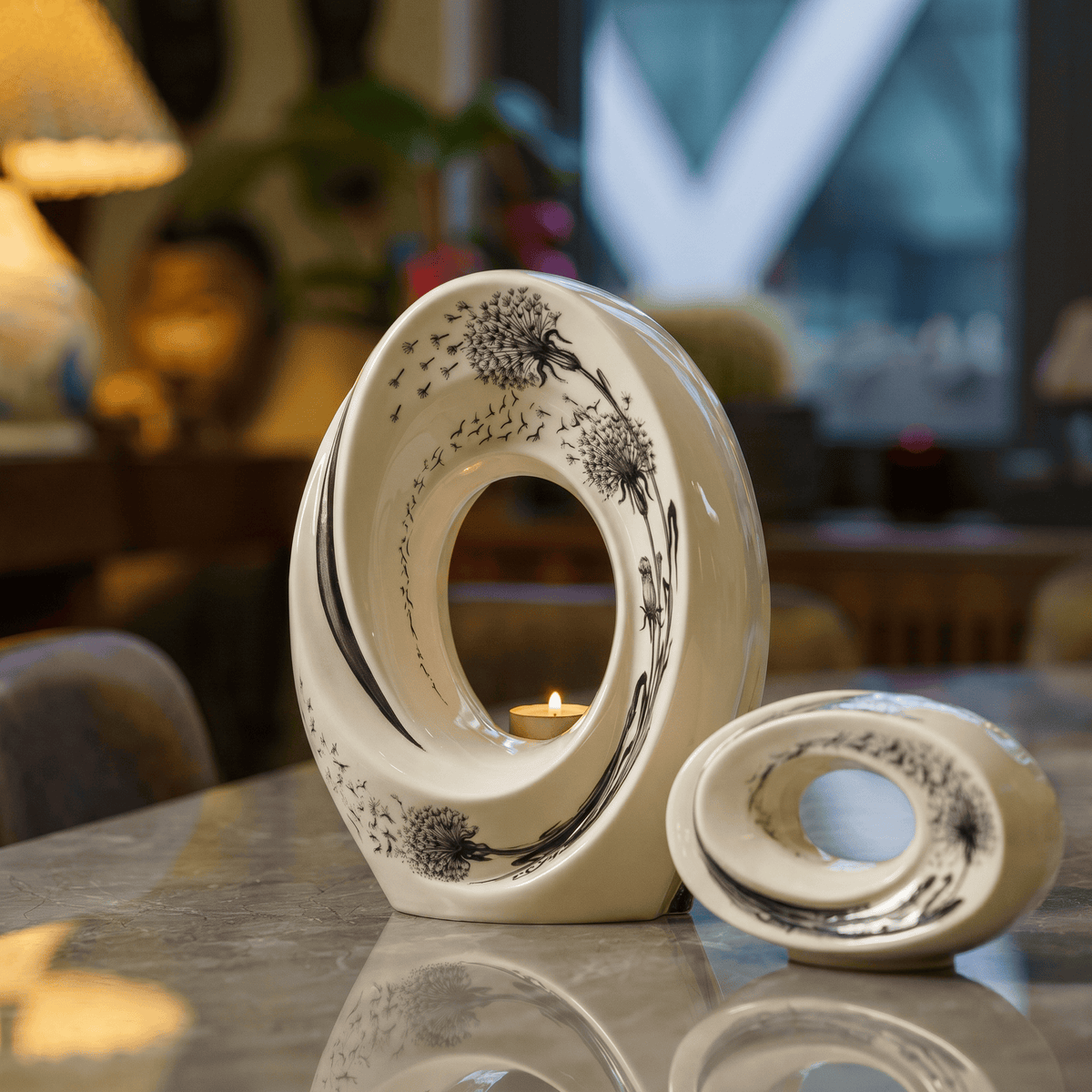
Discover the meaning behind lighting candles for the dead, exploring the traditions, beliefs, and emotions that make this simple ritual a lasting expression of remembrance, comfort, and connection within the home.

The Pet as a Witness to a Human Life
Our pets witness far more of our lives than we realise. Explore what it means for an animal to become a quiet witness to our changing homes, relationships, routines and identities — and how a memorial urn can remain as a physical connection to the life they witnessed.

Can You Inherit a Pet’s Memory?
Can we remember a pet we never knew? Explore how stories, photographs, objects and memorials can carry an animal’s memory across generations, turning a private life into part of a family’s shared history.


Share:
Should You Choose a Keepsake Urn or Full-Size Urn?
How Everyday Sounds Can Trigger Powerful Memories: The Emotional Connection Between Sound, Memory and Loss