

Here for you: art@pulvisurns.com | (562) 609-4019
There are things in life that are easy to describe because they have a form.
A house has walls. A photograph has an image. A letter has words. A piece of jewellery can be held in the hand.
But absence is different.
Absence has no visible shape. It cannot be measured, placed on a shelf, or held between two hands. And yet, after the loss of someone we love, it can become one of the most tangible experiences we know.
A room can suddenly feel different.
A familiar chair can seem strangely empty.
A photograph can acquire an entirely new meaning.
A daily ritual can become a reminder of someone who is no longer there.
Grief is often described as something invisible, but the human instinct to give it a physical form is ancient. Across cultures and generations, people have created objects, rituals, monuments, photographs, jewellery, paintings, gardens, and places of remembrance to preserve what cannot physically remain.
We create forms because memory needs somewhere to live.
This is where art can enter the experience of loss.
Art cannot remove absence. It cannot return what has been lost. But it can give shape to emotions that are otherwise difficult to express.
A memorial object can become a quiet meeting point between what was and what remains.
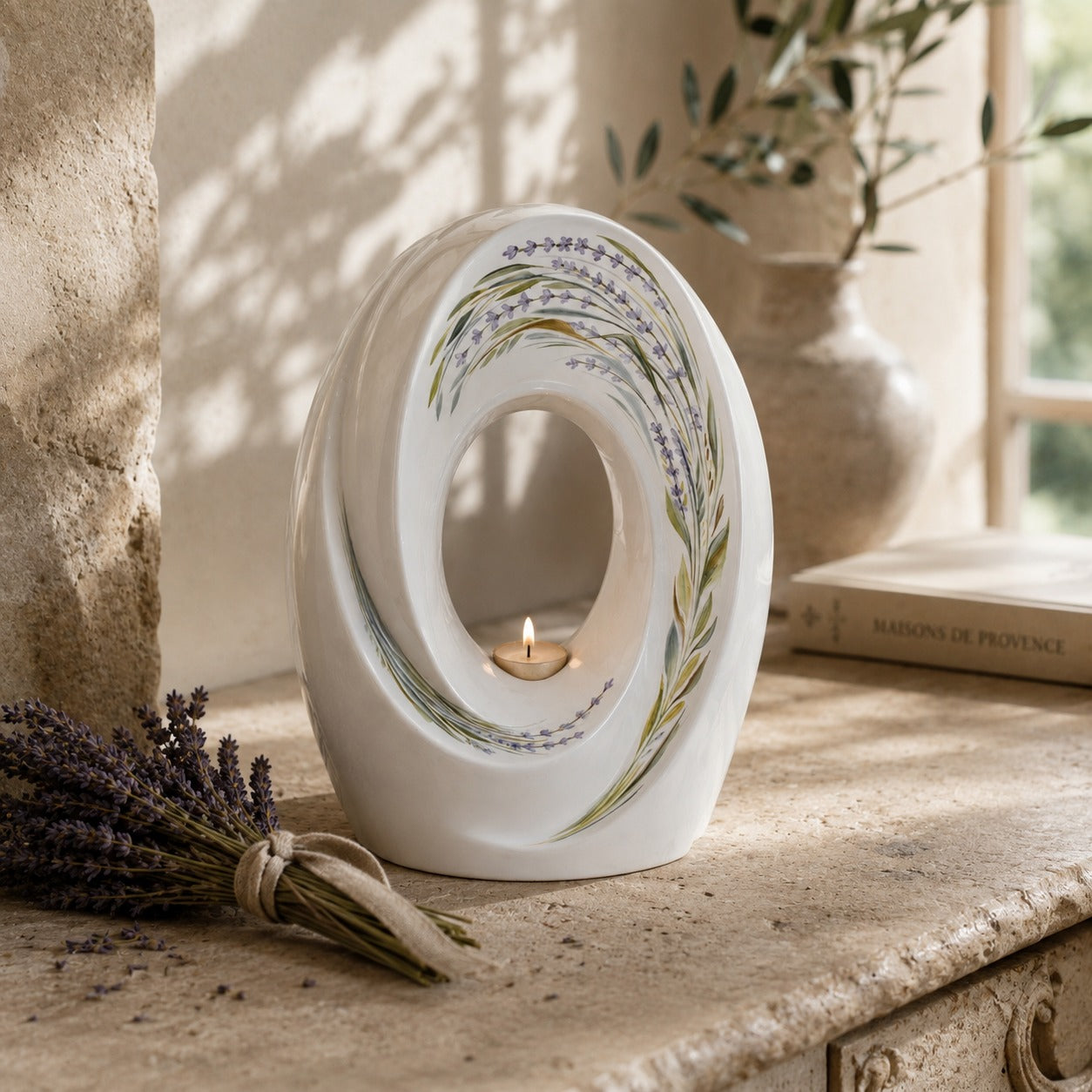
An urn, in particular, occupies an unusual place within this relationship. It is functional, but it can also be deeply symbolic. It can contain ashes, but it can also hold meaning, memory, identity, and a connection to a person whose physical presence has changed forever.
The art of giving absence a shape is therefore not about trying to make loss disappear.
It is about allowing remembrance to take form.

Human beings often respond to loss by looking for something tangible.
This instinct can be surprisingly powerful.
After someone dies, people may return to photographs. They may keep letters, clothing, jewellery, books, furniture, handwritten notes, or other objects associated with the person.
These things do not contain the person themselves.
But they contain traces of a relationship.
A scarf can recall a particular winter.
A book can remind us of conversations.
A photograph can bring an entire period of life back into focus.
An object can become a bridge between memory and the present.
This does not mean that the object itself is sacred in a literal sense. Its significance comes from what it represents.
The emotional meaning is created through association.
The object becomes a physical point at which memory can gather.
And perhaps this is one reason memorial objects have remained important throughout human history.
They give the mind somewhere to return.
Memory is constantly changing.
It is influenced by time, emotion, surroundings, stories, photographs, and even our own changing understanding of the past.
We remember differently at twenty than we do at forty.
A childhood memory may become more meaningful decades later.
A person we once knew in one particular way may become understood differently as we grow older.
Memory is therefore alive.
It moves.
It changes.
It sometimes becomes less painful and more beautiful with time.
Preserving something, however, creates a point of stability.
A photograph does not change in the same way our memory does.
A handwritten letter remains in the handwriting of the person who wrote it.
A memorial object remains physically present even when the emotions surrounding it evolve.
This creates an interesting relationship between permanence and change.
The memory continues to move.
The object remains.

Objects are often underestimated.
We live surrounded by things, and because they are part of everyday life, we can forget how strongly they can carry emotional meaning.
A wedding ring can represent a marriage.
A childhood toy can represent an entire period of life.
A family photograph can connect several generations.
A piece of furniture can remind someone of a home that no longer exists.
Objects become meaningful through the stories attached to them.
The same principle can apply to memorial objects.
Their importance does not necessarily come from their material value.
It comes from their emotional context.
A simple object can become more meaningful than an expensive one if it represents something deeply personal.
This is why memorial design cannot be separated completely from memory.
The form, material, colour, texture, and placement of an object can all influence how we experience remembrance.
For centuries, urns have been associated with remembrance.
But an urn does not have to be understood only as a traditional funeral object.
It can also be understood as a vessel of memory.
Its physical purpose is clear: to hold cremated remains.
Yet its emotional role can be much broader.
An urn may become part of a home.
It may be placed somewhere quiet and meaningful.
It may stand alongside photographs, books, flowers, or other personal objects.
It may remain almost invisible, or it may become a deliberate part of an interior.
The choice depends entirely on the person.
There is no universal way to remember.
Some people prefer discretion.
Others want remembrance to be visible.
Some are drawn to traditional forms.
Others look for something contemporary, sculptural, or artistic.
What matters is not whether one approach is better than another.
What matters is whether the object feels right for the memory it represents.

Art has always had a relationship with mortality.
Artists have explored life, death, time, memory, identity, disappearance, and transformation for centuries.
A painting can capture a moment that no longer exists.
A sculpture can preserve a gesture.
A photograph can freeze a face.
Architecture can turn a place into a memorial.
Art gives permanence to experiences that would otherwise remain intangible.
Memorial objects belong naturally within this tradition.
When an urn is designed with artistic intention, it can move beyond the purely functional.
Its shape can communicate softness, strength, movement, simplicity, or tranquillity.
Its surface can create a particular emotional response.
Its proportions can influence how it exists within a space.
The object can become a quiet work of art.
Not art that demands attention.
Not art that explains grief.
But art that simply gives remembrance somewhere to exist.

Form communicates even when there are no words.
A rounded form can feel gentle.
A geometric structure can feel precise and architectural.
An organic silhouette can suggest nature and transformation.
A minimal object can communicate restraint.
A more sculptural object can become a statement of individuality.
This is particularly important in memorial design because grief itself does not have one universal appearance.
Some people experience grief as silence.
Others experience it as movement, emotion, anger, nostalgia, or creativity.
The object chosen for remembrance can therefore become a reflection of the person being remembered as well as the person choosing it.
A memorial does not have to look solemn simply because its purpose is connected to loss.
It can be elegant.
It can be modern.
It can be warm.
It can be unconventional.
It can even be beautiful in a way that celebrates life rather than focusing entirely on death.
There is sometimes an assumption that grief should be represented by sadness alone.
But human emotions are rarely so simple.
We can miss someone and still feel grateful.
We can experience sadness and remember laughter at the same time.
We can mourn a life while also celebrating everything that life gave us.
This is one reason beauty can have an important place in remembrance.
A beautiful object does not diminish grief.
It can acknowledge the value of the life that came before it.
The purpose of a memorial object is not necessarily to reproduce the feeling of loss.
It can instead create a visual reminder of love, connection, individuality, and continuity.
In this sense, beauty becomes a form of respect.
No two people live identical lives.
Their homes are different.
Their tastes are different.
Their relationships are different.
Their memories are different.
So why should every memorial object look the same?
Personalization does not necessarily mean adding names, dates, or photographs.
It can also exist through design.
A person who loved architecture might have been drawn to geometric forms.
Someone who loved nature might have preferred organic shapes.
Someone with a minimalist aesthetic might have chosen something understated.
Another person might have preferred colour, texture, or artistic detail.
The object becomes part of the story.
It does not simply say that someone existed.
It can suggest something about who they were.

The modern home is more than a place where we sleep.
It contains traces of our lives.
Photographs are displayed.
Books accumulate.
Objects from travels find their place on shelves.
Artwork reflects personal taste.
Furniture becomes associated with particular periods of life.
A memorial object can become part of this environment.
This can be especially meaningful because remembrance does not have to be separated from everyday life.
Instead of being hidden away in a distant location, a memorial object can exist quietly within a familiar space.
It might sit on a shelf.
It might occupy a dedicated corner.
It might be placed beside a photograph.
It might stand near a window or among plants.
The placement itself can become a personal ritual.
There is something psychologically powerful about having a specific place for remembrance.
It creates a physical point of reference.
A person may visit it intentionally.
They may place flowers there.
Light a candle.
Sit nearby.
Look at a photograph.
Or simply pass it every day without doing anything at all.
The object does not require constant attention.
Its presence alone can be enough.
In this way, remembrance becomes integrated into life rather than separated from it.
The memorial does not have to dominate the room.
It can simply belong there.
Material has its own language.
Ceramic can feel tactile and warm.
Stone can suggest permanence.
Wood can create associations with nature.
Metal can feel architectural and enduring.
Glass can suggest transparency and fragility.
The choice of material therefore becomes part of the emotional language of an object.
This is especially significant when the object is intended to remain for many years.
Materials age.
They develop character.
They interact with light.
They respond to their surroundings.
An object can therefore become part of the passage of time.
The person we remember does not change.
But our relationship with the memory can.
The object remains there through those changes.

Grief changes as time passes.
The first weeks may feel very different from the first anniversary.
A year later may feel different again.
The memory may remain intense, but its character can change.
At first, a memorial object might feel painfully connected to the loss.
Later, it may become connected more strongly to the life that was lived.
This transformation is important.
It demonstrates that remembrance does not have to remain frozen in the moment of death.
The object can acquire new meanings as the person continues their own life.
At first it represents absence.
Later, it may represent gratitude.
Eventually, it may simply represent someone who mattered.
Some of the most powerful forms of art are deliberately open to interpretation.
They do not tell us exactly what to feel.
They leave space for our own experience.
Memorial design can work in the same way.
An urn does not need to visually explain a person's entire life.
It does not need to communicate every emotion.
It can simply exist.
Its meaning comes from the person who looks at it.
One person may see peace.
Another may see permanence.
Another may see transformation.
Another may simply see the face or presence of someone they loved.
The object becomes personal because memory completes it.
Traditional funeral objects are often associated with specific spaces.
Cemeteries.
Memorial rooms.
Funeral homes.
Churches.
But contemporary remembrance is becoming more personal.
Many people want memorial objects that can exist naturally within the home.
This has encouraged a new approach to design.
Instead of creating objects that look exclusively ceremonial, designers can create pieces that are also aesthetically compatible with contemporary interiors.
The result is something quieter.
A memorial object can become part of the home without turning the entire space into a place of mourning.
It can coexist with art, books, furniture, plants, and everyday objects.
This creates a more intimate relationship with remembrance.

Design influences how we interact with the world.
It can make objects easier to use.
It can make spaces more welcoming.
It can make everyday experiences more meaningful.
When design is applied to memorial objects, it can also influence how we experience remembrance.
Contemporary memorial design recognizes that today's relationship with death can be deeply personal.
People may not follow one traditional ritual.
They may create their own.
They may combine cultural traditions with modern aesthetics.
They may want a memorial object that feels at home in their environment.
They may want something that reflects the individuality of the person they are remembering.
This does not make remembrance less meaningful.
It can make it more personal.
A memorial does not need to be monumental to matter.
A small object can carry enormous emotional weight.
A modest urn can contain the remains of someone whose presence shaped an entire family.
A small photograph can evoke decades.
A simple flower can bring back a person immediately.
A quiet corner can become a place of reflection.
There is no required scale for love.
And there is no required scale for remembrance.
Sometimes the most meaningful memorial is the one that feels intimate enough to belong to everyday life.
Minimalism can be particularly powerful in memorial design.
When an object is simple, the mind has room to attach its own meaning.
There are fewer distractions.
The form can become quieter.
The material can become more important.
Light and shadow can become part of the experience.
A simple object can therefore create a sense of calm.
This can be especially valuable when emotions are already overwhelming.
The memorial does not need to compete with grief.
It can simply provide a stable presence.
A memorial object can also become a starting point for conversation.
Someone may ask about it.
A child may become curious.
A visitor may notice its unusual form.
A family member may tell a story.
In this way, the object can help keep memory active.
It becomes more than something that is looked at.
It becomes something through which stories are shared.
This is particularly meaningful across generations.
A child who never met someone can still learn about them through the objects and stories left behind.
The memorial becomes a bridge between generations.

There is an interesting paradox in memorial design.
The person who is remembered is no longer physically present.
Yet the object remains.
It occupies a space.
It witnesses the passage of time.
It remains through birthdays, holidays, celebrations, changes of home, new relationships, and new chapters.
In this sense, the memorial object becomes a silent witness to the life that continues.
It does not stop time.
It exists alongside it.
And perhaps that is one of the most meaningful things an object can do.
It reminds us that remembering someone and continuing to live are not contradictory.
Both can happen at once.
There is an important distinction between giving absence a physical form and trying to contain grief.
A memorial object cannot contain everything a person meant to us.
No urn can contain a lifetime.
No photograph can contain an entire relationship.
No monument can contain every memory.
The object is only a point of connection.
It represents something much larger than itself.
Its value lies partly in its ability to remind us of what cannot be physically represented.
In that sense, the object does not limit memory.
It expands it.
Over time, the presence of a memorial object can become surprisingly ordinary.
At first, we may notice it every day.
Later, it becomes part of the room.
We may walk past it without stopping.
We may dust it alongside other objects.
We may move it when rearranging furniture.
We may decorate around it.
And then, unexpectedly, we may notice it again.
This does not mean the memory has become less important.
It means that remembrance has become integrated into life.
The object no longer represents only the moment of loss.
It has become part of the continuing story.

Design is often associated with the future.
We design buildings for people to inhabit.
Furniture for people to use.
Objects for people to interact with.
But design can also look backward.
It can preserve.
It can commemorate.
It can give form to stories that have already happened.
Memorial design sits at this intersection between past and present.
It takes something that has been lost and gives it a physical presence without pretending that nothing has changed.
This is what makes it so powerful.
The object acknowledges absence while creating a place for memory.
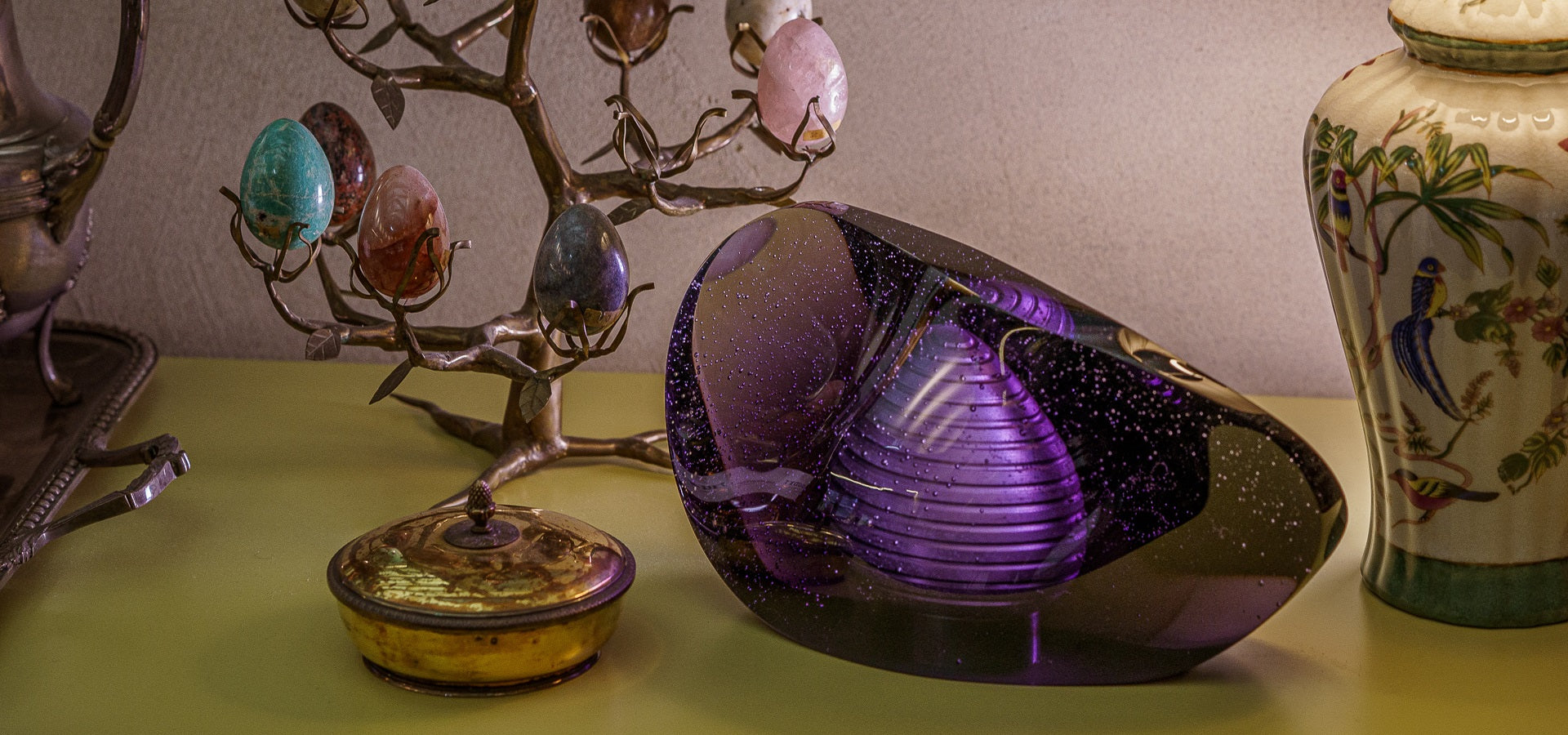
This idea of giving memory a physical form is particularly relevant to contemporary urn design.
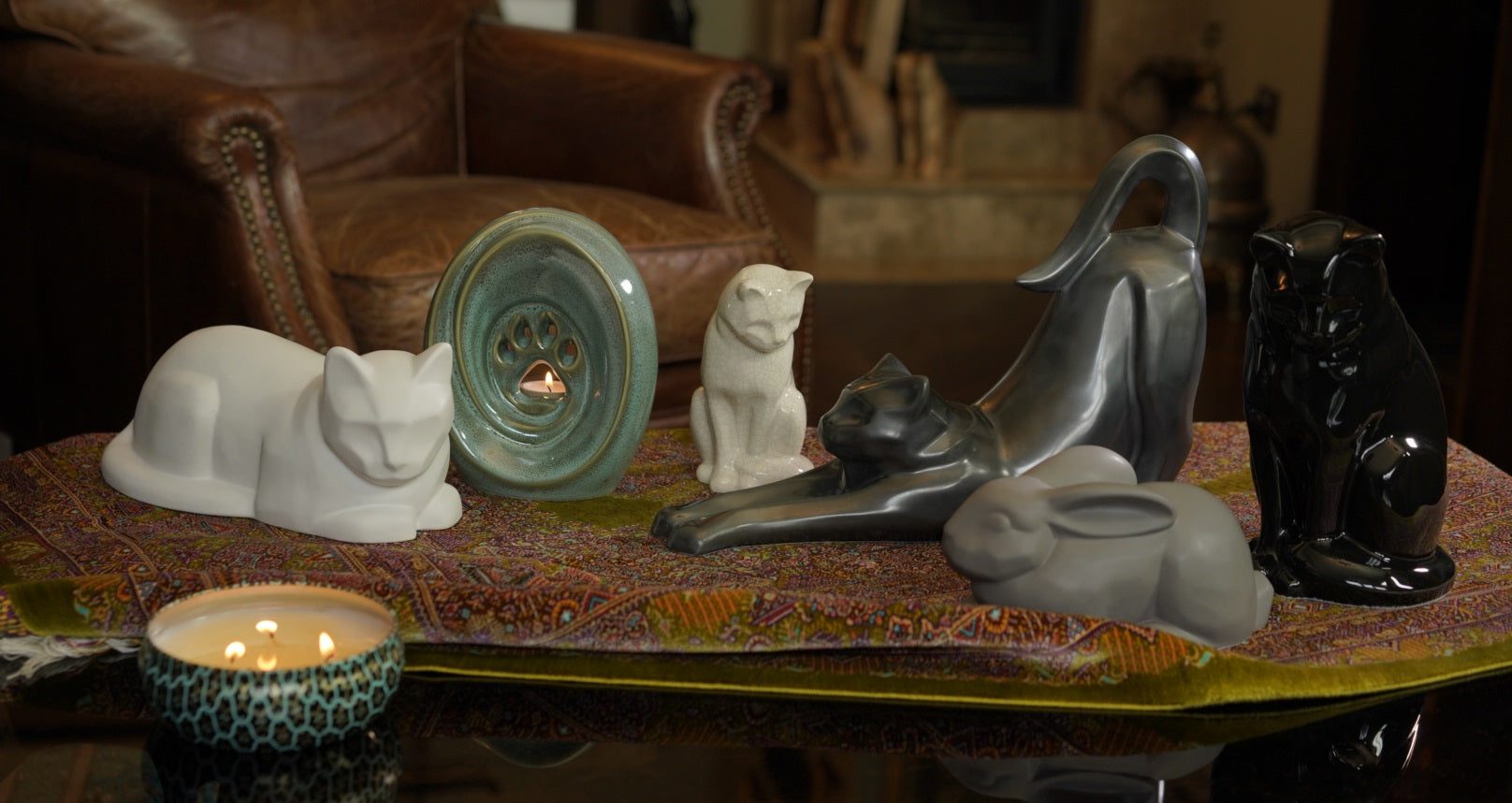
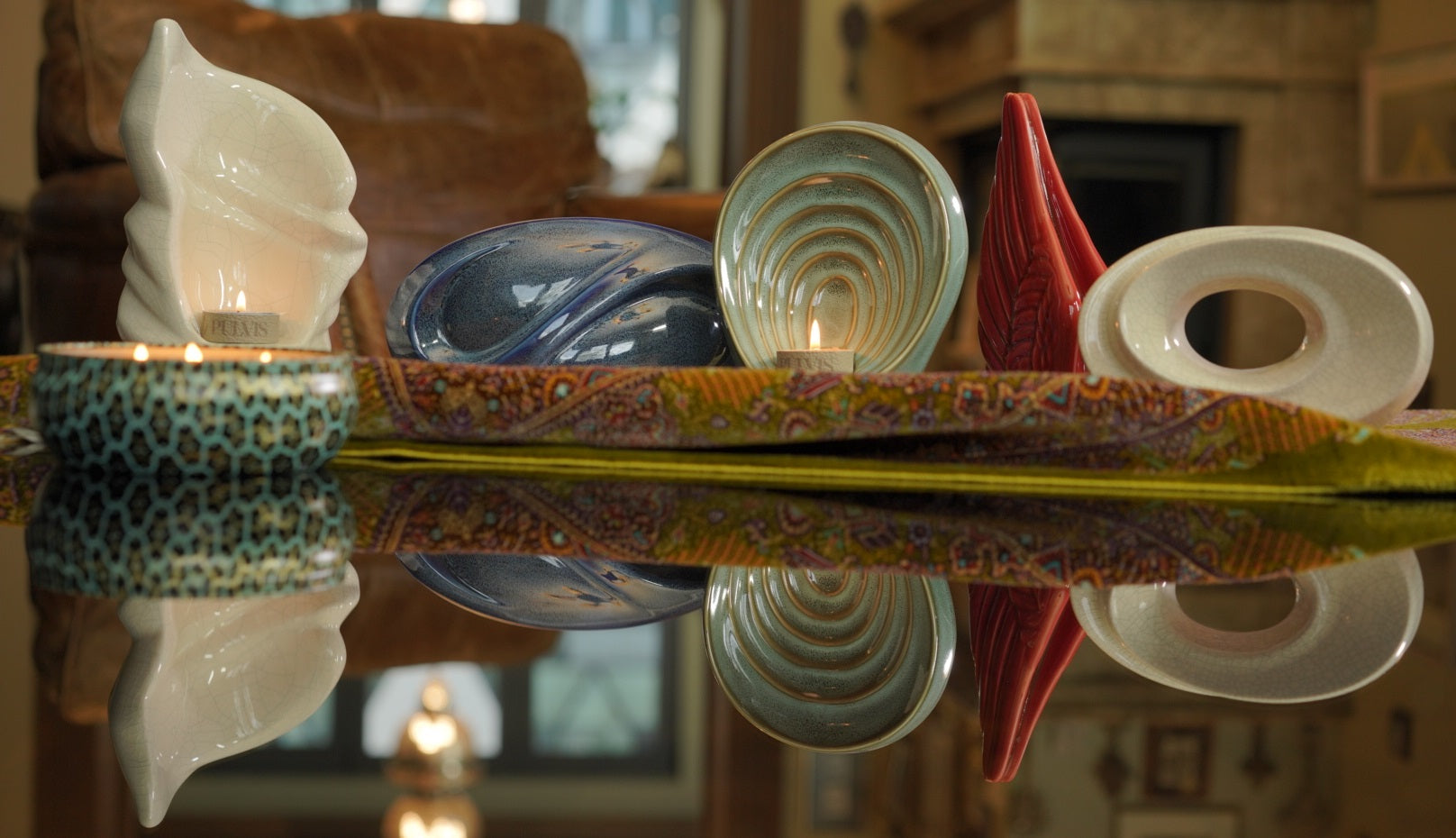
At Pulvis Art Urns, the urn is approached not simply as a functional container, but as an object with artistic and architectural qualities.
The designs explore form, proportion, texture, material, and the relationship between an object and the space around it.
This creates another way of thinking about memorialization.
An urn can be personal without being traditional.
It can be contemporary without becoming cold.
It can be artistic without losing its purpose.
And it can exist within a home as an object of remembrance rather than simply as a symbol of loss.
The intention is not to dictate how someone should grieve.
Instead, design can create possibilities.
A person can choose an object that feels appropriate to their relationship, their home, their aesthetic, and their memory.
There is no universal language of grief.
Some people need silence.
Others need conversation.
Some want photographs everywhere.
Others prefer privacy.
Some find comfort in rituals.
Others find comfort in everyday routines.
Some want to keep everything.
Others need to let go of physical possessions.
All of these experiences can coexist.
This is why the idea of a single correct memorial object is impossible.
The right object is the one that feels connected to the person being remembered and meaningful to the person who remains.
It may be traditional.
It may be contemporary.
It may be almost invisible.
It may be unmistakably artistic.
What matters is the relationship it creates between memory and the present.
Ultimately, the relationship between people does not disappear simply because physical presence does.
Love continues through memory.
Influence continues through the things people taught us.
Stories continue through conversation.
Photographs continue through generations.
And objects can provide a physical point around which these invisible connections gather.
This is perhaps the deepest meaning of memorial design.
It does not attempt to replace a person.
It creates a place where the memory of that person can remain tangible.
It gives the invisible somewhere to exist.

Perhaps giving absence a shape is one of the quietest forms of human creativity.
We know that loss cannot be reversed.
We know that time moves forward.
We know that people change and lives continue.
And yet, we still create.
We photograph.
We write.
We paint.
We sculpt.
We preserve.
We build.
We make objects that allow us to say:
This mattered.
This person mattered.
This life mattered.
This relationship mattered.
A memorial object can become a physical expression of that recognition.
It does not need to be dramatic.
It does not need to explain everything.
It only needs to create a small, meaningful space where memory can remain.
There is a final paradox in remembrance.
The object exists because someone is no longer physically present.
And yet, through the object, their memory can become present again.
A photograph brings a face back into view.
A familiar object recalls a gesture.
A story brings a voice into the conversation.
A place can recreate a feeling.
An urn can become a quiet reminder of an entire life.
In this sense, absence and presence are not complete opposites.
Sometimes absence creates a different kind of presence.
One that is quieter.
Less physical.
More internal.
But no less meaningful.

Loss creates an empty space.
Art cannot fill that space in the literal sense.
Nothing can.
But art can give the space a form.
It can create something beautiful where there is pain.
It can turn memory into an object.
It can give a relationship a physical point of reference.
It can allow something deeply personal to exist within the visible world.
This is why memorial objects matter.
They remind us that remembrance does not have to remain entirely inside the mind.
Sometimes we need something we can see.
Something we can touch.
Something that belongs in our home.
Something that quietly says that a life was here.
That love existed.
That a relationship mattered.
And that even though the person is no longer physically present, their story continues.
The art of giving absence a shape is therefore not really about absence at all.
It is about presence.
About memory.
About identity.
About the traces people leave behind.
And ultimately, about our human desire to give form to what cannot be held.
Because when we create a place for memory, we are not trying to stop time.
We are simply refusing to let what mattered disappear without a trace.
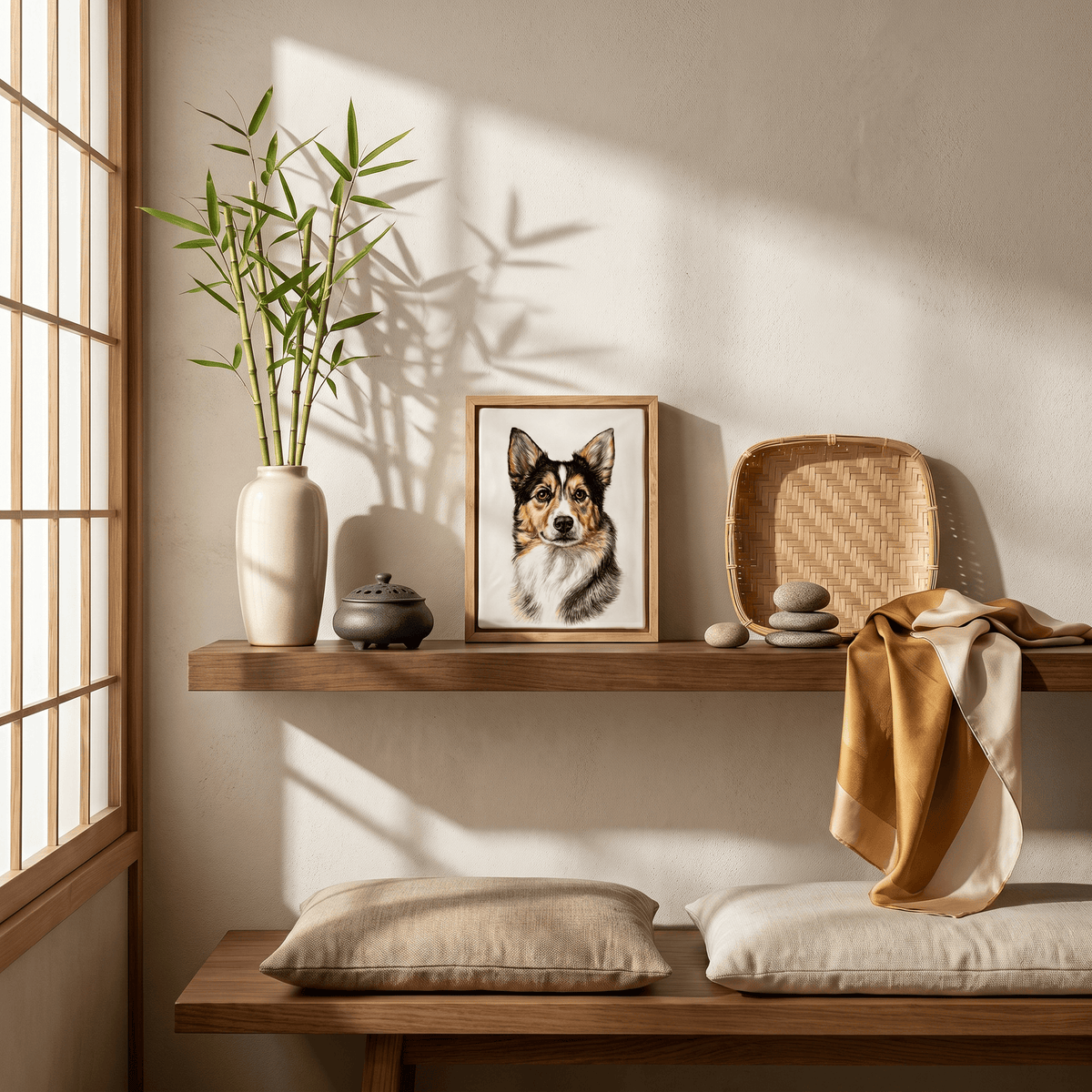
The Urn as a Bridge Between Presence and Absence
What happens when a pet is no longer physically present, but something of that life remains? Explore how a memorial urn can become a bridge between absence and presence, giving memory a tangible form and a lasting place within the home.
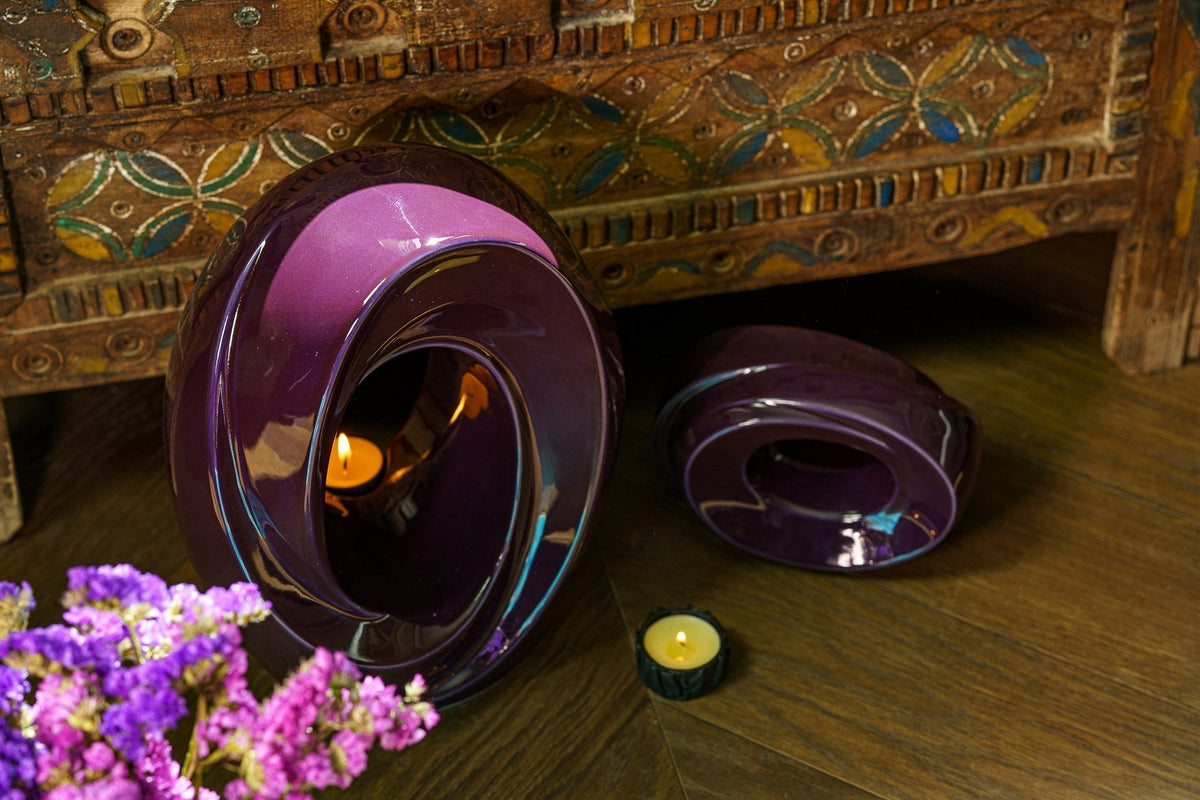
Memento Mori: Why Humans Have Always Made Art About Death
For thousands of years, humanity has transformed death into art — from skulls and fading flowers to portraits, monuments and memorial objects. Explore why we continue to create around mortality, memory and the human desire to make something last.
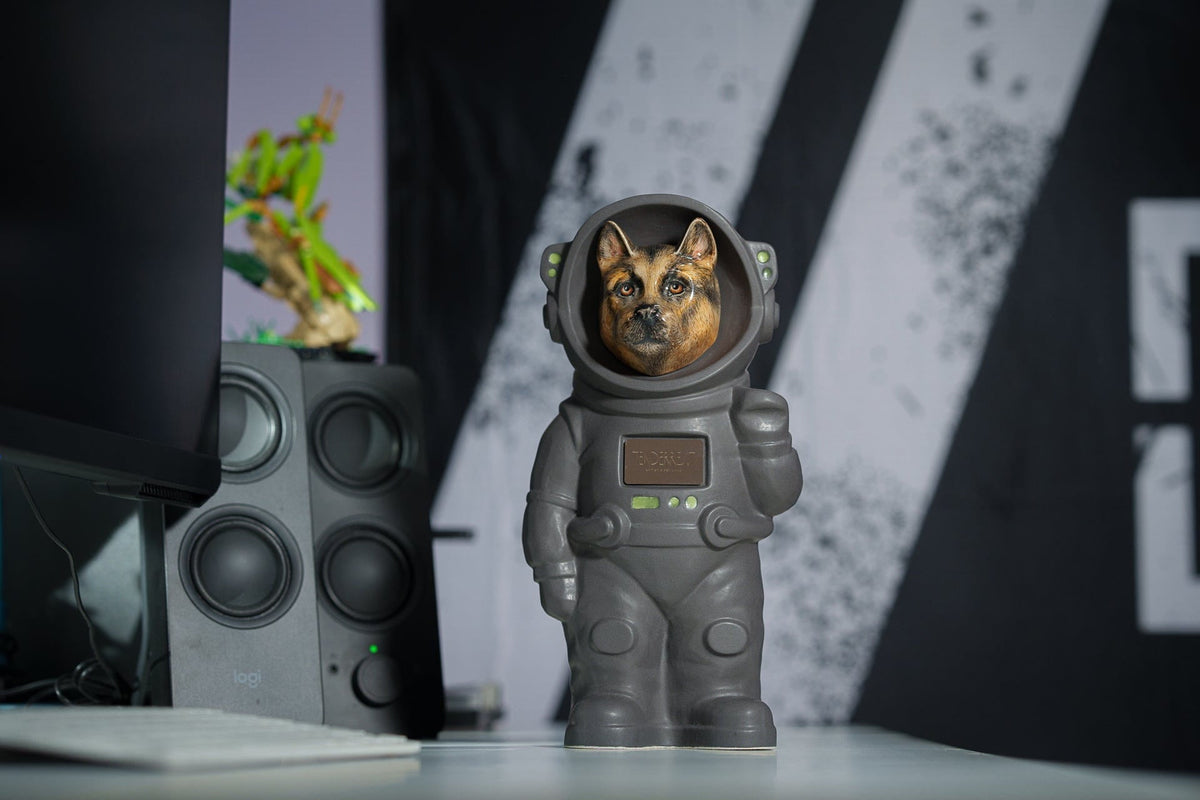
Every pet leaves behind an archive of its life — photographs, familiar objects, stories and traces of everyday routines. Discover how these fragments preserve not only memories, but the physical and emotional story of a beloved companion.
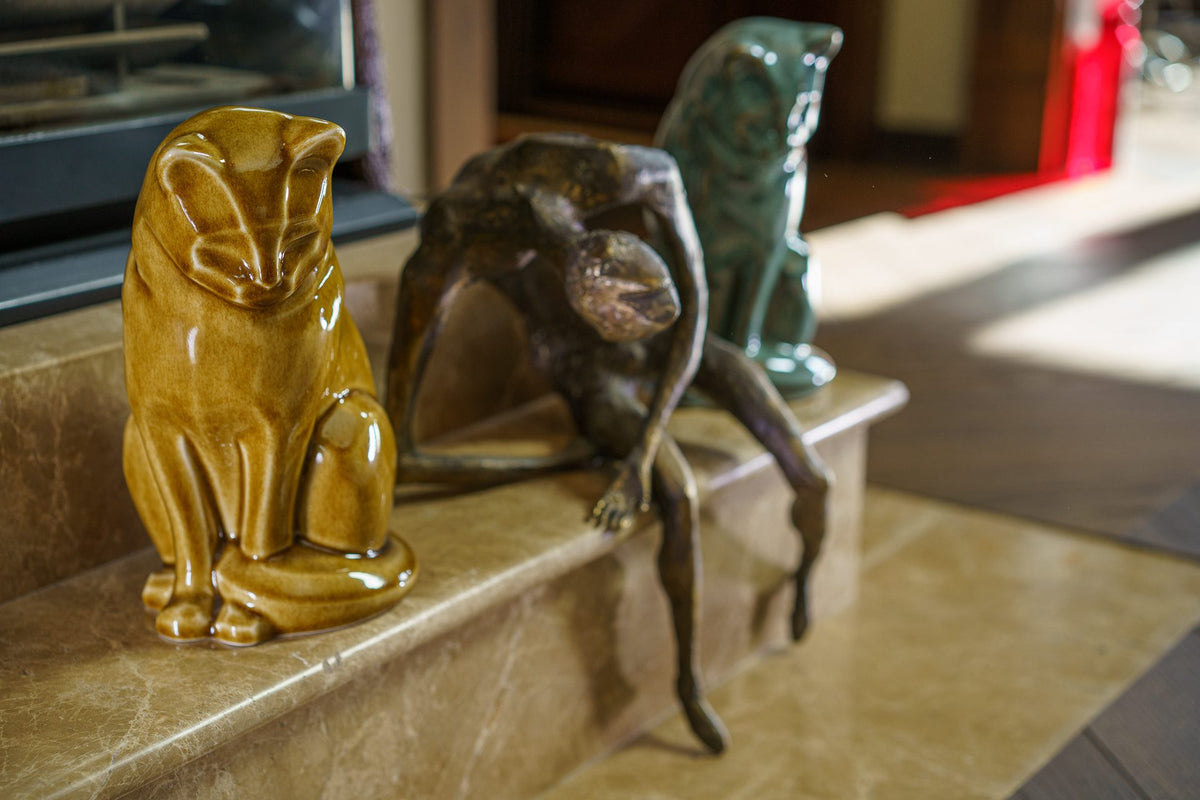
The New Aesthetics of Pet Memorials
Pet memorials are moving beyond traditional symbols of mourning. Explore how contemporary design, art, craftsmanship and materials are creating a more personal and understated aesthetic for remembering a beloved animal.
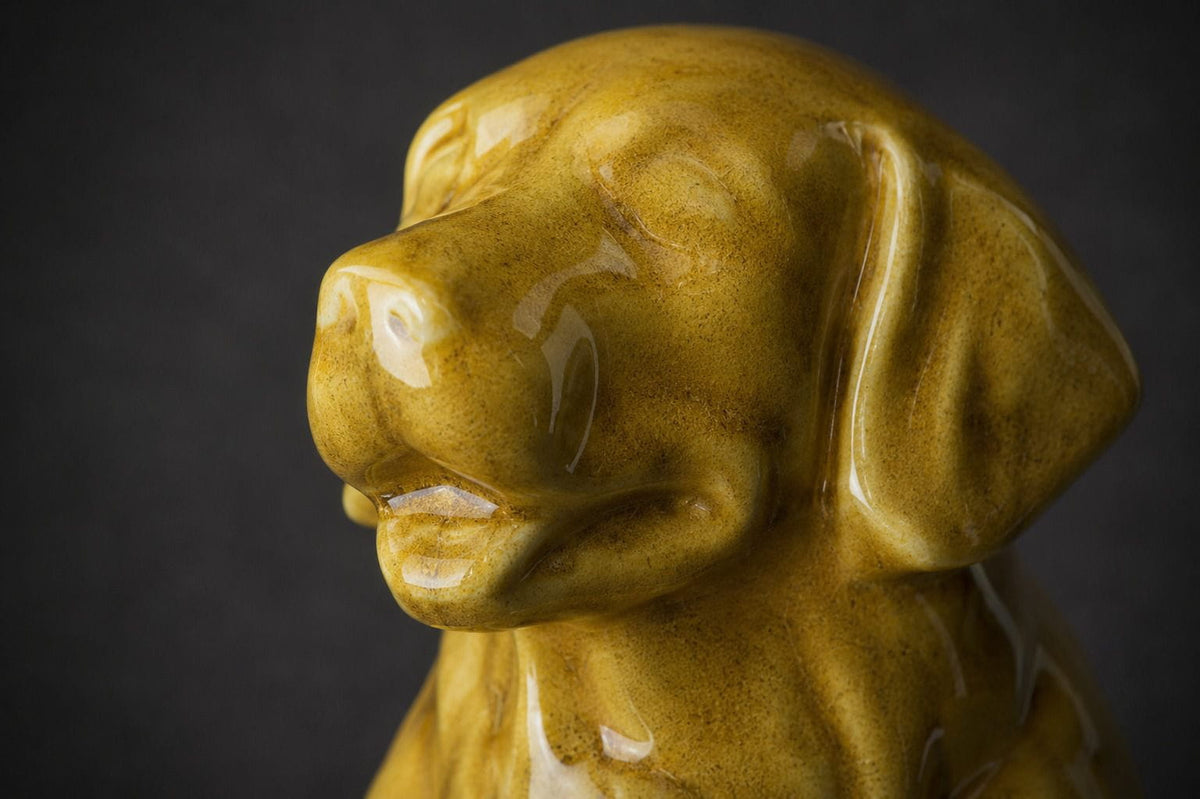
Can a pet urn be more than a vessel for ashes? Explore how craftsmanship, materials and sculptural design can transform a memorial urn into a meaningful work of art that keeps the memory of a beloved companion present.


Share:
How Handmade Objects Carry Human Emotion: Why Craftsmanship Matters in Times of Remembrance
How to Choose an Urn Based on Where It Will Be Kept