


Here for you: art@pulvisurns.com | (562) 609-4019
Funeral rites in Thailand are among the most elaborate and meaningful of all life-cycle ceremonies. Rooted primarily in Theravāda Buddhism, they represent a profound intersection of religious doctrine, cultural expression, and communal solidarity. To the Thai people, funerals are not simply about mourning the dead, but about guiding the soul on its journey, making merit on its behalf, and reaffirming the bonds of family and community.

At the heart of Thai funerary practice is the Buddhist teaching that life itself is suffering—from birth to old age to dying. Death, however, offers both a reminder of this universal truth and a spiritual opportunity. For a select few, the ultimate hope is Nibbāna, liberation from rebirth; for the majority, it is the expectation of rebirth, whether in this world, in heavenly realms such as Indra’s, or in another plane of existence.
Despite Buddhism’s doctrine of anatta (non-self), there remains a deep concern that the deceased may re-emerge as a preta (hungry ghost) or endure torment. Thus, relatives undertake funeral rituals with devotion, seeking to improve the fate of the departed through merit-making acts.

Tradition holds that, at the time of dying, efforts should be made to fix the person’s mind upon the Buddha or the scriptures. Names of the Buddha, or even syllables representing core Abhidhamma principles, might be whispered into the ear of the dying person. Sometimes sacred syllables are written on paper and placed in the mouth, symbolically guiding the consciousness toward a meritorious rebirth.
Relatives often express grief through loud wailing, both as an outlet of sorrow and as a signal to the community, which promptly gathers to offer support.

The Thai funeral process begins almost immediately after death. Within 24 hours, the death must be reported to the registrar’s office or local police, who then issue an official death certificate. Families then contact a temple to schedule the funeral rites and arrange for the transportation of the body.
When the body is transferred to the temple, the procession is led by a monk holding a holy thread (sai sin), believed to guide the spirit of the deceased on its journey. Relatives, often the children of the deceased, follow carrying an incense burner and a portrait of the departed, while the body itself is respectfully conveyed behind them.

One of the first rites is the watering ceremony, held at the funeral altar (to mu bucha โต๊ะหมู่บูชา). This altar, arranged near the head of the deceased, holds a Buddha image, incense, candles, and flowers. The deceased lies on their back, covered in cloth, with the right hand extended.
Mourners approach in turn, pouring perfumed water over the right palm while expressing condolences or asking forgiveness for past wrongs. If the body is unfit for display, the water is poured over a holy thread connected to the corpse. This ritual reminds the living that all must eventually leave the world empty-handed.
For individuals who have rendered significant service to the nation, families may request royal water for bathing the body. This gesture is accompanied by an honor guard of musicians (wong pi chanai klong chana), symbolizing royal respect and distinction.
The body is then placed in a coffin, adorned with wreaths, candles, incense, and often a photograph, surrounded by colored lights.
If cremation is delayed—sometimes by days, sometimes by months or years for prominent figures—monks are invited to chant daily. They may hold a broad ribbon (bhusa yong) connecting the coffin to themselves, symbolically linking the deceased to the sacred recitations.
Food offerings to monks, known as Matakabhatta (“food for the dead”), are made in the name of the deceased:
“Reverend Sirs, we humbly beg to present this mataka food and these various gifts to the Sangha. May the Sangha receive this food and these gifts of ours in order that benefits and happiness may come to us to the end of time.”
This merit is then transferred to the departed, ensuring comfort in the next life.

After the bathing, the body is dressed, then ritually tied in a practice called mud tra sung.
Three nooses are tied around the neck, wrists, and ankles. Each symbolizes attachments that bind life to Samsara: children, spouse, and wealth. To attain liberation, these ties must be cut.
Then, the body is wrapped in a large white cloth, knotted at the head so it can later be easily untied when washing the face with coconut water before cremation. Over this, a raw cotton thread, as thick as a thumb, is tied into five firm knots.
These five knots are a Dhamma riddle (ปริศนาธรรม, paritthadhamma), representing the Five Hindrances (นิวรณ์ 5, Nīvaraṇa)—mental obstacles that block the path to enlightenment:
In this way, the symbolic bindings reflect the Buddhist teaching that liberation requires overcoming both worldly attachments and the hindrances of the mind.
The body is then fully wrapped in white cloth, tied at five points along its length, and placed in the coffin with the head oriented westward, symbolizing the close of life’s journey


Funerals are highly communal. Neighbors gather nightly to feast, visit, and even play games, which serves to dispel loneliness, fear of spirits, and the weight of sorrow. Monks play an indispensable role, not only chanting the sutras but also embodying the link between the living and the dead.
In rural areas, it is common to see a blend of solemnity and festivity: prayers, food, music, and even gambling can accompany the wake, reflecting both the Buddhist acceptance of death and the community’s responsibility to one another.

The cremation usually takes place within three days, though it may be extended for practical or honorific reasons. On the funeral day, the procession begins at the home:
The coffin, carried by pallbearers or transported on a decorated car, is often accompanied by music—sometimes from traditional orchestras, ox carts, or even motor trucks.
At the crematorium, monks chant in front of the coffin, on which lie ceremonial robes (pangsukula). The coffin is then placed on a pyre, and mourners approach with candles, incense, and sandalwood flowers, tossing them beneath the coffin so the cremation begins. Later, the ashes may be collected and enshrined in an urn, kept at home, or scattered in a sacred place.

For wealthy or prominent individuals, the body may be kept for extended periods—months or even years—while families organize elaborate merit-making rites. Memorial ceremonies are often held on the seventh, fiftieth, and hundredth days after death, each marking stages in the soul’s journey.
During such events, families may also commission the printing and distribution of Buddhist texts, essays, or translations of sutras. This practice serves three purposes: honoring the dead, generating merit, and spreading Buddhist teaching within the community.

Thai funerals reveal not only the depth of Buddhist ritual but also the blending of other cultural traditions:
This layered character makes Thai funerals unique: they are at once profoundly Buddhist, deeply local, and open to neighboring cultural currents

Alongside formal Buddhist rites, Thai funerals also preserve folk customs, many influenced by Chinese tradition. One such practice is sometimes referred to as “cheating the date of death.”
According to belief, the soul lingers for a period of time before rebirth, depending on the record kept in the spiritual register. To help their loved one reincarnate more swiftly, some families will symbolically alter the recorded date of death at the temple (never in official documents). By making it appear as though more time has already passed, the family hopes to “shorten” the waiting period for rebirth.
This reflects a playful way of outsmarting the cosmic bureaucracy—an idea also common in Chinese folk religion, where rituals such as gǎi shòu (改寿, “changing lifespan”) or symbolic tampering with underworld documents (yīn sī wén shū 作假) are meant to adjust fate or ease the journey of the soul.
Though not part of orthodox Buddhist doctrine, this “cheating ceremony” expresses the same compassionate intent found throughout Thai funerals: the desire of the living to aid the deceased in achieving a better passage into the next life.
In every case, the funeral becomes both a religious event and a social expression of respect, love, and solidarity.
Thai funeral traditions illustrate the depth with which Buddhism engages with the universal reality of death. They combine solemn Buddhist teachings with communal resilience, spiritual creativity, and cultural layers inherited over centuries. Whether simple village cremations or elaborate ceremonies for the wealthy and royal, Thai funerals embody the conviction that through chanting, merit-making, and community care, the dead may be guided toward a better rebirth—and the living comforted in their grief.
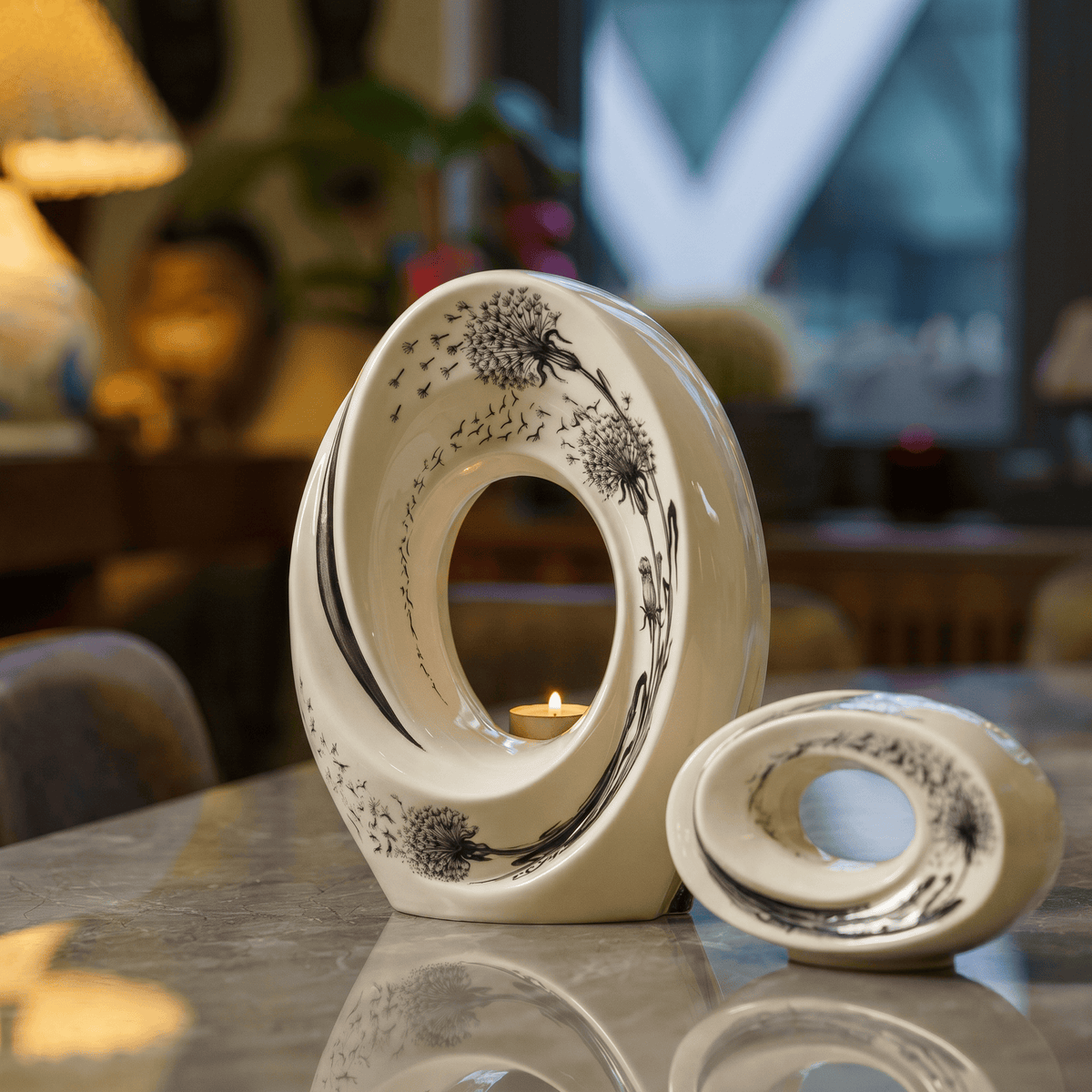
Why Do People Light Candles for the Dead?
Discover the meaning behind lighting candles for the dead, exploring the traditions, beliefs, and emotions that make this simple ritual a lasting expression of remembrance, comfort, and connection within the home.

The Pet as a Witness to a Human Life
Our pets witness far more of our lives than we realise. Explore what it means for an animal to become a quiet witness to our changing homes, relationships, routines and identities — and how a memorial urn can remain as a physical connection to the life they witnessed.

Can You Inherit a Pet’s Memory?
Can we remember a pet we never knew? Explore how stories, photographs, objects and memorials can carry an animal’s memory across generations, turning a private life into part of a family’s shared history.
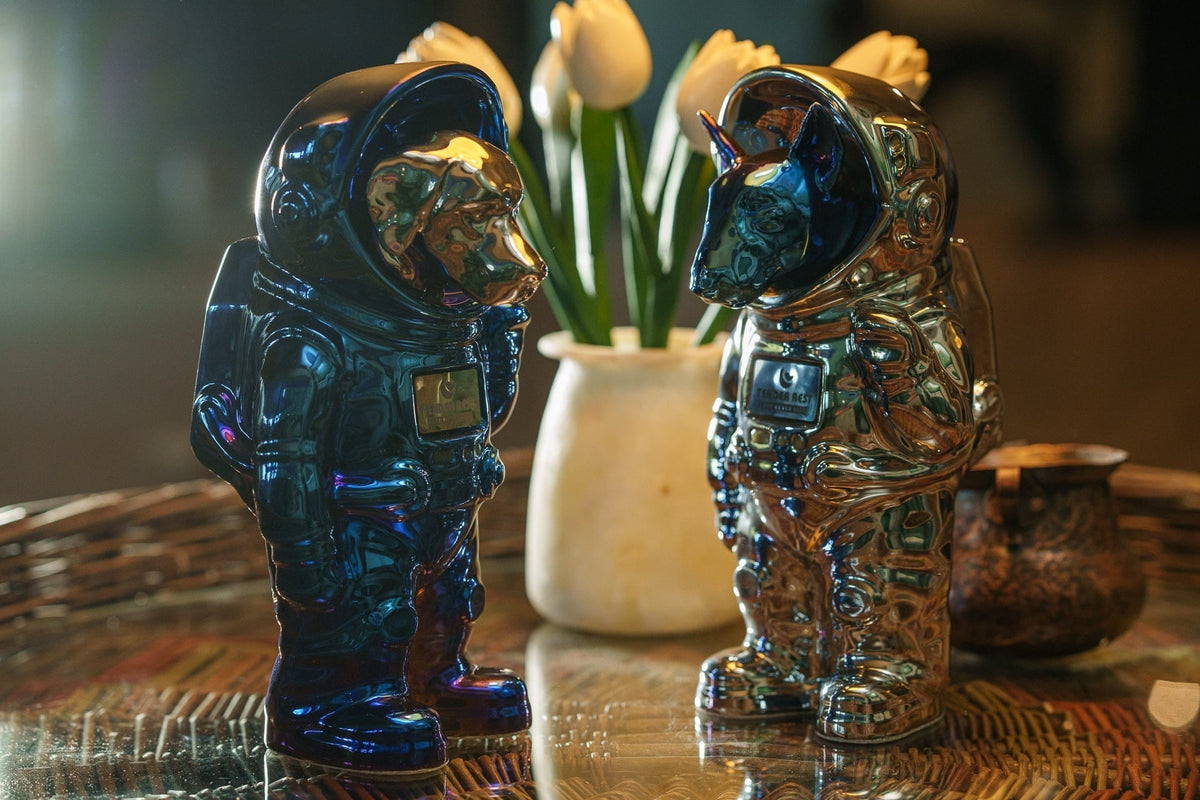
What a Pet Teaches Us About Impermanence
Living alongside a pet teaches us that the most meaningful parts of life are often temporary. Explore how animals shape our understanding of time, impermanence a quiet, lasting expression of what remains.
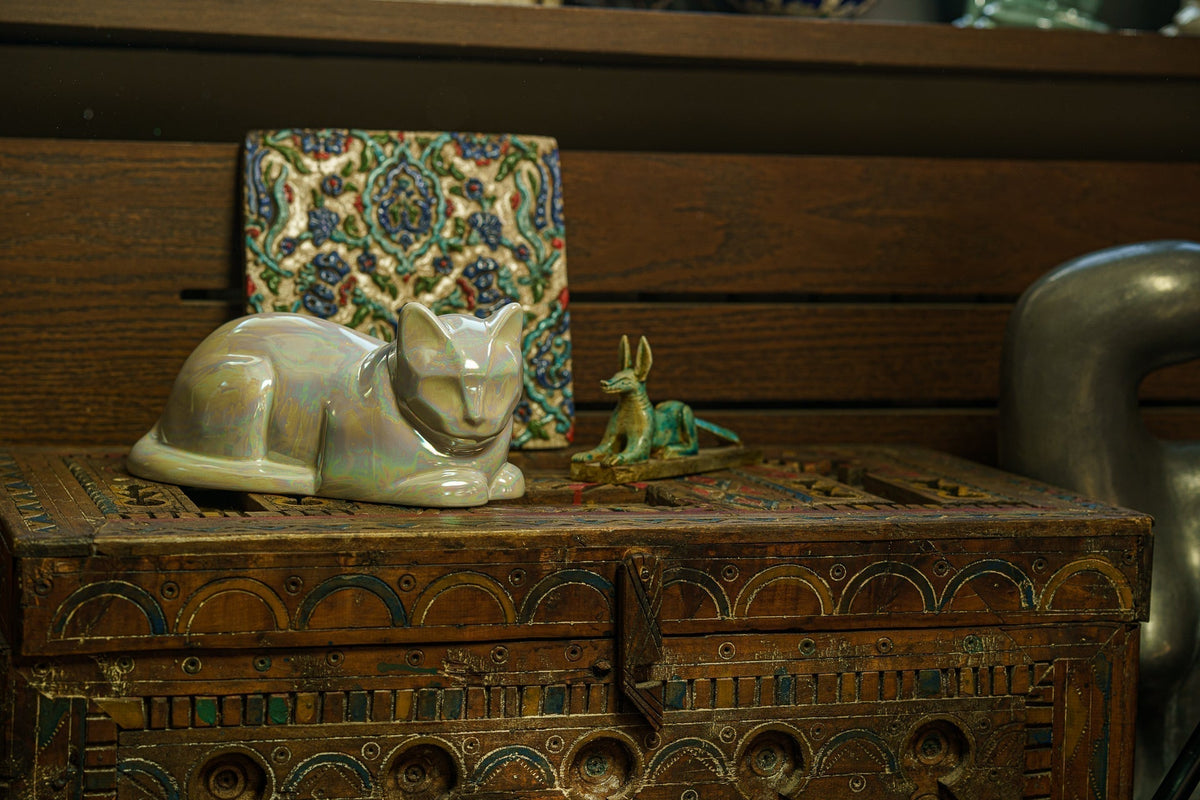
Why the Best Pet Memorials Don't Always Look Like Pet Memorials
The most meaningful pet memorials do not always rely on familiar symbols. Discover how contemporary pet urn design uses form, material, colour, and craftsmanship to create personal memorials that quietly belong within the home.


Share:
Urns – A Cult of the Individual or an Act of Tribute?
Why Cremation Is Becoming the World’s Preferred Choice Over Burial