



The Shamanic Send-Off: Understanding Korean Soul-Guiding Rituals (Ssitgim-gut)
We often imagine death as a boundary — final, absolute. But in Korean shamanic tradition, it is not an end. It is a threshold.
Grief, in this world, is not something to overcome. It is a path to walk — backward and forward at once. Through the Ssitgim-gut (씻김굿), the living do not simply bury their dead; they accompany them. They walk alongside the soul, guiding it gently away from this world, cleansing its sorrows, untying its regrets. They help it cross.
In this ritual, time folds. A voice once silenced is invited back. Clothes once worn are placed on straw and shaped into a body. Water is poured not to erase but to remember. The shaman sings, not to summon power, but to help the spirit find its way — to unbind it from pain, to guide it to peace.
There is no rushing. There is no forgetting. Only the long, slow unwinding of a life once lived.

Origins and Regional Transmission
The Ssitgim-gut emerged from the deeply felt need to prepare a soul for the journey ahead — not with silence, but with song. Not with separation, but with ceremony. Its roots run deep in the Jeolla region, where communities have preserved its form and spirit. In Jindo, it is recognized as an Intangible Cultural Heritage. Elsewhere, it endures in fragments — passed down by hereditary shamans (sesup-mu), often against the tide of modernity.

The Shape of the Ritual
The ritual varies — no two deaths are the same, no two departures unfold alike. Yet, within each Ssitgim-gut, there are common beats, like the steady rhythm of mourning.
The ritual begins with a tale — the myth of Baridegi, the daughter who walks into death to bring life back. Her story becomes a prayer, her journey a path for others to follow.
Born as the seventh daughter of a king who desired a son, Baridegi was abandoned at birth. Yet when the king fell gravely ill, only she could undertake the perilous journey to the underworld to retrieve the water of life. She walked through realms of fire, ice, and shadow, crossing rivers of blood and enduring the trials of the dead. Through sacrifice and devotion, she brought back the elixir that saved her father — though he had cast her away. For this act of filial piety and transcendence, she became a divine figure — Ogu-shin, the one who governs the gates of the afterlife. In Ssitgim-gut, her name is invoked to plead for safe passage and release.

White cloth is knotted — each twist a symbol of pain, of unresolved sorrow. The shaman dances as she unties them, one by one. The knots loosen. The grief exhales. The soul is freed.
A figure is made — the clothes of the departed wrapped into a body, a bowl of rice for a head, a pot lid for a hat. Water comes next. Then mugwort. Then incense. With each wave of the broom, the soul is cleansed — not only of death, but of life’s burden.
A strip of white cloth stretches forward. It becomes a road, unseen but essential. The soul effigy is placed upon it. The shaman pushes it gently, slowly, as if guiding someone through a crowd. The road to the afterlife is opened.

Sacred Logic: The World Behind the Ritual
Everything holds meaning. Water washes the pain. Fire burns away illness. The kitchen hearth — where meals were made and life was nourished — becomes a sacred space. Even the silence between songs holds weight.
The Ssitgim-gut is not just for the dead. It is for the living — to speak what went unsaid, to release what clung too tightly, to begin walking forward without forgetting what lies behind.

Echoes in a Modern World
The cities grow louder. The old songs are harder to hear. Yet in certain homes, in small towns, by riverbanks and in temples, the ritual continues. It has changed — as all things do — but it survives. In every cloth knotted, every chant sung, every tear shed, the old logic of grief lives on.

Cross-Cultural Echoes: Chinese Ritual Parallels
While Ssitgim-gut is distinctively Korean, its core purpose — to guide the soul and purify its path — finds resonance across Asia. In Chinese tradition, Taoist and folk practices offer their own vision of the soul’s departure.
In Taoist funerary rites, for instance, a priest performs dujing (度经), the reading of sacred scriptures meant to assist the spirit through the Yellow Springs — the afterlife in Chinese belief. Chanting, incense offerings, and the symbolic burning of paper money are intended to ease the soul's journey, removing karmic debt and ensuring safe arrival in the next world.

Some rituals also include Zhai (斋) ceremonies — purification banquets where food offerings, prayers, and ritual fasting purify both the deceased and the living. Just as Ssitgim-gut unties the grief-knots of the departed, Chinese rites aim to release the soul from earthly suffering and guide it toward harmony in the ancestral realm.
In many Han Chinese funerals, family members offer incense, food, and ritualized gestures to guide the spirit to the afterlife. The burning of joss paper (symbolic money) ensures that the deceased has all they need in the next world. In some regions. During the Ghost Festival or Zhongyuan Jie (中元节), communities perform rites to appease wandering spirits and honor ancestors, echoing the themes of release, remembrance, and reunion present in Ssitgim-gut.
Both traditions — though shaped by different cosmologies — express the same human impulse: to honor the dead, to help them cross over, and to transform grief into something sacred.

Conclusion
To send off the dead is not to forget them. It is to carry them with care across a threshold we will all one day cross. Through Ssitgim-gut, we are reminded: death does not erase. It transforms. And in that transformation, there is not just sorrow — but beauty, ritual, and the whisper of eternity.
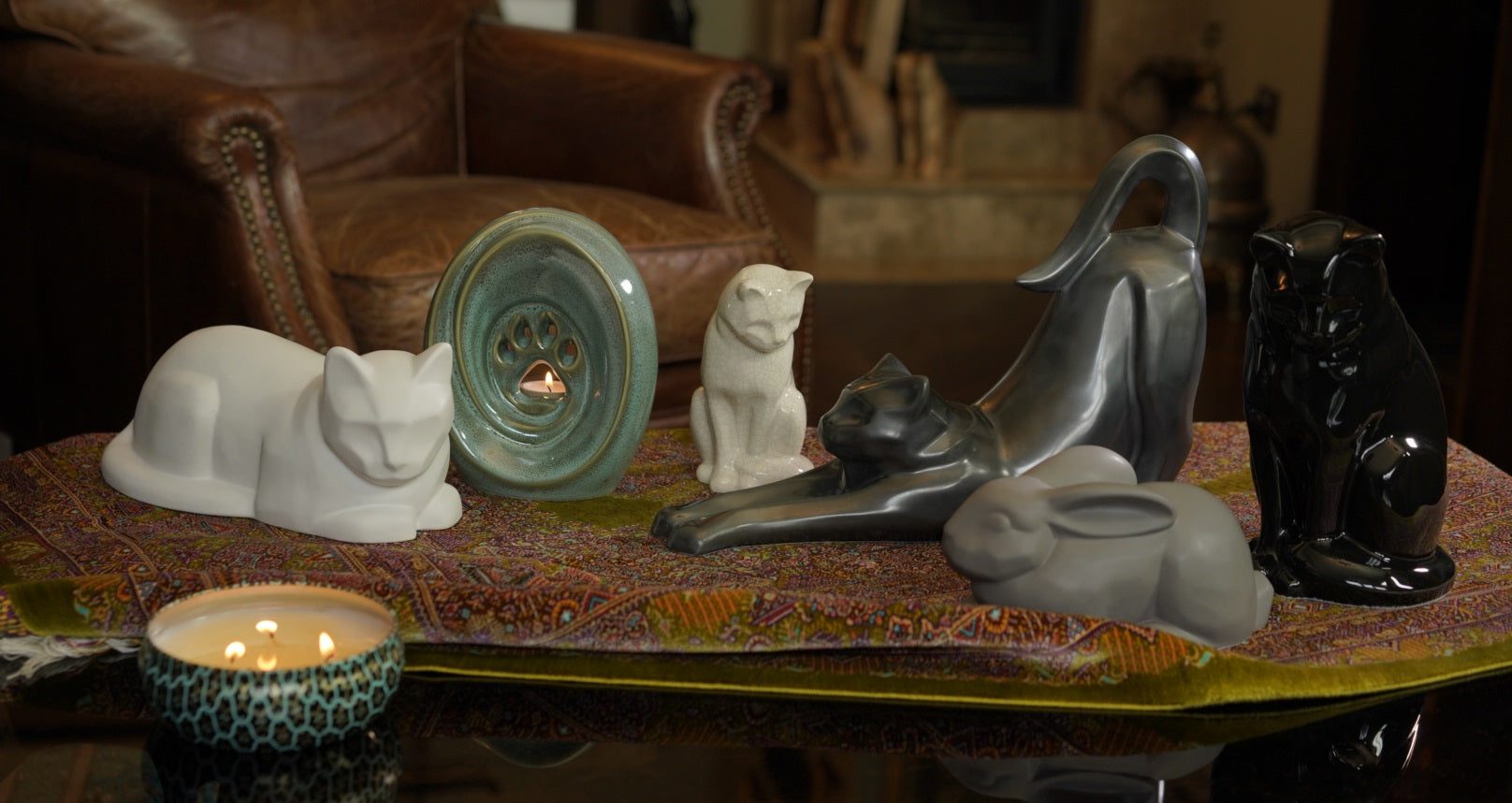
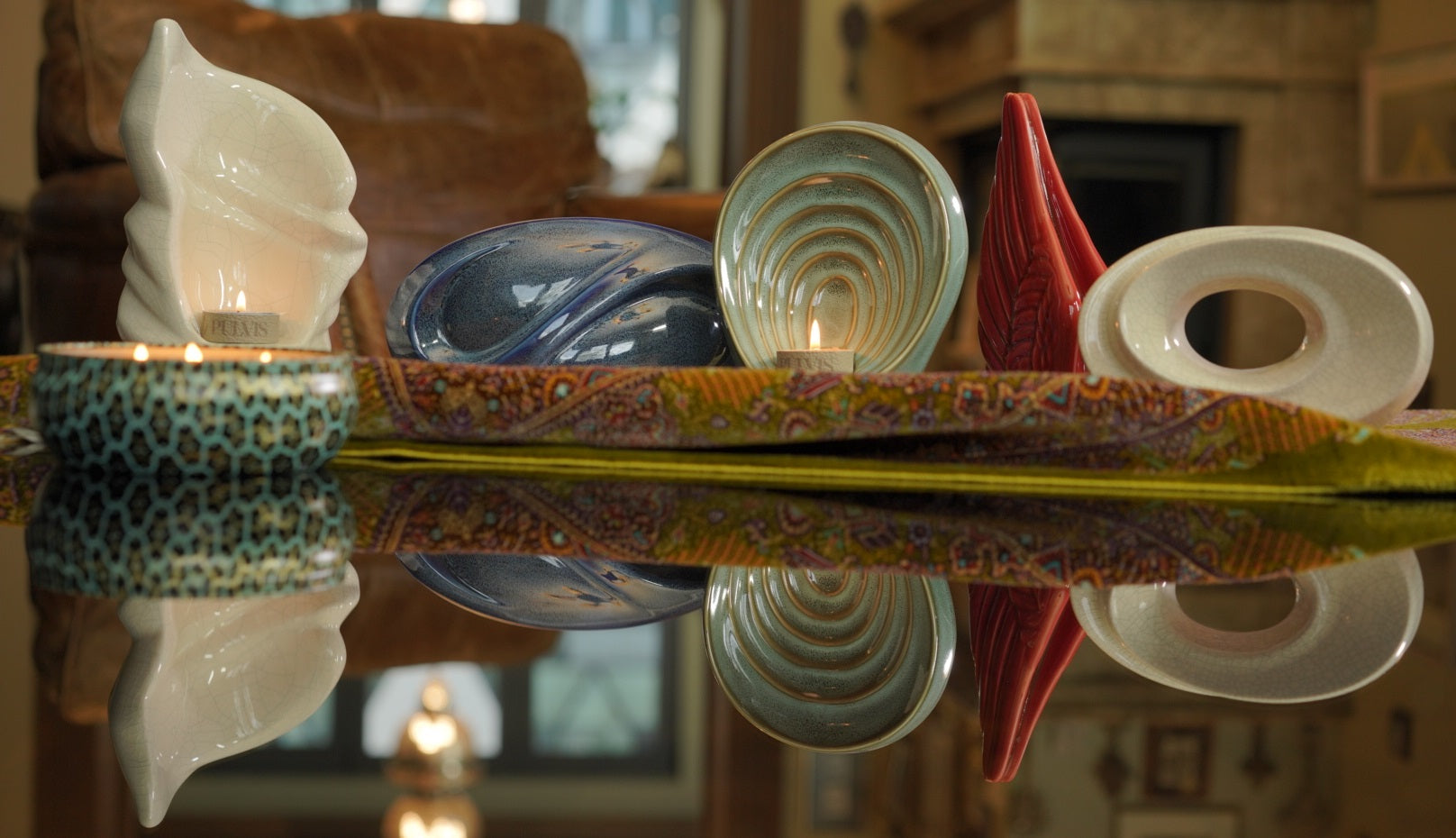
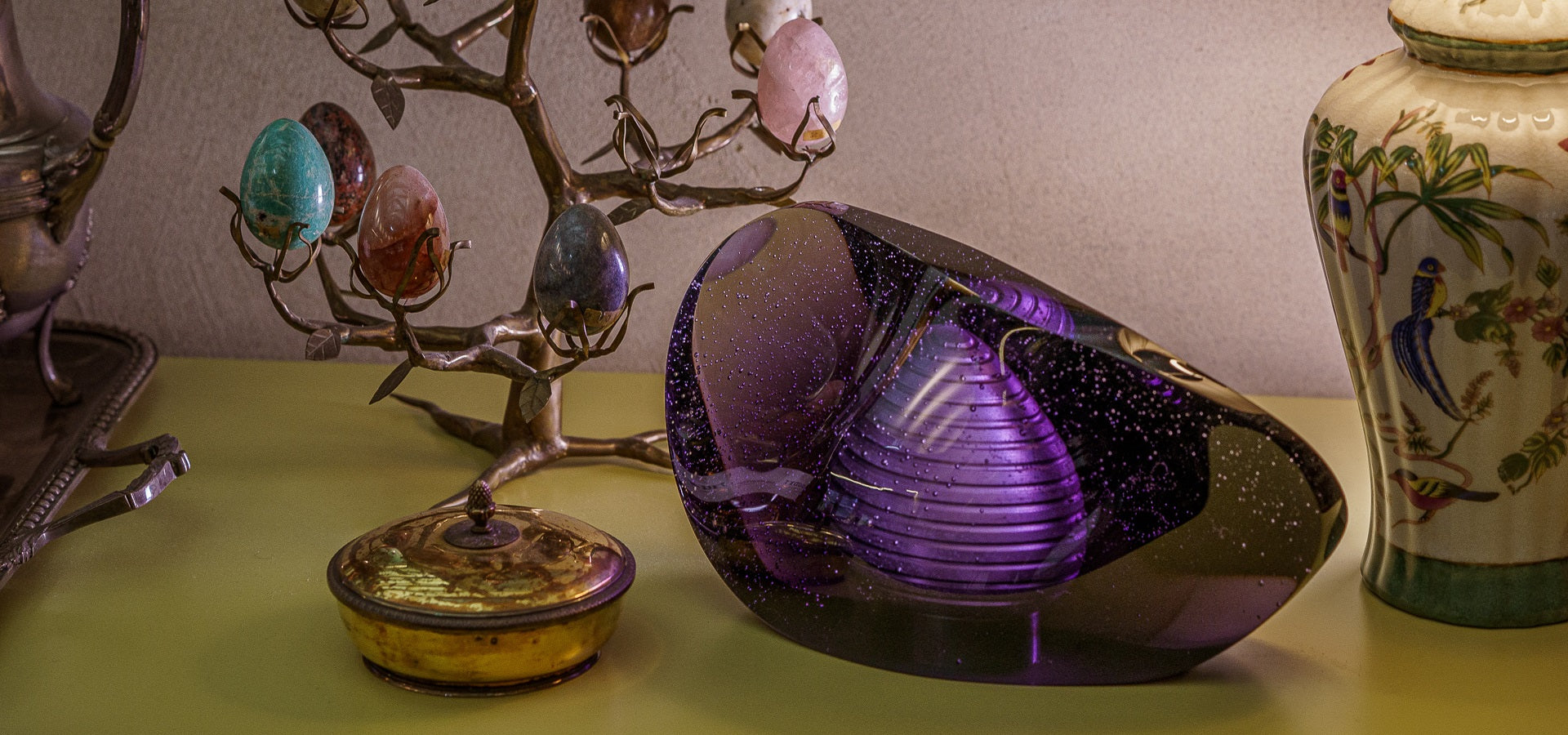
Lastly, both Korean and Chinese practices not only embrace the use of ceremonial rites but also the practice of cremation. Ceramic urns, in this context, play a vital role — serving as vessels for ashes and symbols of continuity. Much like the rituals themselves, they hold space not only for remains, but for memory, legacy, and love made tangible.


Easy Guide to Funeral Homes in North Dakota
From the rise of Green Burial to the pragmatics of a $5,600 saving with cremation, North Dakota’s 2026 landscape is shifting. This guide breaks down the "Peace Garden State’s" unique eight-day rule, 2026 cost averages, and how families are honoring prairie roots with sophisticated, sculptural legacies.

The Alchemy of Remembrance: The Definitive Master Guide to Choosing the Color of a Memorial Urn
Choosing a memorial urn is a profound act of love where color serves as the "visual frequency" of a legacy. From the tranquil depth of celestial blues to the radiant warmth of amber glazes, the right hue transforms a vessel into a storyteller. Explore our master guide to matching personality, tradition, and home decor to find a tribute that resonates with the soul it holds.

Easy Guide to Funeral Homes in Connecticut
In Connecticut, tradition meets modern, eco-friendly choices. As of 2026, cremation rises to 60–62%, with costs averaging ~$9,600 for burials and ~$3,100 for direct cremation. State law mandates a 48-hour wait before cremation. Families honor loved ones through historic plots or artistic urns reflecting Connecticut’s coastal, refined style.

Easy Guide to Funeral Homes in Alaska
From the debut of Natural Organic Reduction to the pragmatic shift toward coastal cremation, Delaware’s 2026 funeral landscape is changing. This guide breaks down the "First State’s" essential costs, the unique five-day rule, and how to plan a personalized "portable legacy" from Wilmington to the Atlantic shore.

Easy Guide to Funeral Homes in Idaho
In Idaho, rugged landscapes shape unique end-of-life traditions. By 2026, cremation and nature-focused memorials are rising, while traditional burial remains meaningful in farming communities. Costs: $765–$1,706 for cremation, $7,745–$9,750 for burial. Idaho law requires 24-hour waiting, coroner approval, and death certificate filing. Outdoor ceremonies are common. Artistic urns honor loved ones.


Share:
Grief Makes Us Time Travelers
Echoes of Farewell: How Britain’s Funeral Traditions Blend the Past and Present