

Here for you: art@pulvisurns.com | (562) 609-4019
7% off your order
Use this code at checkout:
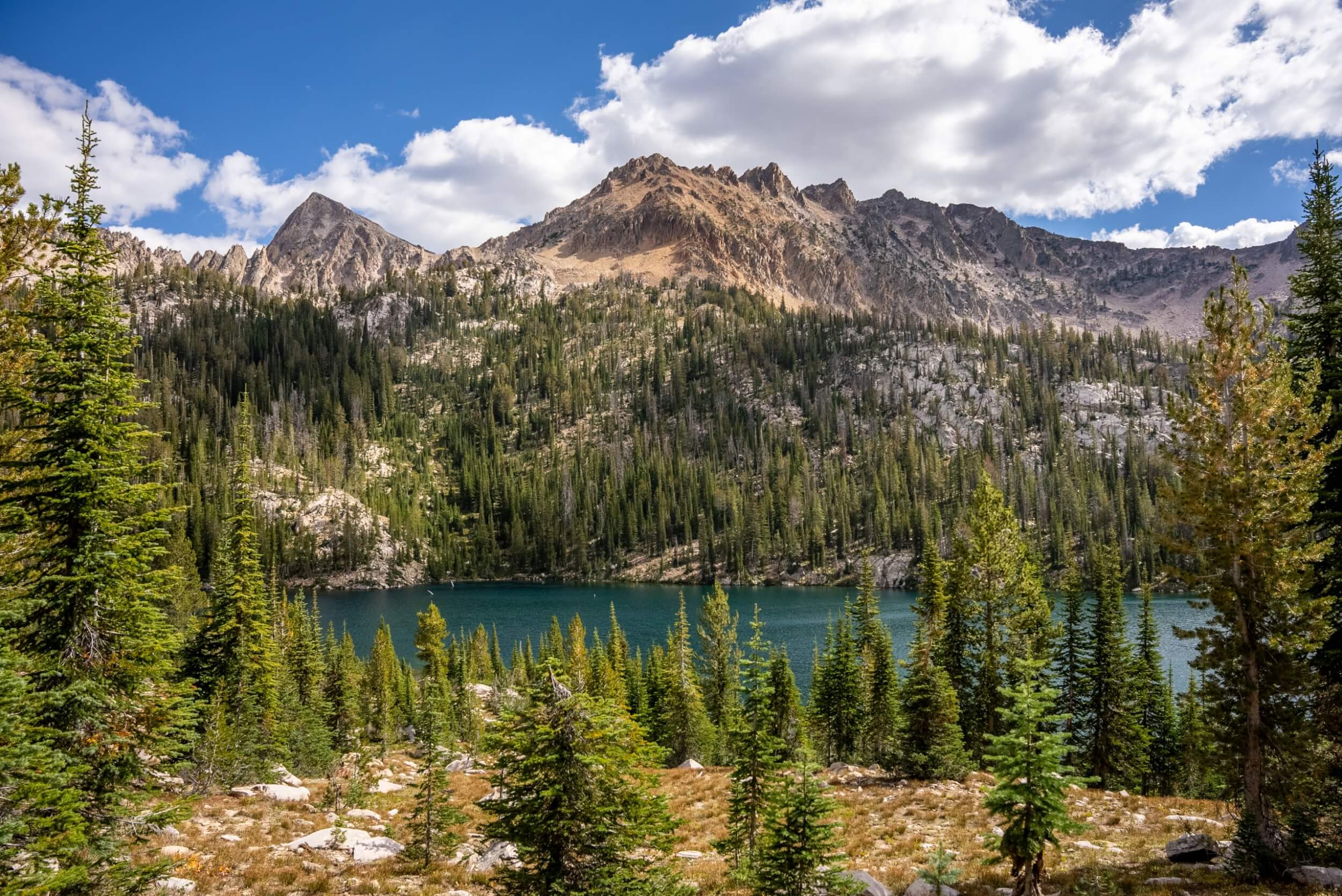
In Idaho, the "Gem State," a landscape carved by ancient volcanic activity and dramatic river canyons provides the backdrop for a unique cultural approach to mortality. Known for its rugged individualism and a deep-seated connection to the "Great Outdoors," Idaho is currently navigating a period where traditional Western values are meeting a rapid rise in environmental consciousness. As of 2026, Idaho is seeing a notable shift away from the "permanent real estate" of traditional cemeteries toward flexible, mobile, and nature-centric memorials. Whether you are in the high-tech hub of the Treasure Valley or the remote, timbered mountains of the Panhandle, this guide provides the essential 2026 data to help you navigate end-of-life choices in Idaho.
An Idaho Perspective on Independence and the Land
In Idaho, the choice between burial and cremation is often a reflection of the state’s pioneer heritage and a contemporary desire to "leave no trace" on its pristine wilderness.
Emotional and Psychological Factors: For multi-generational Idaho families, particularly in agricultural communities like Twin Falls or Blackfoot, traditional burial in a local churchyard remains a symbol of stability and community roots. However, for the influx of new residents in Boise and Coeur d'Alene, cremation has become the "standard of freedom". It allows for a Celebration of Life to be held in the locations that truly defined the person—from a fly-fishing retreat on the Salmon River to a quiet morning overlooking Lake Pend Oreille. Many families find peace in keeping their loved one’s remains in a sculptural Cremation Urn, treating the pulvis (ashes) as a permanent piece of artistic decor that allows the person’s memory to remain a vibrant part of the home.

Environmental Values: Idahoans take immense pride in their state’s natural beauty. Traditional burial, with its use of embalming fluids and concrete vaults, is increasingly viewed as "land-heavy". Cremation, especially when paired with a handcrafted ceramic vessel to hold the pulvis, is seen as a low-impact alternative. Furthermore, Idaho has become a hub for Green Burial—where remains are returned to the earth in biodegradable containers without chemicals—reflecting the state's conservationist spirit.
Financial Practicality: Idahoans are famously self-reliant and practical. According to 2026 data, the costs of a traditional funeral in Idaho can be a significant hurdle. Cremation is favored by many as the "economical" choice, allowing families to skip the $2,000–$10,000 cost of a premium casket and the recurring fees of cemetery maintenance. This allows for funds to be redirected toward Memorial Ideas that have a more lasting community impact, such as a donation to Idaho’s state parks or a high-quality, handcrafted urn for the pulvis.
Idaho consistently reports some of the highest cremation rates in the Pacific Northwest, trailing only slightly behind Washington and Oregon.
Cremation Rates: As of 2026, Idaho’s cremation rate remains high, mirroring the national trend where cremations are anticipated to account for the vast majority of funeral types by 2045. This reflects a culture that has largely moved past the stigma of cremation, viewing it as a dignified and modern way to handle the end of life.
Average Cost Breakdown: In 2026, Idaho families should budget for the following average expenses:
Traditional Funeral with Burial: A full-service funeral in Idaho averages $7,745. In premium areas, the total can reach $9,750 or higher when including premium caskets and vaults.
Direct Cremation: For a simple process with no ceremony, the average cost in Idaho is $1,706. Competitive "simple cremation" providers in regions like Boise often offer packages starting as low as $765 - $995.
Full-Service Cremation: A cremation that includes a formal viewing and memorial service typically averages $5,437 - $5,812.
Idaho law is designed to be straightforward, but it includes specific protections for the deceased and the public regarding the handling of the pulvis.
The 24-Hour Rule: Idaho law (IDAPA 24.08.01.452) requires that a body must be either embalmed or refrigerated at 36°F or less if final disposition (burial or cremation) has not occurred within 24 hours.
The Coroner's Authorization: No cremation may commence in Idaho until the county coroner in the county where the death occurred provides written authorization. For indigent cases, a coroner may authorize cremation ten days following death if no next of kin is established.
Death Certificate Filing: The funeral director or person in charge must file the death certificate within five days of death. Medical certification must typically be completed within 72 hours.
For the vast majority of Idahoans choosing cremation, the vessel for the pulvis is a critical design choice that bridges the gap between mourning and art.
Sizing Rules: The industry standard is: 1 lb of body weight prior to cremation = 1 cubic inch of ash. Most adults require a Standard Adult Urn with approximately 200 cubic inches of capacity.
Scattering on Public Land: Idaho is 60% public land. While there are no state-wide laws strictly controlling where you scatter the pulvis, it is recommended to check local city or county restrictions. Spreading ashes is permitted on lands owned by the Idaho Department of Parks and Recreation provided the location is pre-approved, though scattering in the water within a state park is prohibited.
Artistic Tributes: 2026 trends include "Trailhead Memorials" and the use of artistic ceramic urns that match the rustic, natural aesthetic of Idaho mountain homes. For those choosing water burial, federal law requires scattering at least 3 nautical miles from land.

Based on 2026 service excellence and directory data, here are several highly-regarded providers serving the state:
| Terrace Lawn Memorial Gardens Funeral Home | Caldwell | |
| Cremation Society of Idaho | Boise | |
| Idaho Funeral Service Association | Boise | |
| Hovey-Summers Funeral Home | Payette | |
| Bowman Funeral Home | Garden City | |
| Serenity Funeral Chapel | Twin Falls | |
| Downard Hansen Funeral Home | Pocatello | |
| Davis Funeral Home | American Falls | |
| Horsley Funeral Home | Malad City | |
| Horsley Funeral Home | Arimo | |
| Horsley Funeral Home | Aberdeen | |
| Myers Mortuary | Salmon | |
| Jones & Casey Funeral Home | Salmon | |
| Bert Flamm Mortuary | St. Anthony | |
| Bidlake Memorial Chapel | Challis | |
| Wilks Magic Valley Funeral Home | Twin Falls | |
| Bowman Info Funeral Chapel | Garden City | |
| Chapel of Remembrance | Kellogg | |
| Sherman-Campbell Funeral & Cremation Services | Kootenai | |
| Pacific Northwest Cremation & Funeral | Coeur d'Alene | |
| Davis-Rose Funeral Home | American Falls | |
| Yates Funeral Homes & Crematory Hayden Chapel | Hayden | |
| Hullinger Mortuary | Roosevelt | |
| Premier Funeral Home | Lapwai | |
| Carlson Funeral Home | Kellogg | |
| Mountain View Cemetery & Funeral Home | Pocatello | |
| Summers Funeral Homes Ustick Chapel | Meridian | |
| Relyea Funeral Chapel | Boise | |
| Morrison Payne Funeral Home & Crematory | Burley |
Whether you find peace in the silence of a Sawtooth mountain peak or in the sculptural beauty of a Cremation Urndisplayed on your mantle, your choice is a profound act of love. By understanding the 2026 costs and the specific legal requirements in Idaho, you can ensure your final tribute—and the care of the pulvis—is as soulful and enduring as the Gem State itself.
Which urn size do I need?
A simple rule: about 1 cubic inch of urn per pound of body weight.
Every product page lists the urn's capacity. Keepsake urns hold a small portion of ashes to share.
Need it by a specific date?
Free shipping · Delivery in 3–5 business days
Express delivery in up to 3 business days – choose it at checkout
Need help choosing?
Talk to our team – we're happy to help you find the right urn.
(562) 609-4019 art@pulvisurns.comSend us a message
Can You Grieve a Life That Never Had Words?
Discover why losing a beloved pet can be so profound, how wordless bonds shape our lives, and how Pulvis Art Urns brings craftsmanship and thoughtful design to the art of remembering an animal companion.
What Does the Bible Say About Cremation?
Explore what the Bible says about cremation, Christian beliefs about resurrection, and meaningful ways to honor a loved one’s memory through a thoughtful memorial.
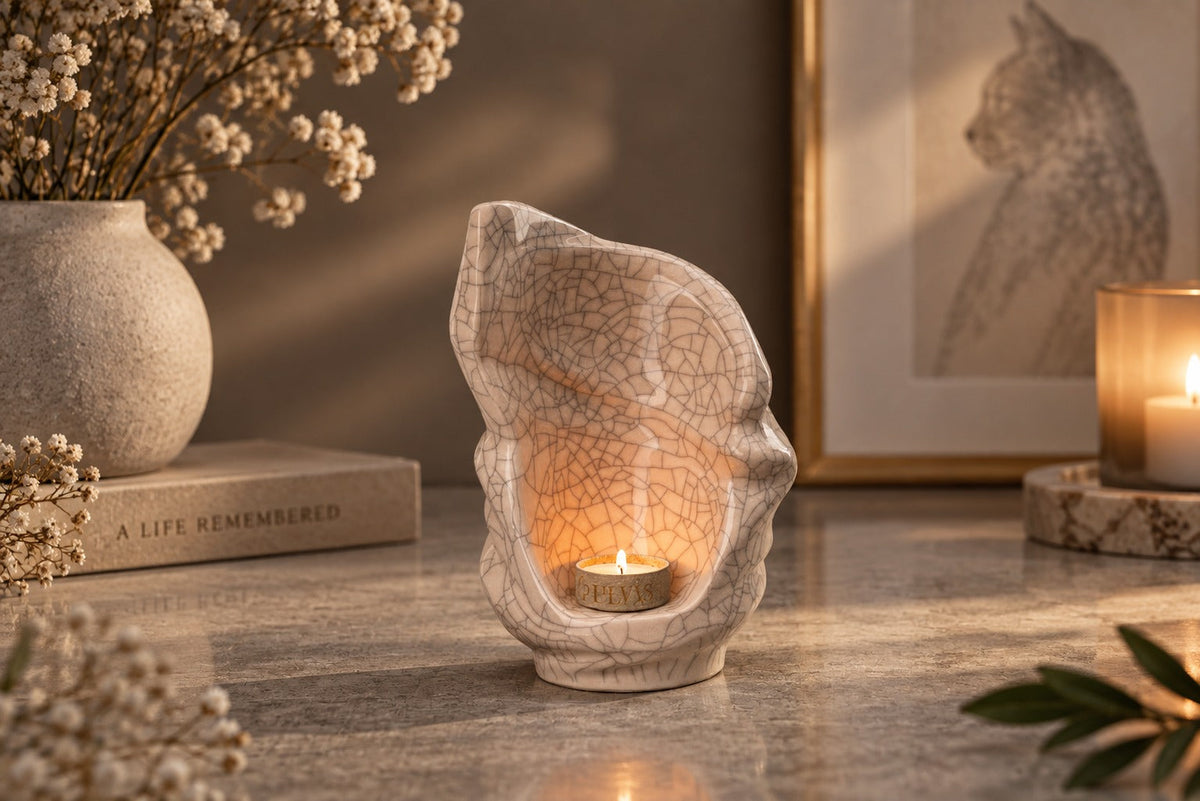
Why Do People Light Candles for the Dead?
Discover the meaning behind lighting candles for the dead, exploring the traditions, beliefs, and emotions that make this simple ritual a lasting expression of remembrance, comfort, and connection within the home.

The Pet as a Witness to a Human Life
Our pets witness far more of our lives than we realise. Explore what it means for an animal to become a quiet witness to our changing homes, relationships, routines and identities — and how a memorial urn can remain as a physical connection to the life they witnessed.

Can You Inherit a Pet’s Memory?
Can we remember a pet we never knew? Explore how stories, photographs, objects and memorials can carry an animal’s memory across generations, turning a private life into part of a family’s shared history.


Share:
Easy Guide to Funeral Homes in Kentucky
Easy Guide to Funeral Homes in Alaska