

Here for you: art@pulvisurns.com | (562) 609-4019
Grief is one of the most universal human experiences, yet no two people experience it in exactly the same way. The loss of a loved one changes not only our emotions but also the way we move through the world. Everyday routines become reminders of absence. Places that once felt ordinary suddenly carry immense significance. Even the smallest moments—a familiar song, the scent of a favorite perfume, or an empty chair at the dinner table—can bring memories rushing back with astonishing clarity.
In the days, weeks, and years after a loss, many people find themselves reaching for something tangible. They hold onto photographs, handwritten letters, jewelry, clothing, or cherished keepsakes. Others create memorial spaces within their homes, light candles on anniversaries, or choose a handcrafted urn that reflects the life and personality of the person they love.
To an outside observer, these may appear to be simple objects. But to those who grieve, they become something far more meaningful.
This raises an important question: Can an object actually help us grieve?
Modern psychology suggests that the answer is yes.
Meaningful memorials do not erase grief or lessen the depth of loss. Instead, they provide comfort, continuity, and connection. They become symbols of love that help us navigate one of life's most difficult journeys while reminding us that although someone may no longer be physically present, the relationship we shared with them continues to shape who we are.

Human beings are deeply connected to the physical world. We celebrate important moments with rings, photographs, heirlooms, gifts, and souvenirs because objects help us preserve memories that words alone cannot hold.
When someone dies, the sudden absence of their physical presence creates an emotional gap that can feel almost impossible to comprehend. The person who once occupied a chair at family gatherings, answered late-night phone calls, or greeted us at the front door is suddenly no longer there.
The mind understands what has happened.
The heart often takes much longer.
Psychologists explain that meaningful objects can act as bridges between the past and the present. They provide something tangible during a time when everything else feels uncertain. A favorite book, a wedding ring, a handwritten recipe, or a carefully chosen memorial urn allows people to maintain a connection while gradually adapting to a new reality.
These objects do not replace the person.
They help preserve the relationship.
For much of the twentieth century, grief was often described as something people needed to "get over." Traditional theories suggested that healing required emotionally detaching from the person who had died.
Today, grief researchers understand the process differently.
One of the most influential ideas in modern bereavement psychology is known as the theory of continuing bonds. Rather than encouraging people to sever emotional ties, it recognizes that healthy grieving often involves finding new ways to maintain a relationship with the person who has passed away.
We continue speaking to them in our thoughts.
We remember what they would have said.
We carry their values into our own lives.
We celebrate birthdays, anniversaries, and family traditions in their honor.
The relationship changes—but it does not end.
Meaningful memorials become part of this continuing bond. They provide a physical place where memories, love, and reflection can coexist. Far from preventing healing, they often support it by acknowledging that love does not disappear simply because someone is gone.

Our relationship with objects is more complex than we often realize.
Psychologists have long studied why certain possessions become emotionally priceless while others remain ordinary. The answer lies not in the object itself, but in the meaning we attach to it.
A simple photograph becomes priceless because it captures a moment that will never exist again.
A favorite sweater becomes comforting because it reminds us of someone's presence.
A handwritten letter becomes irreplaceable because it preserves a voice that can no longer be heard.
Objects become emotional storytellers.
They hold fragments of relationships, preserving experiences that shaped our lives. When someone dies, these possessions often become even more meaningful because they carry memories that cannot be recreated.
A memorial object functions in much the same way.
Its value is never measured by its material or price, but by the emotions, memories, and love it represents.

Grief is not only emotional—it is neurological.
Our brains are constantly predicting the world around us based on familiar routines. If someone has been part of our daily lives for years, the brain continues expecting them to be there.
This explains why many grieving people instinctively reach for the phone to call someone who has died, expect them to walk through the front door, or briefly forget that they are gone.
These experiences are surprisingly common.
The emotional brain still anticipates the presence of the loved one, while the rational brain understands the reality of their absence.
Meaningful memorials help bridge this difficult adjustment.
They provide the brain with a physical point of reference—a reminder that although the relationship has changed, it still exists in another form.
Rather than forcing memories away, memorial objects gently integrate them into everyday life.
Human beings naturally think through symbols.
A wedding ring represents commitment.
A national flag represents identity.
A graduation diploma represents years of dedication.
None of these objects possess their meaning on their own.
We give them meaning.
Memorials function in exactly the same way.
They become symbols of love, gratitude, remembrance, and shared history. Their emotional value comes from the stories connected to them rather than their physical form.
This symbolic power explains why people often feel comfort simply by sitting near a memorial object, touching it gently, or including it in moments of quiet reflection.
The object becomes a language that emotions can speak when words are no longer enough.

Every culture has developed rituals surrounding death.
Funerals.
Memorial services.
Candles.
Flowers.
Moments of silence.
Anniversary gatherings.
These rituals help transform overwhelming emotions into meaningful acts.
Yet grief does not end after the funeral.
Many people discover that the most difficult moments arrive weeks or months later, when everyday life resumes but the absence remains.
Personal rituals become incredibly important during this stage.
Lighting a candle every evening.
Visiting a memorial garden.
Reading old letters.
Spending a quiet moment beside an urn.
Speaking aloud to someone who is no longer physically present.
These simple actions create structure during emotional uncertainty. They remind us that grief is not something we must suppress but something we gradually learn to live alongside.
Throughout history, people have built monuments and memorials because remembrance has always required a place.
Today, that place is often much more personal.
A shelf filled with photographs.
Fresh flowers by a window.
A favorite painting.
A candle.
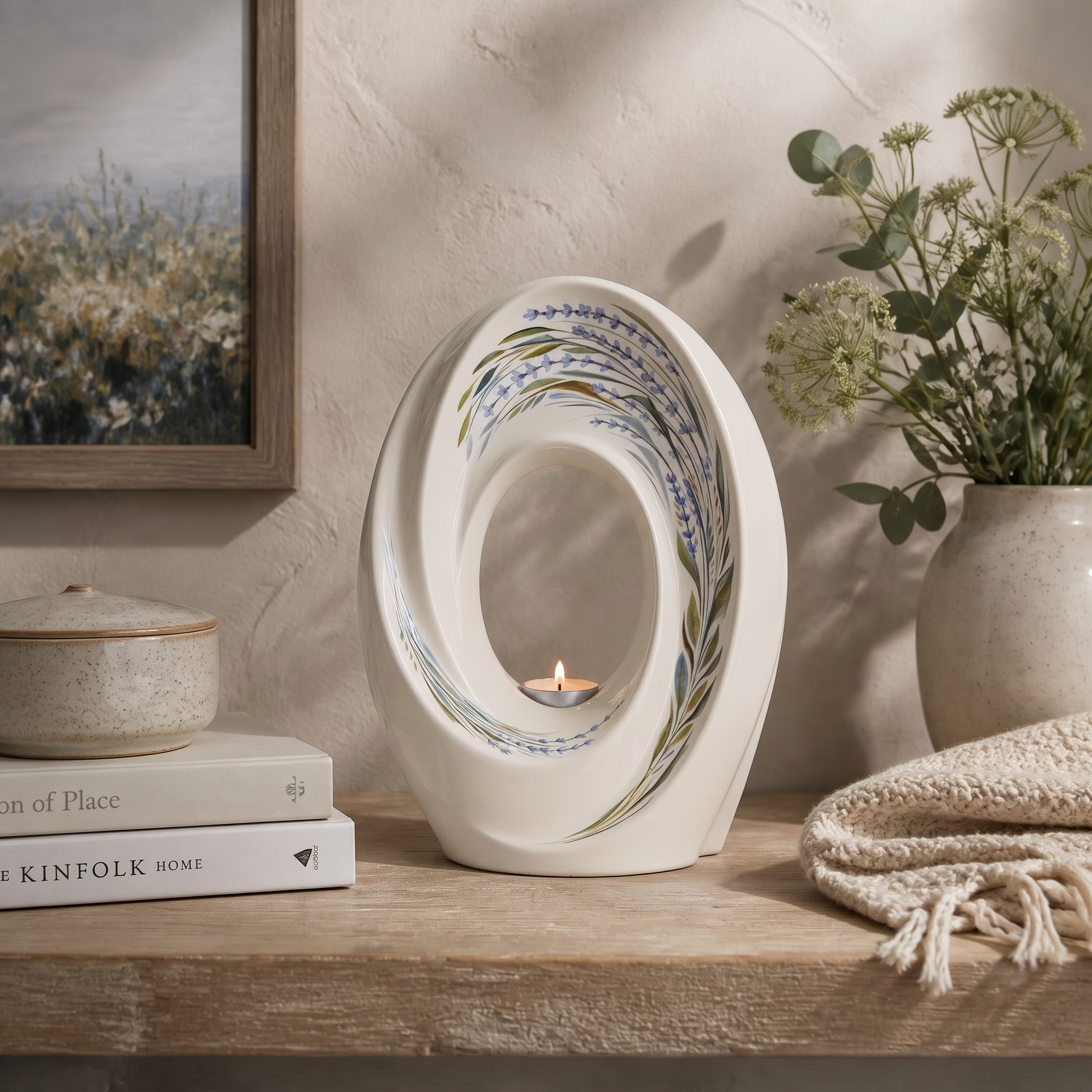
A handcrafted memorial urn placed in a peaceful corner of the home.
These small spaces become sanctuaries of memory.
They invite reflection without demanding it.
They allow family members to remember naturally as part of everyday life rather than only during formal ceremonies.
For many people, these quiet spaces become sources of comfort long after the funeral has ended.

Beauty has always played a role in remembrance.
Ancient civilizations created sculptures.
Artists painted portraits.
Architects designed magnificent memorials.
Craftspeople carved monuments by hand.
These traditions remind us that honoring life has never been purely practical.
Art has always been part of grief.
Today, this same philosophy continues through contemporary memorial design.
Families increasingly seek memorial objects that reflect personality rather than convention.
Someone who loved nature may be remembered through organic forms.
Someone with a passion for modern design may be honored through clean architectural lines.
Someone known for creativity may be remembered through handcrafted artistry rather than mass production.
This shift reflects a deeper understanding that memorials should celebrate individuality.
Every life is unique.
Every story deserves its own expression.
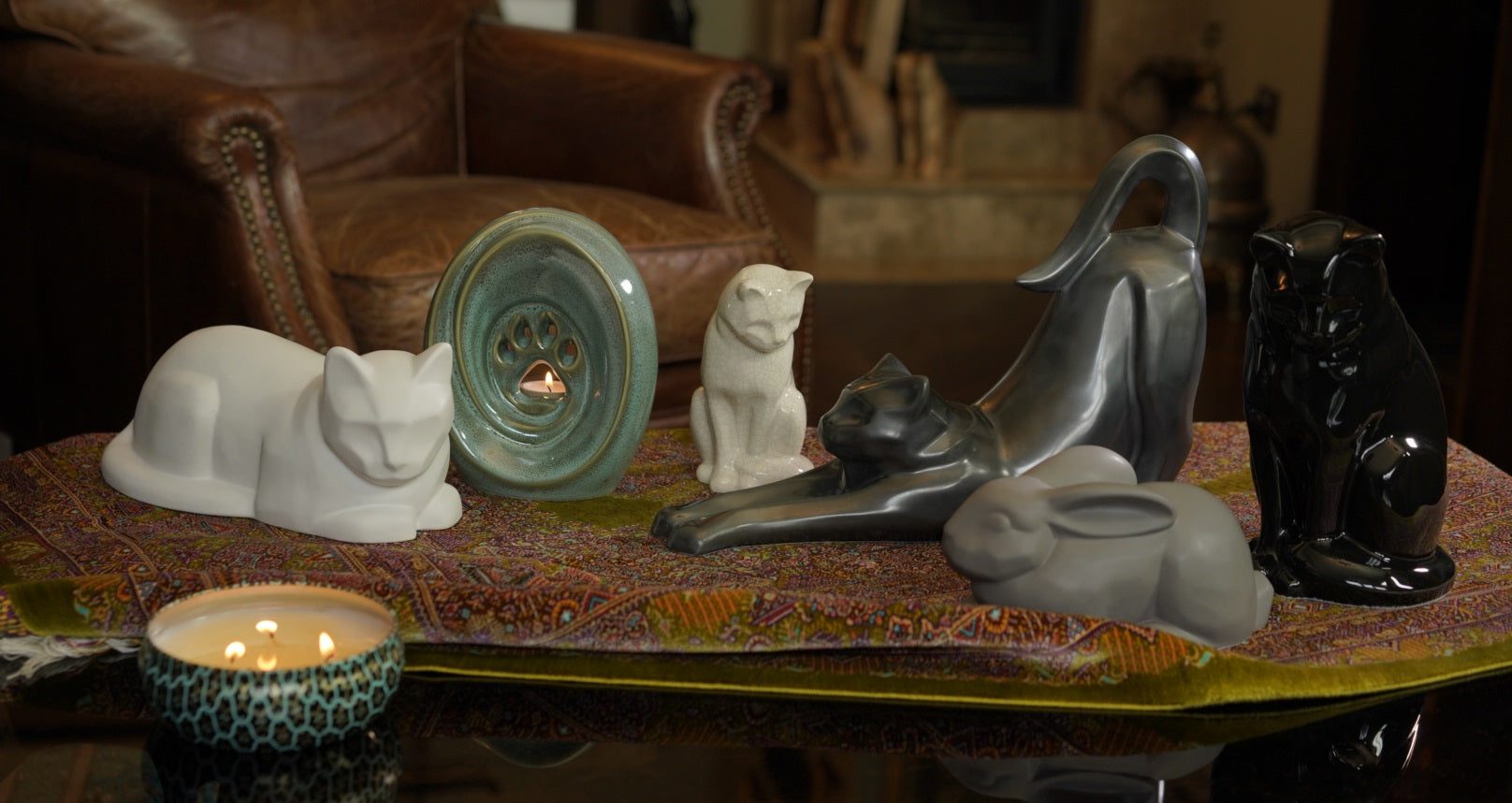
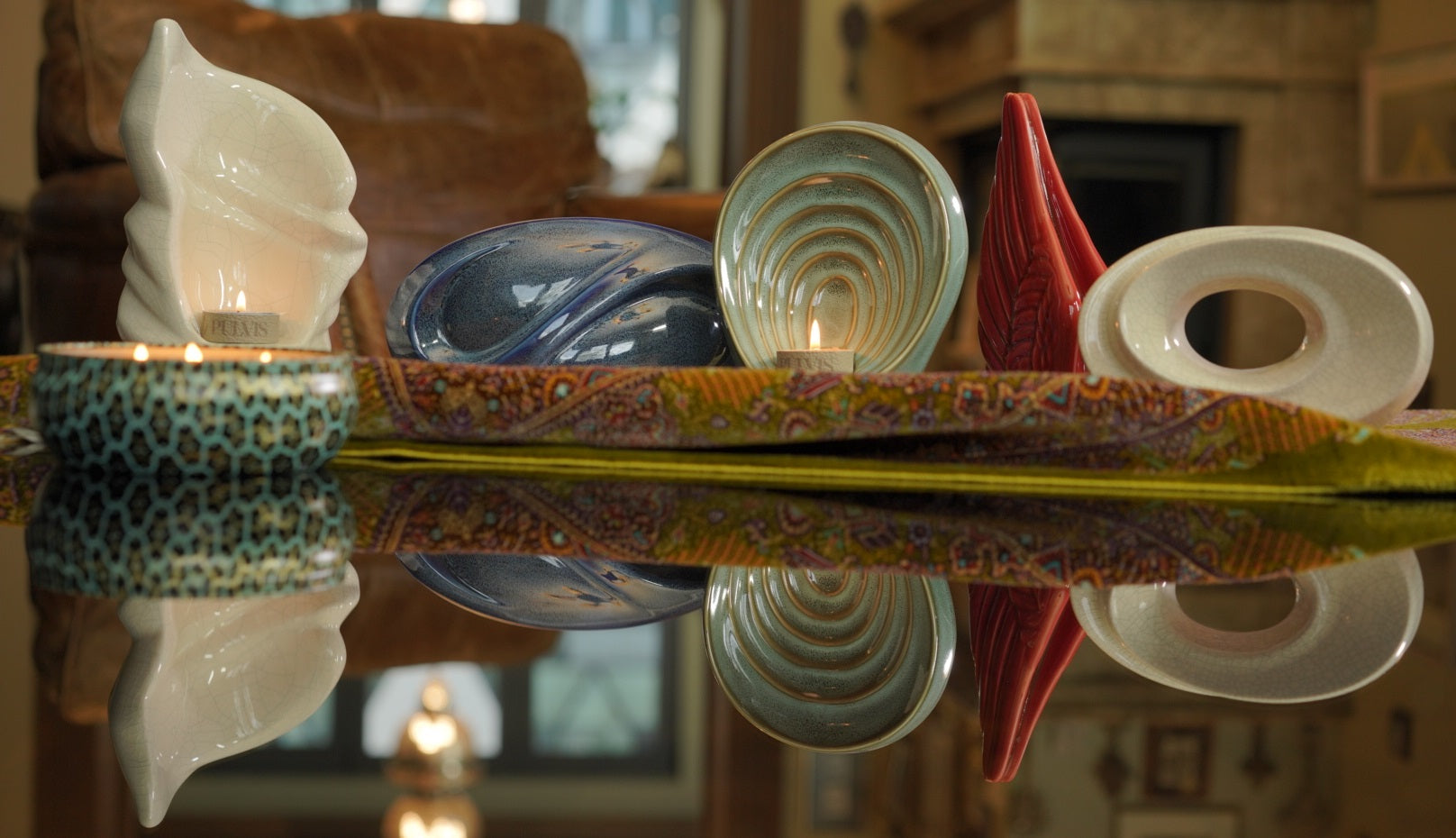
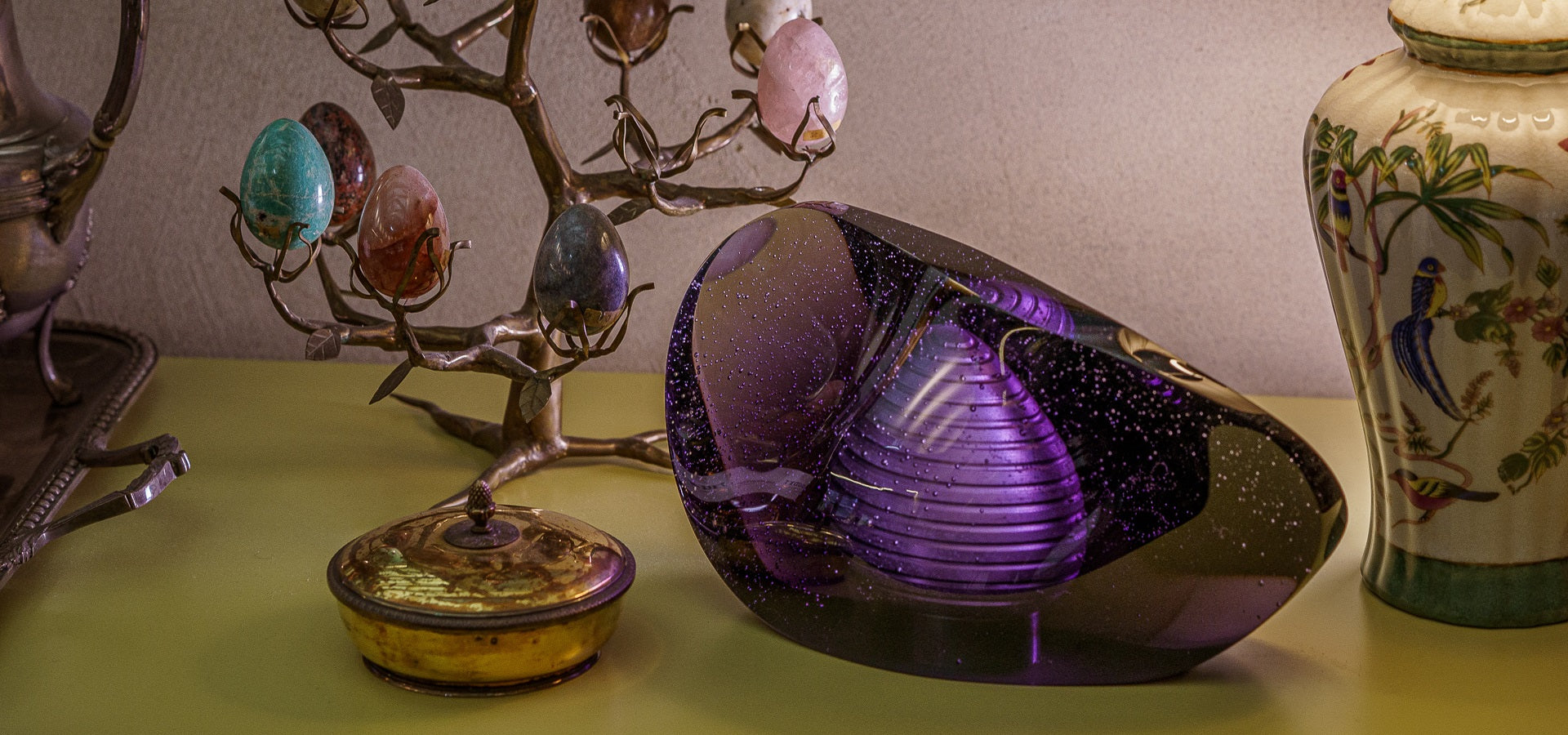
At Pulvis Art Urns, this philosophy inspires handcrafted memorial urns that combine contemporary design with timeless symbolism. Rather than viewing an urn as merely a functional vessel, each piece is created as an artistic memorial that honors a person's individuality while providing families with a lasting place of remembrance. Every curve, texture, and material is chosen with the understanding that memorial objects can become meaningful companions throughout the grieving journey.
Memory is remarkably fragile.
Specific conversations fade.
Dates become difficult to remember.
Faces slowly change in our minds.
Yet certain objects have an extraordinary ability to awaken memories almost instantly.
The texture of fabric.
The smell of old books.
The shape of a familiar piece of jewelry.
A favorite chair.
A treasured photograph.
These sensory experiences activate emotions in ways that language often cannot.
Memorial objects become keepers of these memories.
They quietly preserve stories until we are ready to revisit them.
In doing so, they help ensure that the lives of those we love continue to be remembered not only through photographs and names but through meaningful moments of connection.

The way we remember loved ones is changing.
Today's families increasingly seek memorials that feel deeply personal rather than purely traditional.
Instead of asking only where ashes should be kept, many now ask different questions.
How can this memorial reflect who they truly were?
How can it celebrate their personality?
How can it become part of everyday life rather than something hidden away?
This evolving perspective has led to growing appreciation for artistic urns, personalized memorials, keepsakes, and home remembrance spaces.
The focus is shifting away from death itself and toward celebrating the richness of a person's life.
After all, memorialization is ultimately about remembering how someone lived—not simply acknowledging that they died.
Some people worry that keeping memorial objects means refusing to let go.
Psychological research suggests otherwise.
Healing does not require forgetting.
Accepting loss does not mean ending love.
Healthy grieving allows both realities to exist together.
We acknowledge that someone is physically gone while continuing to carry them emotionally.
A memorial object does not keep a person trapped in the past.
Instead, it helps weave their memory into the future.
It reminds us that love can evolve without disappearing.
That remembrance can coexist with hope.
That moving forward does not require leaving someone behind.
Perhaps the greatest misunderstanding about memorial objects is believing that they are important because of what they contain.
In reality, they matter because of what they represent.
Shared laughter.
Family traditions.
Life lessons.
Quiet conversations.
Dreams fulfilled together.
Moments that changed us forever.
The object itself is only the visible part of something much larger.
Its true value lives in the invisible relationship it continues to honor.
That relationship becomes part of our own identity.
Because the people we love shape who we become, remembering them also means remembering ourselves.

Grief teaches us something extraordinary about love.
Love does not disappear when a heartbeat stops.
It changes.
It becomes memory.
It becomes gratitude.
It becomes tradition.
It becomes stories passed from one generation to the next.
Sometimes, it becomes something we can hold in our hands.
Whether it is a cherished photograph, a family heirloom, a handwritten note, or a thoughtfully crafted memorial urn, these objects remind us that remembrance is not about remaining in the past. It is about carrying the people we love into every chapter of the future.
An object cannot erase grief.
It cannot replace a voice, a smile, or an embrace.
But it can become a quiet companion through the healing process.
It can offer comfort on difficult days.
It can create space for reflection when words fail.
It can remind us that every meaningful relationship leaves an imprint that time cannot erase.
In the end, the most meaningful memorials are never simply objects.
They are expressions of enduring love.
They are physical reminders that every life leaves a story worth preserving, every relationship deserves to be honored, and every memory continues to shape the people who carry it forward.
Because grief is not the opposite of love.
It is love that has learned to exist in a different form.
And sometimes, that love finds its home in something beautifully made, quietly present, and filled with meaning.

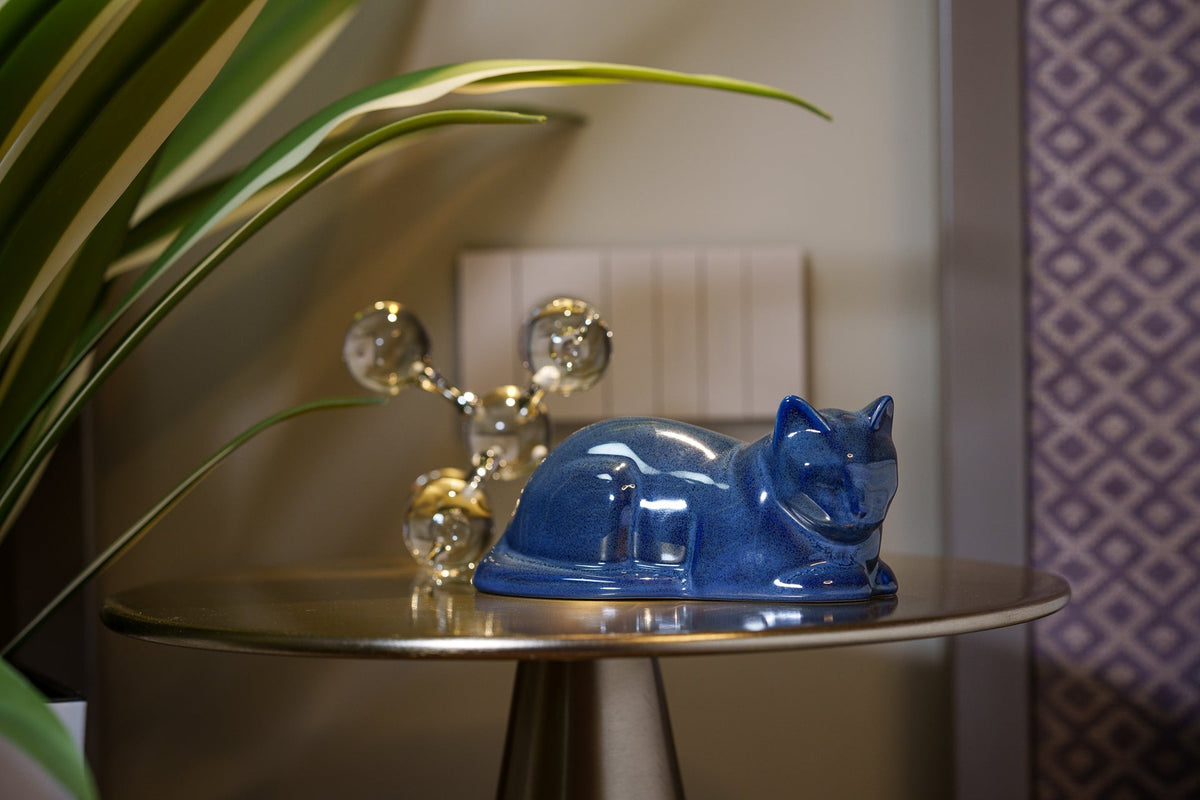
Can the Design of a Pet Urn Change the Way We Grieve?
Can the design of a pet urn influence the way we experience grief? Explore how meaningful materials, forms and memorial design can help transform loss into a lasting connection with a beloved companion.

What Are the Most Unique Urns Available Today?
Discover the most unique cremation urns available today, from handcrafted ceramic and sculptural designs to glass, nature-inspired, personalized, and keepsake memorials. Learn what makes an urn distinctive and how to choose a meaningful design based on capacity, material, placement, and personal significance.
How Do You Choose the Right Pet Urn?
A practical guide to choosing the right pet urn, covering size, capacity, materials, personalization, closure, and meaningful ways to memorialize your beloved companion.
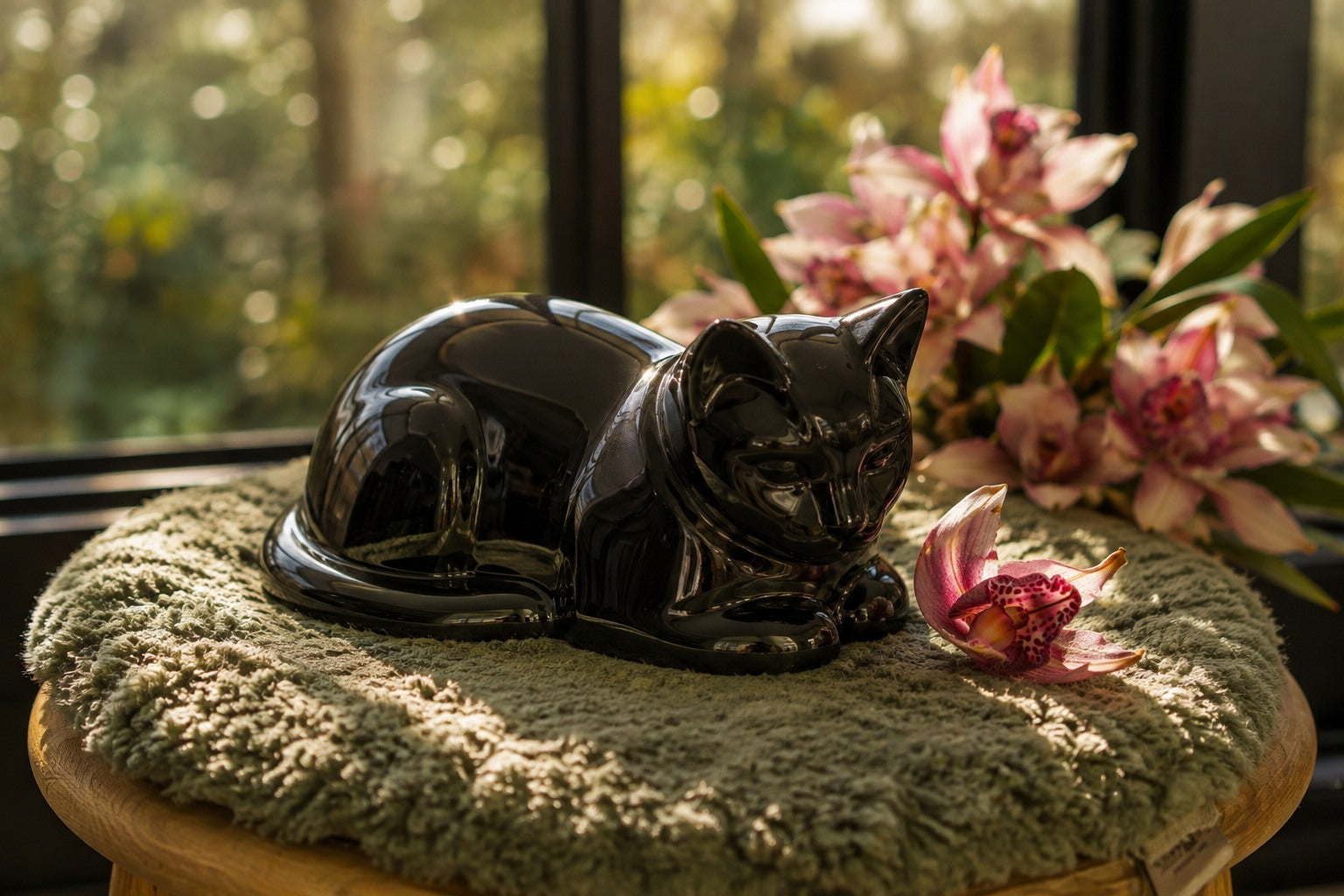
Why Pet Grief Doesn’t Always Get Easier. It Gets Different
Pet grief does not always become easier with time. It changes. Discover how loss evolves, why memories take on new meaning, and how memorial objects such as urns can become quiet reminders of a life once shared.
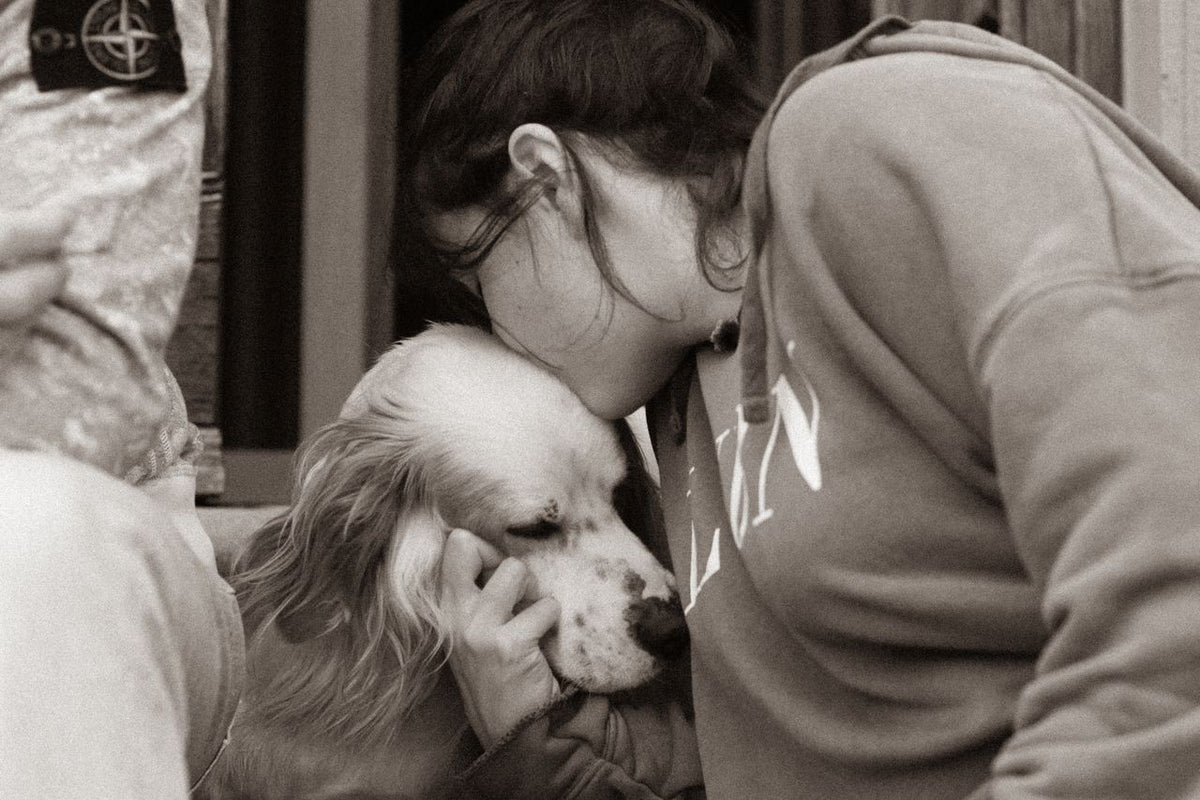
Why Your Pet’s Smell Can Bring Back an Entire Memory
Why can the smell of a pet bring back an entire moment? Discover how scent, emotion and memory are connected, and why the familiar smell of an animal can preserve some of our most intimate memories of life together.


Share:
Why We Dream About Loved Ones Who Have Passed Away: What Science and Psychology Reveal
The Conversation We Avoid: Why Talking About Death Is an Act of Love