


Here for you: art@pulvisurns.com | (562) 609-4019
7% off your order
Use this code at checkout:
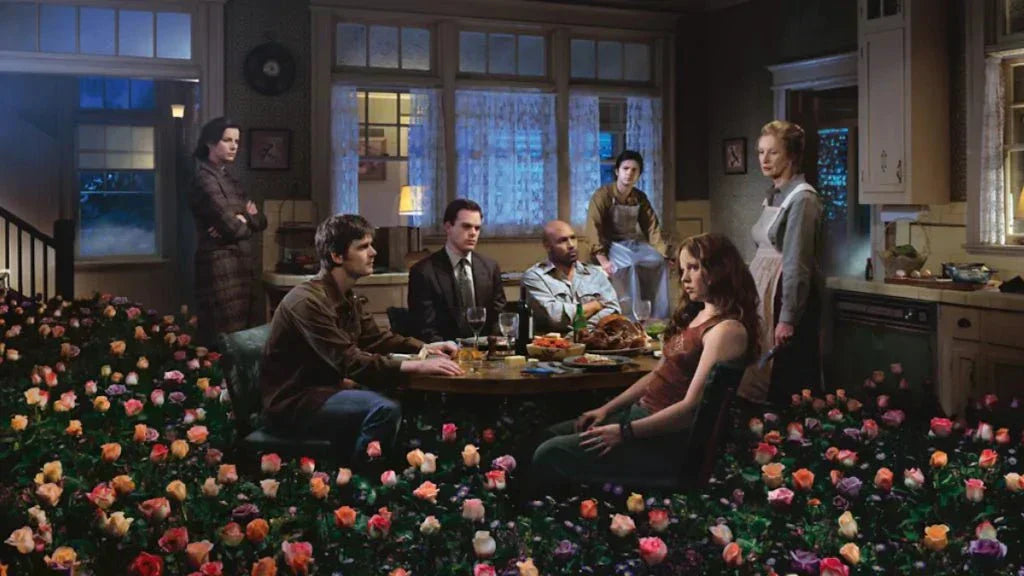
Food holds a sacred place in the rituals surrounding death. Across continents and belief systems, the act of preparing, offering, and consuming food in times of mourning becomes more than a routine—it transforms into a ceremony of remembrance, a collective balm for grief, and a symbolic passage for the deceased. The customs vary, yet they echo one another in their intent: to nourish the body, soothe the spirit, and create a communal space of memory and healing.
Modern neuroscience tells us that food releases dopamine—the hormone associated with pleasure—not once, but twice: first when it is tasted, and again when it reaches the stomach. In funeral settings, this biological comfort becomes emotionally and spiritually significant. The simple act of sharing a meal offers a tangible sense of solidarity and emotional regulation. Mourning rituals often integrate this understanding, whether implicitly or explicitly, creating food traditions that not only honor the dead but also support the living.

In Spain, bread plays a central role in funerary customs. Known as pan de ánimas (bread of souls), this votive offering is often shared during funerals or placed on altars. Rooted in Catholic symbolism, bread represents fertility, resurrection, and communal unity. Historically, it was believed that there must be bread in the house to facilitate the soul's journey from this world to the next. These traditions reflect the deep reverence for death that permeates Spanish culture.
The Spanish velorio (wake) includes communal eating, often accompanied by wine or coffee. A wide variety of food—tapas, cured meats, bread, cheese, and sweets—creates an atmosphere that encourages storytelling, shared mourning, and community bonding. In rural areas, extended family and friends contribute food to sustain mourners in the days following the burial.

In Italy, funeral meals are commonly organized by the bereaved family, with dishes such as pasta, meatballs, or simple sandwiches served to those who have come to pay their respects. While funeral food isn’t something that strongly distinguishes itself from everyday meals, there is a special tradition for commemorations. In Lombardy, pan dei morti (bread of the dead) is prepared with cocoa, spices, raisins, and crushed cookies for All Souls’ Day rather than during funerals themselves. In Siena, pan co’ santi, a sweet bread enriched with wine, walnuts, and anise, carries similar commemorative significance, while Sicilian traditions include elaborate bread offerings during the Feast of San Giuseppe. These breads are not usually part of funeral meals, but are deeply symbolic foods crafted to honor the departed and link the present to ancestral legacies.
In Germany, medieval funerals sometimes featured “corpse cakes,” wheat-based confections shaped like grave mounds and sweetened with honey or sugar. The wheat symbolized resurrection and continuity of life. The cake itself was sometimes seen as a mirror of the deceased's body. In more recent centuries, the post-funeral Kaffeetafel (coffee table) tradition emerged, where families and friends gather to drink coffee and share cakes, blending solemn remembrance with comforting hospitality.

In the West, particularly in the UK and Ireland, post-funeral gatherings often feature large buffets with alcohol. In the United Kingdom, it is customary to serve 'wake tea'—a light meal including sandwiches, cakes, and tea. These gatherings provide an opportunity for mourners to share memories, offer condolences, and support the grieving family. In the 18th–19th centuries, it was common to offer funeral biscuits—sugared or sponge-like biscuits wrapped in paper sealed with black wax—to mourners or those unable to attend. Certain regions maintained the tradition of burial or arvel cakes, spiced and wrapped treats, sometimes sealed with black wax; these often accompanied mourners and symbolized communal remembrance.

In the U.S., funeral meals are often potlucks, where family and friends bring dishes. In the South, fried chicken, macaroni and cheese, and casseroles are staples, while in the Midwest, “funeral potatoes”—cubed potatoes baked with white sauce and cornflake topping—are central. Amish traditions include funeral pie, a raisin-filled dessert passed down for generations, reflecting heritage and continuity.

In Mexico, pan de muerto (bread of the dead) is central to Día de Muertos, decorated with bone-like shapes symbolizing the continuity of life and death. In Xochimilco, some prepare funeral menus in advance, often avoiding meat dishes as a sign of respect for the body. Food here becomes both sacred offering and remembrance.

In the Andean regions, t’antawawas (bread babies) are shaped like the deceased—especially children—and offered on November 2nd as part of All Souls’ Day. These breads are often decorated with icing, masks, or even painted faces to resemble the departed, making the offering deeply personal. They are sometimes accompanied by guaguas de pan (another name for bread babies) and paired with hot beverages like colada morada in Ecuador or api morado in Bolivia, both thick, spiced drinks made from maize and fruit.
The tradition reflects the blending of Catholic All Souls’ Day with Indigenous Andean beliefs about the continuity of life and the connection between the living and the dead. Families bring these breads, along with fruits, coca leaves, and chicha (fermented maize beer), to cemeteries, where they gather at the graves of relatives to share a meal with the departed.
In Bolivia, the celebration is known as the Día de las Ñatitas (Day of the Skulls), where real human skulls, decorated with flowers and offerings, are honored alongside food. In Peru and Ecuador, the emphasis lies on bread babies and communal cemetery gatherings, which become both acts of remembrance and opportunities for family reunions.
Thus, Andean funeral food is not simply nourishment but a ritual of continuity, a way of affirming that the dead remain members of the community—fed, remembered, and celebrated.
.

The Jewish mourning period, Shiva, lasts seven days. Visitors bring food to the mourners’ home. The first meal, seudat havra'ah, includes bread, eggs, and lentils—foods symbolizing life’s cycle. Shared meals sustain mourners emotionally and physically, embodying communal care.

Asian cultures are rich in diverse funeral practices that vary significantly across different countries and communities. These funeral rites are deeply rooted in the historical and cultural context of each region, reflecting the complex tapestry of traditions, beliefs, and values. Understanding these practices is not only essential for appreciating the cultural heritage of Asia but also for fostering respect and sensitivity towards the diverse ways of dealing with death and mourning.
The significance of funeral rites in Asian cultures cannot be overstated. They are not just rituals performed to bid farewell to the deceased; they are also believed to play a crucial role in ensuring the deceased person's safe passage into the afterlife. The practices are influenced by various religious beliefs, including Buddhism, Hinduism, Taoism, and Confucianism, each contributing unique elements to the funeral customs.
Asia is home to a vast array of funeral practices, reflecting the continent's cultural, religious, and historical diversity. From the elaborate cremation ceremonies in Bali to the solemn, ritualistic funerals in Japan, each culture has its unique way of honoring the dead. Many of these practices have their roots in ancient traditions and have evolved over time, shaped by religious teachings such as the Buddhist focus on impermanence and the cycle of rebirth.

Southeast Asia provides particularly rich examples. In Indonesia, Hinduism influences Balinese funerals, especially the Ngaben cremation ceremony, a colorful and elaborate rite believed to purify the soul of the deceased so it may ascend to heaven. This involves constructing cremation towers and performing extensive rituals. In Thailand, Buddhist traditions dominate funerals, which often include chanting monks, almsgiving, and cremation. Ashes may be scattered in rivers or buried in cemeteries, embodying Buddhist ideas of impermanence.

Understanding Asian funeral practices promotes cultural sensitivity, respect, and a deeper appreciation of the values and beliefs that underpin these societies. These customs are not only farewells but affirmations of continuity, belief, and the importance of community.
In Japan, cremation rites include placing rice beside ashes and offering food like dumplings before burial. A formal meal is presented to the deceased, along with symbolic food to sustain the soul for 49 days of travel until it reaches nirvana. Symbolic foods such as sushi (life’s cycle), beans (luck), and sea bream (longevity) are also significant. Alcohol is often consumed during mourning, transforming meals into acts of remembrance.
Food offerings continue afterward at home altars with fruits, sweets, and water, and during Obon and Ohigan festivals, where families visit graves, share meals, and dine alongside ancestors in a picnic-like atmosphere. These traditions highlight the deeply rooted Japanese practice of ancestor veneration through food.

Korean sangrye funerals involve extended vigils where mourners share yukgaejang (spicy beef soup), rice cakes, tofu, and chestnuts, believed to comfort mourners and protect the spirit. Funeral halls typically serve bossam (boiled pork belly), kimchi, rice, soup, dried fish, nuts, and fruit such as tangerines and cherry tomatoes. Communal eating, often accompanied by alcohol, strengthens bonds and honors the deceased.


Chinese funeral meals rely on symbolism: long noodles represent longevity, chicken signifies continuity, and sweet dishes preserve memory of joy. Meals are consumed with quiet reverence, reinforcing cultural values of harmony and respect.

Thai funerals emphasize Buddhist merit-making. Families invite monks to chant prayers and serve them meals, believing merit will help the deceased in the next life. Afterward, mourners share a communal meal, uniting spiritual belief with collective remembrance.


Romani funerals include a three-day vigil with constant food and wine for visitors, and water placed near the coffin for the soul. These customs emphasize hospitality, spiritual care, and constant presence with the deceased.
Conclusion: Nourishing the Living, Honoring the Dead
Funeral foods are not only offerings for the dead but nourishment for the living, a quiet reverie where sorrow meets solace. In them, we glimpse the eternal truth: that memory, like bread, is meant to be shared, passed from hand to hand, heart to heart, keeping those we have lost forever present at our table.
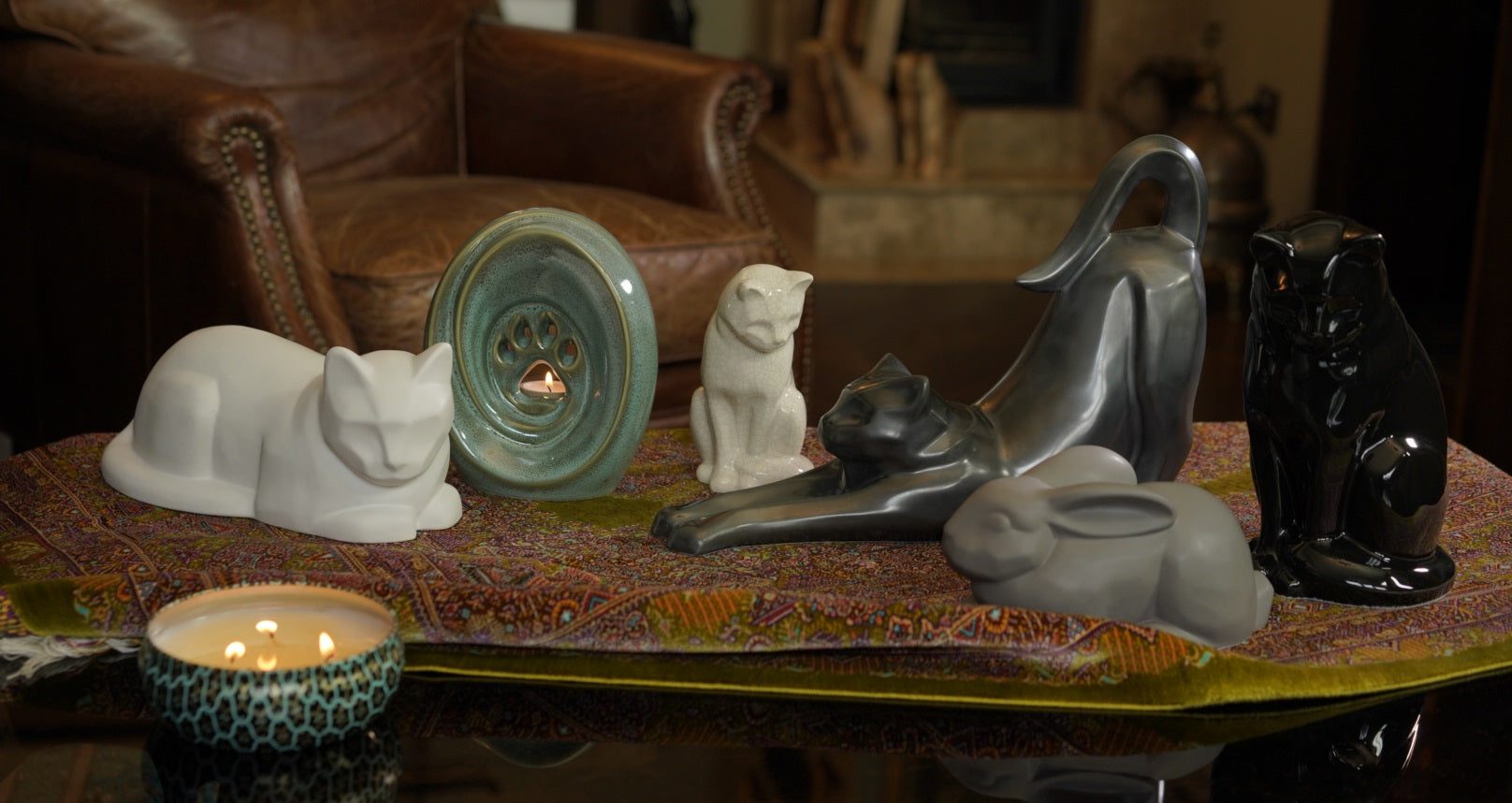
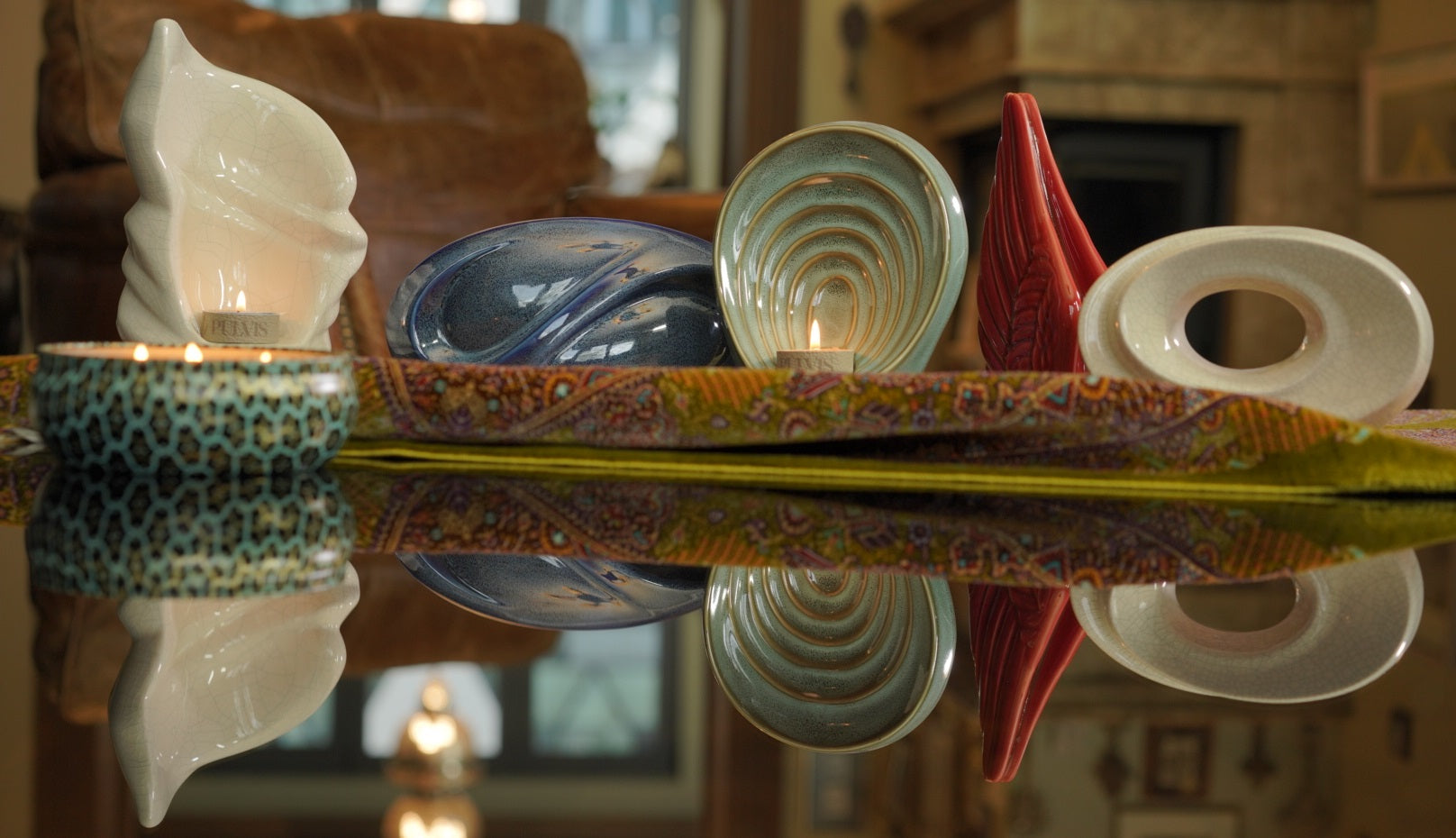
And just as food has carried meaning across centuries, so too do the vessels we choose to honor our loved ones. From ritual breads to communal tables, every culture has found ways to preserve presence beyond absence. Today, urns serve this same purpose—timeless vessels of remembrance, crafted not only to hold ashes but to embody love, memory, and continuity.

Which urn size do I need?
A simple rule: about 1 cubic inch of urn per pound of body weight.
Every product page lists the urn's capacity. Keepsake urns hold a small portion of ashes to share.
Need it by a specific date?
Free shipping · Delivery in 3–5 business days
Express delivery in up to 3 business days – choose it at checkout
Need help choosing?
Talk to our team – we're happy to help you find the right urn.
(562) 609-4019 art@pulvisurns.comSend us a message
Can You Grieve a Life That Never Had Words?
Discover why losing a beloved pet can be so profound, how wordless bonds shape our lives, and how Pulvis Art Urns brings craftsmanship and thoughtful design to the art of remembering an animal companion.
What Does the Bible Say About Cremation?
Explore what the Bible says about cremation, Christian beliefs about resurrection, and meaningful ways to honor a loved one’s memory through a thoughtful memorial.

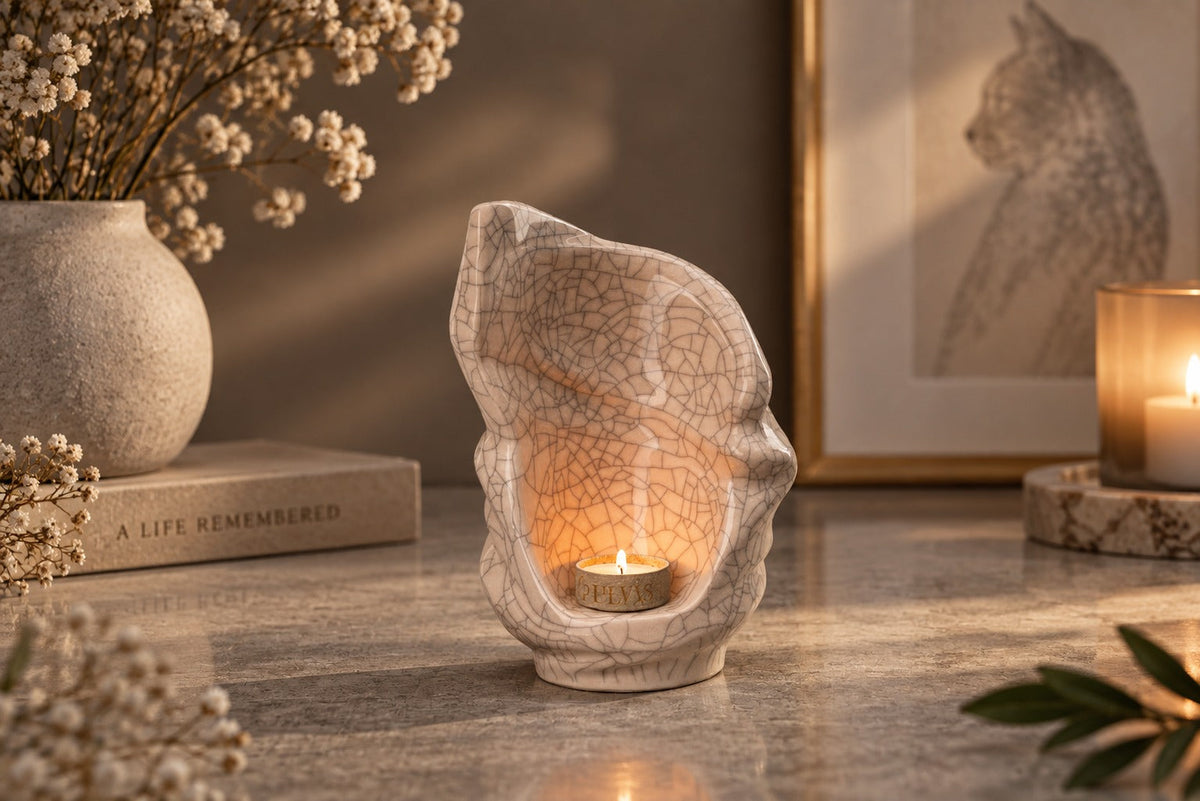
Why Do People Light Candles for the Dead?
Discover the meaning behind lighting candles for the dead, exploring the traditions, beliefs, and emotions that make this simple ritual a lasting expression of remembrance, comfort, and connection within the home.

The Pet as a Witness to a Human Life
Our pets witness far more of our lives than we realise. Explore what it means for an animal to become a quiet witness to our changing homes, relationships, routines and identities — and how a memorial urn can remain as a physical connection to the life they witnessed.

Can You Inherit a Pet’s Memory?
Can we remember a pet we never knew? Explore how stories, photographs, objects and memorials can carry an animal’s memory across generations, turning a private life into part of a family’s shared history.



Share:
How to Safely Ship Cremation Urns and Memorial Products
Urns – A Cult of the Individual or an Act of Tribute?