


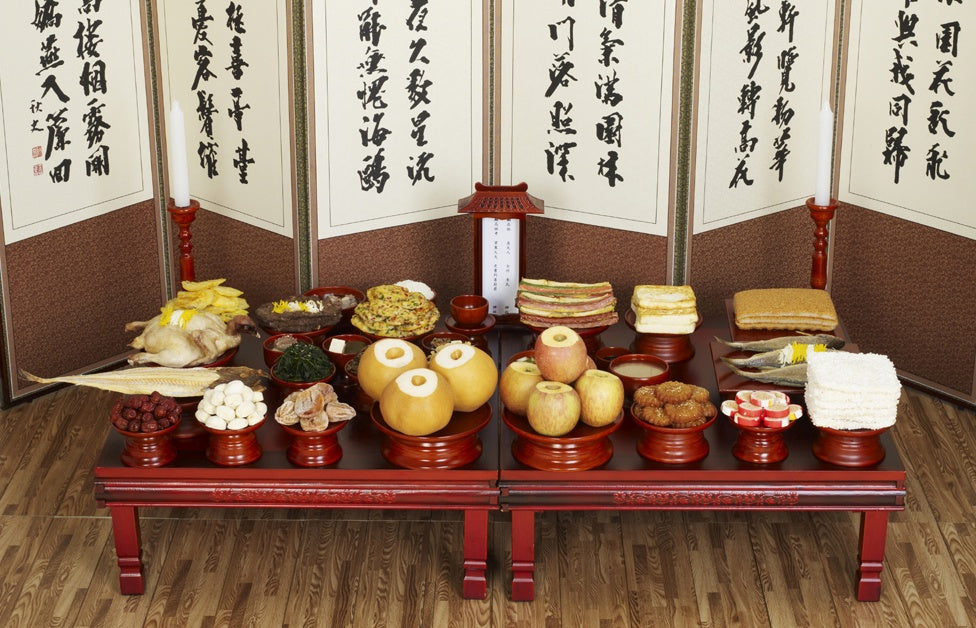
In traditional Korean culture, honoring ancestors through rituals (차례, charye) is deeply connected with the arrangement of the ritual table and the symbolic meanings of the foods offered on the altar. This arrangement, known as “jinseol”, and the ritual food offerings “jesu” ( 제수) are not merely customs but embody the entire cosmic harmony and the history of human existence.

The arrangement of the table for “charye” (차례) traditionally consists of five rows. Each row can be seen as representing the foods that ancestors consumed during different historical stages, arranged in chronological order. For example, fruits, vegetables, and wild plants that symbolize food from the earliest hunting and gathering period are placed at the front and in the second row. Foods that began to be cooked with fire — such as pancakes and pan-fried dishes (전류) — represent the next stage. Dishes related to the agricultural era — such as staple foods (“bap”, 밥), soup (“guk”, 국), and various side dishes such as skewered or grilled meat or fish or soups, broths ad stews (“tang”, 탕; 적) — occupy the remaining three rows.

This arrangement reflects the evolution of the human diet over time:
The first two rows represent the earliest era of hunting and foraging, marked by offerings of fruits, herbs, and wild greens. Next come dishes prepared with the use of fire, symbolizing the shift to cooked foods. The final three rows reflect the age of agriculture, featuring staple grains, soups, and various side dishes that became central to ancestral meals.

The first row is the farthest from the ritual site and contains the main foods — rice (메, 밥) and soup (갱, 국). During Chuseok (the traditional autumn festival), rice is replaced by songpyeon (송편) — crescent-shaped rice cakes symbolizing the full moon, which is emblematic of the festival.
The positioning of the foods is highly symbolic: soup is always placed on the east side (right), and rice on the west side (left). When both rice and songpyeon- Korean crescent-shaped rice cake- are served together, the rule “Banseo-gaengdong” (반서갱동) applies — rice and the cup of alcohol are placed on the left (west), and soup and songpyeon on the right (east). This arrangement emphasizes the distinction between the world of the living and the world of the dead, respectively west and east.
Special ritual items are also placed on this row — for example, a small bowl of salt (시접), spoon and chopsticks (sujeo, 수저), which are part of the ritual vessels "jegi" (제기).

The second row contains meat dishes — grilled meat pancakes "yukjeon"(육전), roasted meat "yukjeok" (육적), roasted vegetables "sojeok"(소적), as well as fish pancakes (eojeon, 어전) and roasted fish (eojeok, 어적). The arrangement follows specific principles:
These rules originate from traditional Korean philosophy of Yin and Yang and the Five Elements "Eumyang ohaeng-seol" (음양오행설), where each position and orientation of the food carries deep symbolism for the cycle of life, nature, and the cosmos.
The traditional food arrangement also reflects philosophical principles:
Foods originating from the earth (root vegetables and other plant types) symbolize Yin - the passive, feminine energy, and are placed in even numbers. Foods considered gifts from the sky (such as meat and fish) represent Yang - the active, masculine energy, and are placed in odd numbers
In this way, the table setting embodies the entire universe and the harmony of all its forces.

The fourth row contains dried meat or fish (“po”, 포) on the left side and the traditional sweet rice drink “sikhye” (식혜) on the right, with various vegetable garnishes (“namul”, 나물) arranged between them.
Of special importance are the three-colored vegetables (“samsek namul”,삼색 나물), which are placed in front of the ancestral tablets (“shinwi”, 신위). They come in three colors — white, black, and green — and the number three symbolizes Yang and nobility. White vegetables are root vegetables (e.g., balloon flower root and radish), black are stalk vegetables (e.g., bracken fern), and green are leafy (e.g., spinach, watercress).
On the fifth row, fruits are arranged according to a special rule (“joyul-ishi,”조율이시), which specifies the order from left to right: date, chestnut, persimmon. The rule Hongdong-baekseo (홍동백서) is also observed — red fruits are placed on the east side (right), and white fruits on the west side (left).

Peaches are not used, nor fish whose names end with "chi" (e.g., samchi, galchi, gongchi).
Spices with hot chili powder and garlic are avoided. Instead of red beans, a white filling is used — symbolically consistent with the ritual’s principles.

The ritual offerings vary depending on region and family traditions, as each area uses local specialty products, and sometimes the food placement differs slightly. This often leads to disputes, and the proverb: “Do not interfere in another’s ritual — don’t tell whether to place dried persimmons or jujubes,” emphasizes respect for diverse customs and practices.
The arrangement of the ritual table and the choice of sacrificial foods in Korean ancestral rites are much more than simply serving food. They are deeply symbolic and philosophically linked to human history, natural cycles, and the cosmic principles of Yin and Yang. Through the rules governing placement, numbers, and food selection, these rituals preserve the memory of ancestors, affirm the bond between the living and the dead, and reflect the harmony of the universe.

In contemporary Korea, cremation has become the prevalent method of handling remains, partly due to limited burial space and changing religious and social practices.
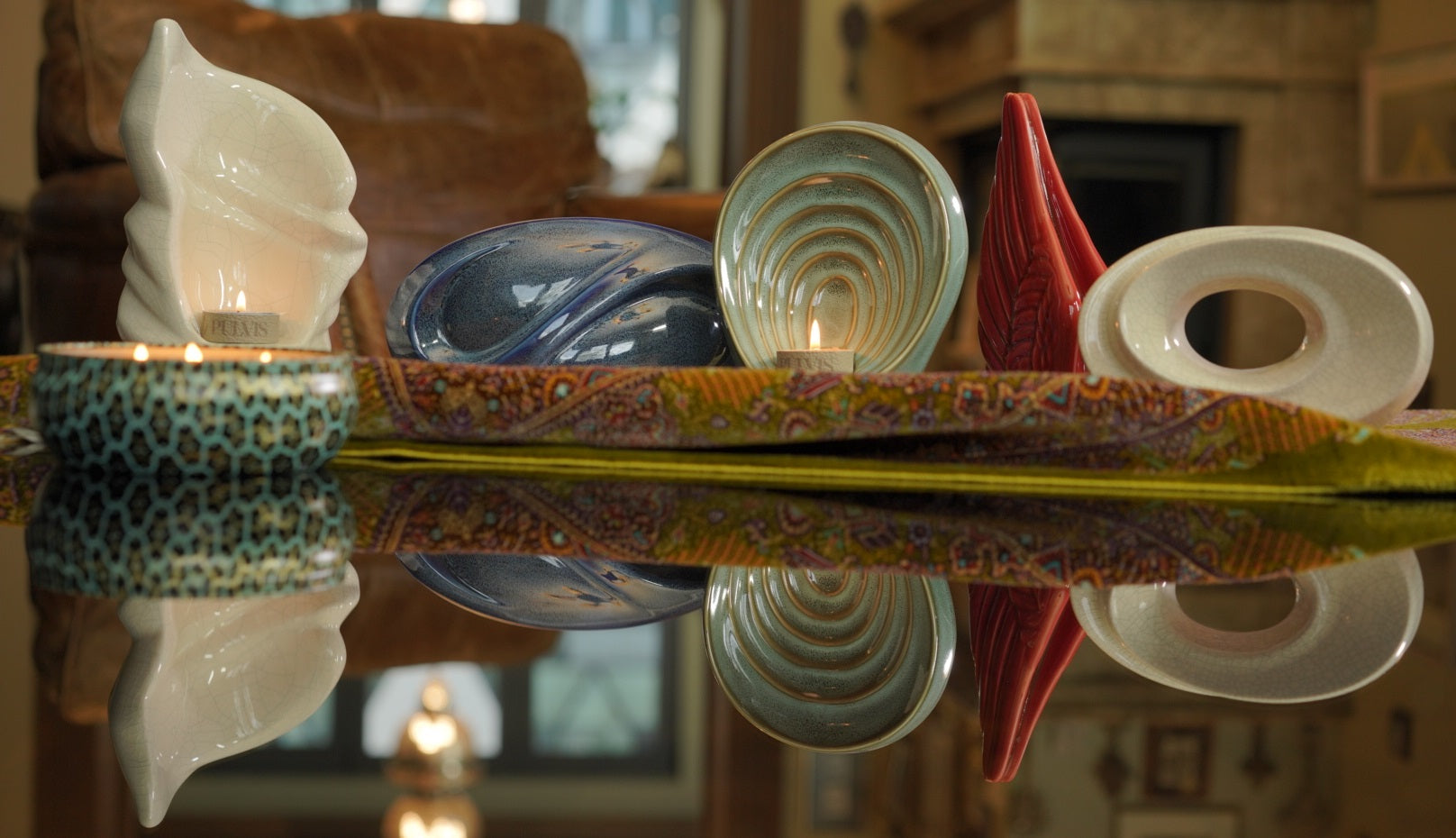
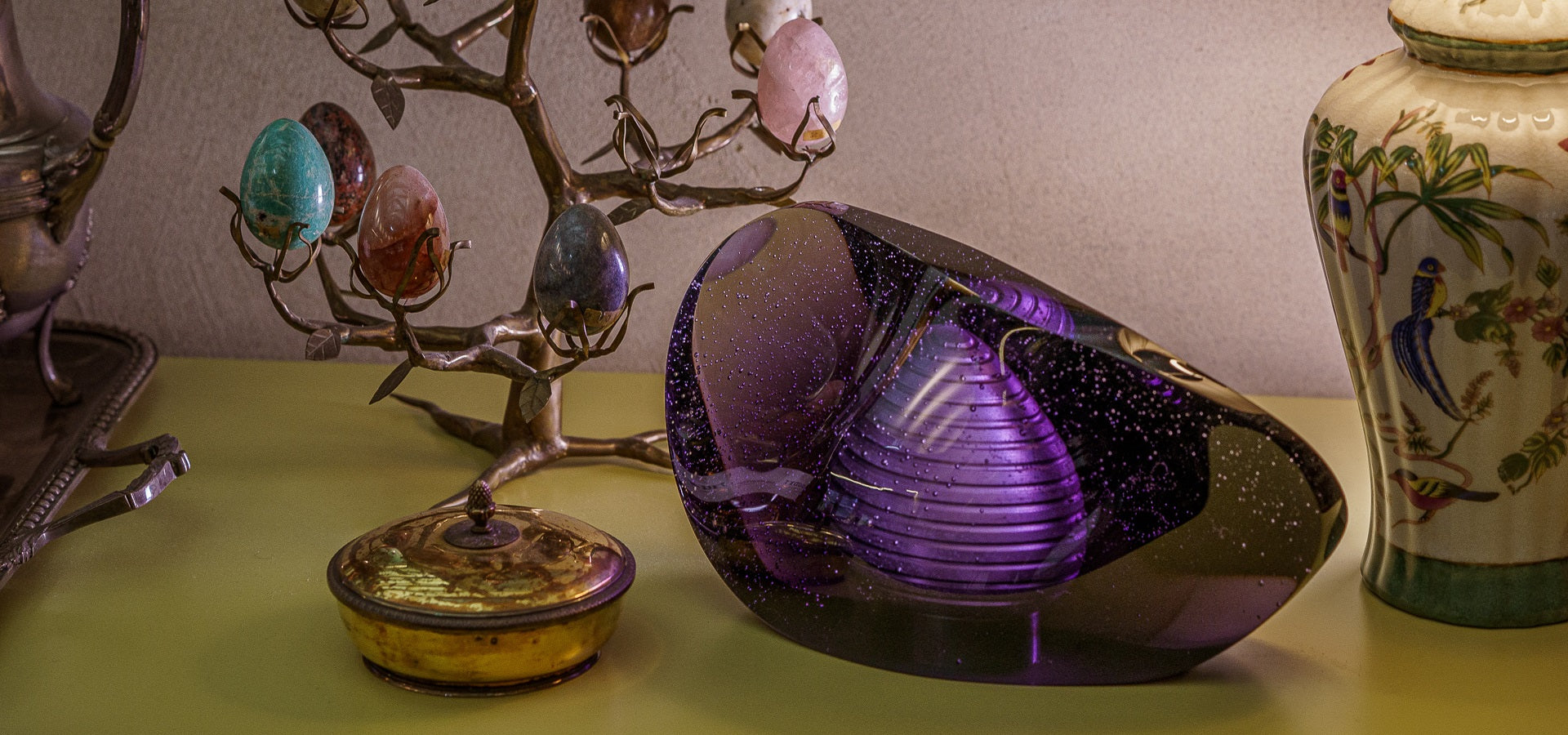
After cremation, the remains are collected and placed in a special urn “Hangari” (항아리). These urns may be kept in family graveyards, temples, or dedicated columbariums “Napgoltang”(납골당). The urn is not merely a container but a sacred vessel symbolizing the continuation of life and the connection between generations.


Easy Guide to Funeral Homes in North Dakota
From the rise of Green Burial to the pragmatics of a $5,600 saving with cremation, North Dakota’s 2026 landscape is shifting. This guide breaks down the "Peace Garden State’s" unique eight-day rule, 2026 cost averages, and how families are honoring prairie roots with sophisticated, sculptural legacies.
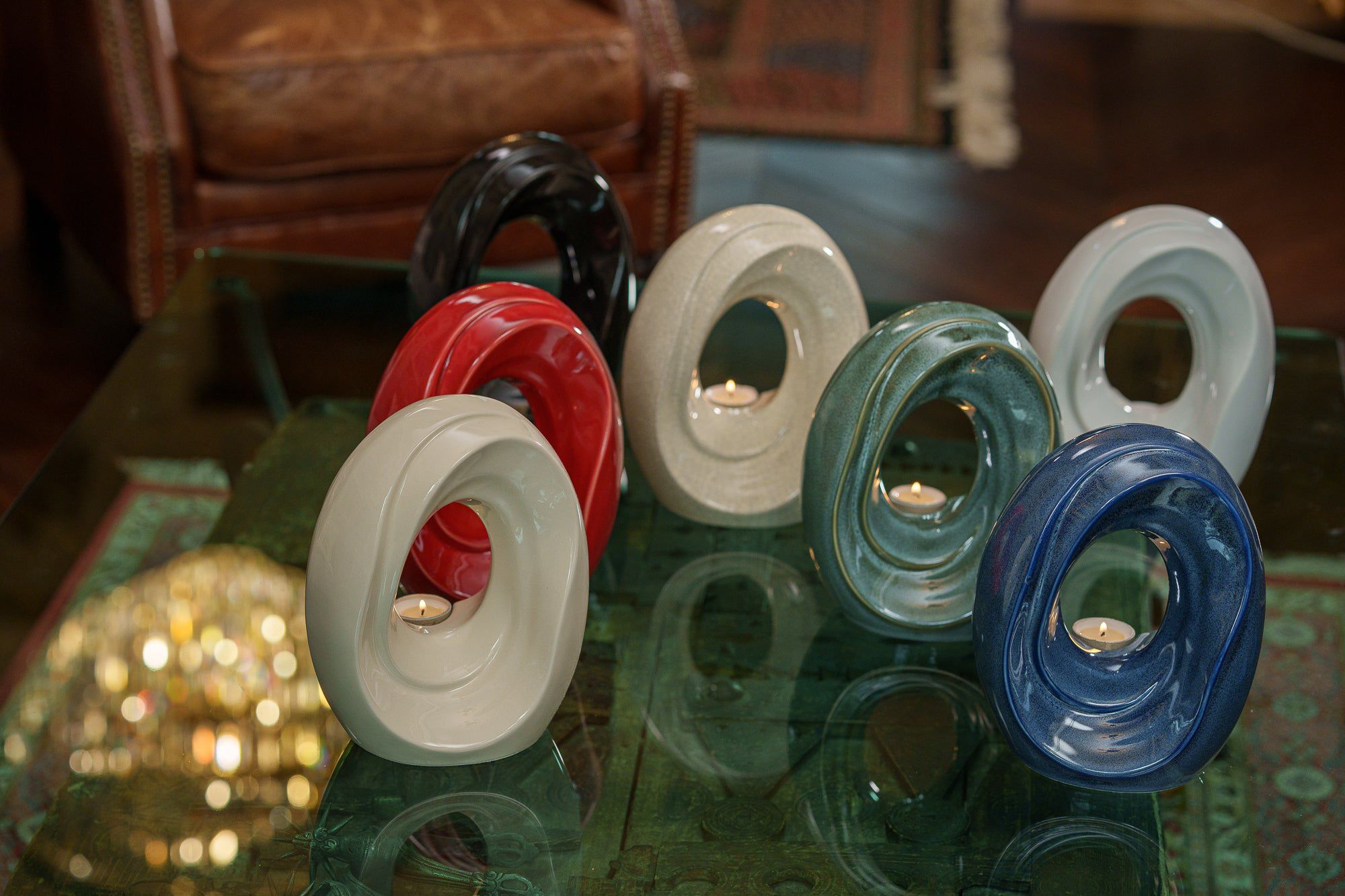
The Alchemy of Remembrance: The Definitive Master Guide to Choosing the Color of a Memorial Urn
Choosing a memorial urn is a profound act of love where color serves as the "visual frequency" of a legacy. From the tranquil depth of celestial blues to the radiant warmth of amber glazes, the right hue transforms a vessel into a storyteller. Explore our master guide to matching personality, tradition, and home decor to find a tribute that resonates with the soul it holds.
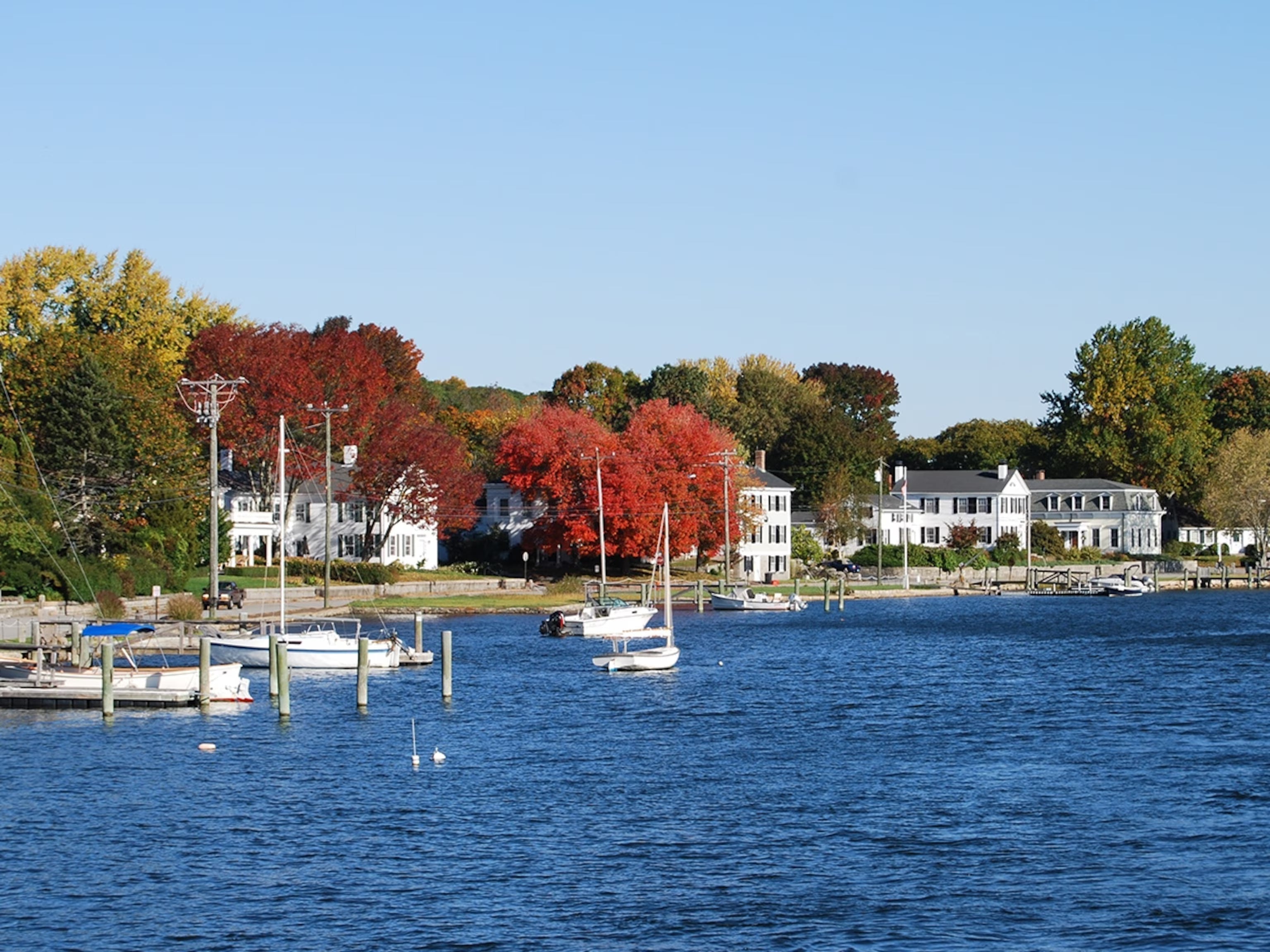
Easy Guide to Funeral Homes in Connecticut
In Connecticut, tradition meets modern, eco-friendly choices. As of 2026, cremation rises to 60–62%, with costs averaging ~$9,600 for burials and ~$3,100 for direct cremation. State law mandates a 48-hour wait before cremation. Families honor loved ones through historic plots or artistic urns reflecting Connecticut’s coastal, refined style.

Easy Guide to Funeral Homes in Alaska
From the debut of Natural Organic Reduction to the pragmatic shift toward coastal cremation, Delaware’s 2026 funeral landscape is changing. This guide breaks down the "First State’s" essential costs, the unique five-day rule, and how to plan a personalized "portable legacy" from Wilmington to the Atlantic shore.

Easy Guide to Funeral Homes in Idaho
In Idaho, rugged landscapes shape unique end-of-life traditions. By 2026, cremation and nature-focused memorials are rising, while traditional burial remains meaningful in farming communities. Costs: $765–$1,706 for cremation, $7,745–$9,750 for burial. Idaho law requires 24-hour waiting, coroner approval, and death certificate filing. Outdoor ceremonies are common. Artistic urns honor loved ones.


Share:
The Lady of the Lilies: From Myth to Ceramic
Grief Makes Us Time Travelers