



Here for you: art@pulvisurns.com | (562) 609-4019
7% off your order
Use this code at checkout:
In the District of Columbia, our nation's capital, end-of-life traditions are shaped by a unique urban landscape, a diverse population, and a sophisticated approach to legacy. As of 2026, Washington D.C. reflects a national trend toward personalization and environmental consciousness, with a significant shift away from traditional land-intensive burials toward flexible and artistic cremation options. This guide provides the essential 2026 data and legal insights for navigating final arrangements in the District.
A D.C. Perspective on Urban Life and Legacy
In the District, the choice between burial and cremation is often a reflection of the city's limited geographic space and the cosmopolitan values of its residents.
Emotional and Psychological Factors: D.C. is a city of transit and international connection. For many, cremation offers the "portable peace" required for a Celebration of Life that can take place in multiple locations—perhaps a formal service in the city and a private gathering in a home state or country. Many families choose to keep a loved one’s remains in a sculptural Cremation Urn, viewing the pulvis (ashes) as a permanent piece of home art that keeps the person’s memory active and present in their daily lives.

Environmental Values: With no room for new large-scale cemeteries within the District lines, residents are increasingly eco-conscious. Traditional burial is viewed as a high-impact land use. Cremation, particularly when paired with a handcrafted ceramic vessel for the pulvis, is seen as a respectful, low-impact choice. There is also significant interest in Water Cremation (alkaline hydrolysis), which aligns with the District's progressive environmental goals.
Financial Practicality: Washington D.C. has some of the highest cost-of-living rates in the country, and funeral costs are no exception. In 2026, a traditional burial can easily exceed $12,000 when cemetery fees are included. Choosing cremation allows families to bypass the extreme costs of urban "cemetery real estate," often saving over $7,000, which can be redirected toward a travel-based memorial or a high-quality family heirloom.
D.C. maintains a high cremation rate, driven by urban land constraints and a diverse, mobile population.
Cremation Rates: As of 2026, the cremation rate in Washington D.C. is approximately 60-65%, following the national trajectory toward 80% by 2045.
Average Cost Breakdown: In 2026, D.C. families should budget for the following average expenses:
Traditional Full-Service Burial: A full funeral service averages $9,850. When including a burial plot and vault in the D.C. metro area, total costs often range from $12,000 to $16,000+.
Direct Cremation: For a simple process with no ceremony, the average cost in the District is $2,850, with some competitive providers offering packages starting as low as $1,495.
Full-Service Cremation: A cremation that includes a formal viewing and memorial ceremony typically averages $7,500 - $8,200.
District of Columbia law (D.C. Code § 7–211 and § 3–401) provides a strict framework for the handling and disposition of the pulvis.
The 24-Hour Rule: If a body is not embalmed, it must be cremated, buried, or placed in refrigeration (at 40°F or less) within 24 hours of the funeral director taking custody.
Coroner’s Authorization: In any case involving the Medical Examiner, no cremation may proceed until a specific authorization for cremation is signed by the Medical Examiner's office.
Waiting Period: There is no state-mandated waiting period in the District beyond the time required to obtain the necessary permits and death certificate filings.
Death Certificate Filing: The death certificate must be filed electronically within five days of death and prior to the final disposition of the body.

In the District, the vessel chosen for the pulvis is often a reflection of the city's appreciation for art, history, and international design.
Sizing Rules: The industry standard remains: 1 lb of body weight = 1 cubic inch of ash. A standard adult urn generally holds 200 cubic inches.
Scattering the Pulvis: Scattering is generally permitted on private property with owner consent. For public lands like the National Mall or Rock Creek Park, scattering is strictly regulated and requires a Special Use Permitfrom the National Park Service, which is rarely granted for these purposes.
Scattering in the Potomac: Scattering ashes in the Potomac River is permitted, provided it occurs at least three nautical miles from the shoreline (if done in the open ocean) or follows local environmental guidelines if done within the river, typically requiring 100% biodegradable materials.
Artistic Tributes: 2026 trends in D.C. include "Embassy Row" private memorials and the use of artistic ceramic urns—such as those by Pulvis—that mirror the neoclassical and modern architectural textures of the city.

Based on 2026 service excellence and directory data, here is an expanded list of providers serving the District and the surrounding metro area:
| Neighborhood/Area | Funeral Home | Website |
| Downtown / NE | Stewart Funeral Home | stewartfuneralhome.com |
| NW / Brightwood | Bacon Funeral Home | baconfuneralhome.com |
| NW / Takoma | McGuire Funeral Service | mcguire-fh.com |
| NE / Brookland | Johnson & Jenkins | johnsonandjenkinsfuneralhome.com |
| SE / Capitol Hill | Cedar Hill Funeral Home | cedarhillfuneralhome.com |
| NW / Tenleytown | Joseph Gawler’s Sons | josephgawlers.com |
| NE / Michigan Park | Marshall-March Funeral Home | marshallmarchfh.com |
| NW / Petworth | RN Horton Co | rnhorton.com |
| SE / Anacostia | Pope Funeral Homes | popefuneralhomes.com |
| Metro Area | Capitol Cremation | capitolcremation.com |
| Metro Area | Rapp Funeral & Cremation | rappfuneral.com |
| Metro Area | Wiseman Funeral Home | wisemanfuneralhome.com |
| Metro Area | J.B. Jenkins Funeral Home | jbjenkinsfuneralhome.com |
| Metro Area | Hines-Rinaldi Funeral Home | hinesrinaldi.com |
Whether you find peace in a traditional service near the historic monuments or in the sculptural beauty of a Cremation Urn displayed on your mantle, your choice is a profound act of love. By understanding the 2026 costs and the specific land-use rules in the District of Columbia, you can ensure your final tribute for the pulvis is as soulful and enduring as the capital itself.
Which urn size do I need?
A simple rule: about 1 cubic inch of urn per pound of body weight.
Every product page lists the urn's capacity. Keepsake urns hold a small portion of ashes to share.
Need it by a specific date?
Free shipping · Delivery in 3–5 business days
Express delivery in up to 3 business days – choose it at checkout
Need help choosing?
Talk to our team – we're happy to help you find the right urn.
(562) 609-4019 art@pulvisurns.comSend us a message
Can You Grieve a Life That Never Had Words?
Discover why losing a beloved pet can be so profound, how wordless bonds shape our lives, and how Pulvis Art Urns brings craftsmanship and thoughtful design to the art of remembering an animal companion.
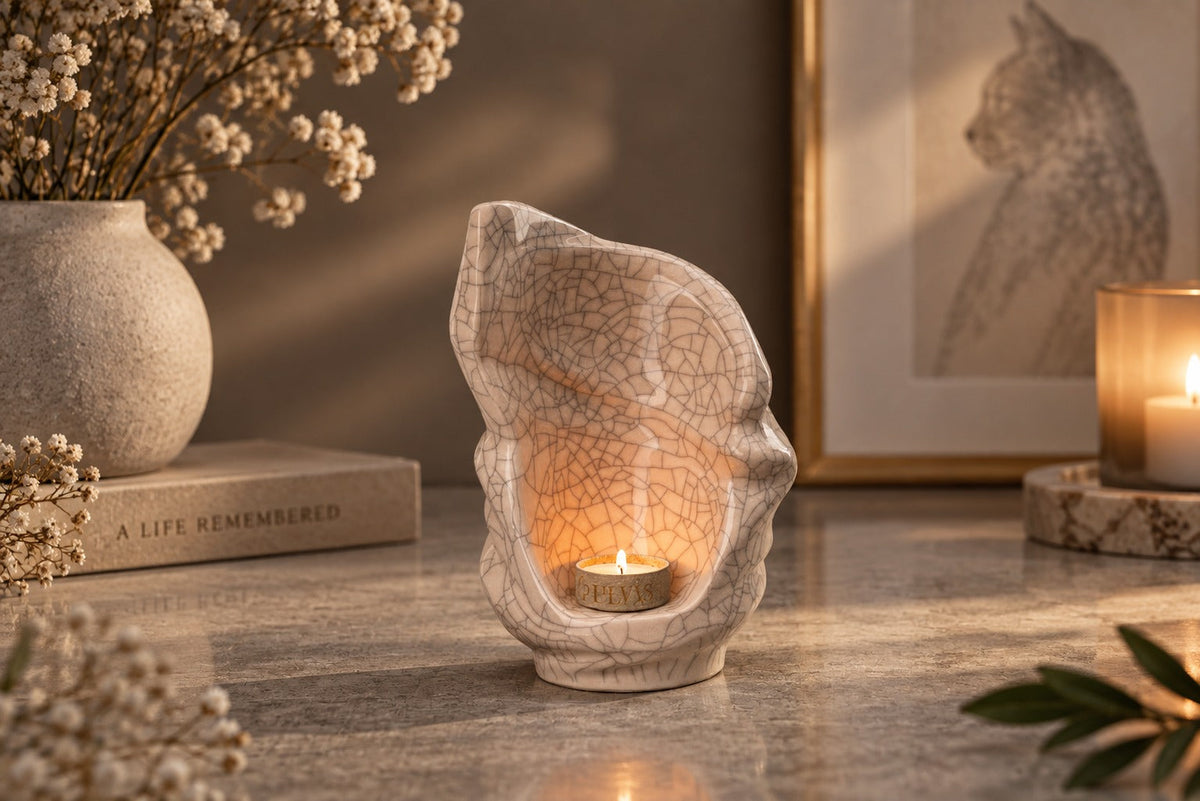
What Does the Bible Say About Cremation?
Explore what the Bible says about cremation, Christian beliefs about resurrection, and meaningful ways to honor a loved one’s memory through a thoughtful memorial.

Why Do People Light Candles for the Dead?
Discover the meaning behind lighting candles for the dead, exploring the traditions, beliefs, and emotions that make this simple ritual a lasting expression of remembrance, comfort, and connection within the home.

The Pet as a Witness to a Human Life
Our pets witness far more of our lives than we realise. Explore what it means for an animal to become a quiet witness to our changing homes, relationships, routines and identities — and how a memorial urn can remain as a physical connection to the life they witnessed.

Can You Inherit a Pet’s Memory?
Can we remember a pet we never knew? Explore how stories, photographs, objects and memorials can carry an animal’s memory across generations, turning a private life into part of a family’s shared history.



Share:
Easy Guide to Funeral Homes in Montana
Easy Guide to Funeral Homes in Delaware