


Here for you: art@pulvisurns.com | (562) 609-4019
7% off your order
Use this code at checkout:
From ancient Roman times up to nowadays, ceramic pottery vessels have been used as urns for our loved one’s ashes. Known for their durability and beauty, urns made of ceramic can express something personal about your loved one as they come in various shapes and colours.
Ceramic urns are undoubtedly the most popular type of cremation urns nowadays, simply because ceramic is a material with rich history.

The first evidence of human-made ceramics date back to at least 24,000 years BC - a small statue known as Venus of Dolní Věstonice, was found in a settlement near Brno, in the Czech Republic.
The first evidences of pottery use appeared in Asia several thousand years later. In the Xianrendong cave in China, parts of pottery vessels dated to 17,000-16,000 BCE have been found. It is believed that from China the use of pottery successively spread to Japan where archaeologists have found shards of ceramic artefacts dating to 14,000 BCE.

In Japan, the history of ceramics dates back to 10,000 years BC in the Jomon period, but it was not widely used until the potter’s wheel and the sloping kiln were introduced.
Use of tools made of ceramics increased rapidly during the Neolithic period, with the establishment of communities dedicated to agriculture, land cultivation and farming.

In the West, pottery is associated with creation and decoration of vases, known as the Neolithic art, which was popular in Ancient Greece. Many art critics consider Greek pottery to represent the zenith of ceramic art.
One of the most important breakthroughs in the production of ceramics was the invention of the wheel, in 3,500 BCE. The wheel allowed for the utilisation of the wheel-forming technique to produce ceramic vessels with radial symmetry.
Meanwhile, ceramic pottery evolved in its use of increasingly elaborated paintings, so that these objects eventually became genuine pieces of art.
During the Middle Ages, trade through the Silk Road allowed for the introduction and diffusion of porcelain throughout Islamic countries first and later in Europe.

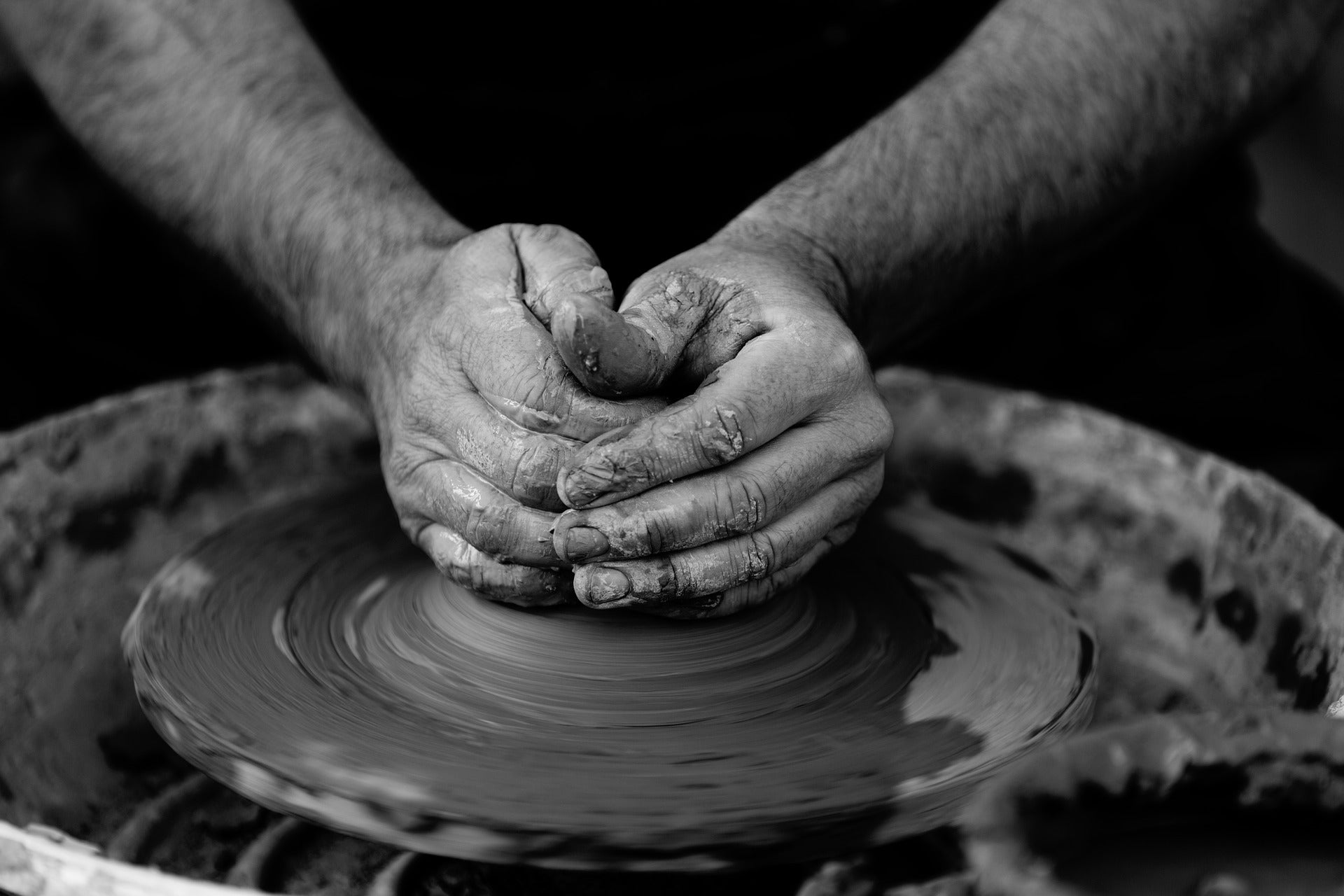
Ceramic urns before entering the furnace. Photo by Pulvis Art Urns
By the end of fifteenth century the first blast furnaces were developed in Europe. They could easily reach temperatures above 1300 degrees Celsius and were used to melt iron. In the early 16th century synthetic materials with better resistance to high temperatures were developed. This was the beginning of the industrial revolution and since then the ceramic industry has gone through a dramatic transformation.
After World War II, ceramics have contributed to the growth of many technologically advanced fields, including electronics, automotive and space exploration. Since these ancient times, the technology and applications of ceramics has steadily increased, reaching its full potential today, while in 2023 the sector is expected to reach almost 1.1 trillion dollar market.

Ceramic is all around us and almost not a day goes by that we do not come into contact with it.
Ceramic products have many advantages among which are:
From industry to home ware and urns, ceramic is always being used and it is so important to modern day life!

Before you make any decision regarding your urn and eventually buy one, you need to decide its purpose. Are you going to be dividing the ashes amongst family? Or maybe you intend to bury it? Many people prefer to store the ashes in their home or garden. Those are all valid questions and depending on what you decide will help you proceed with picking the right urn.

Reach us if you have more questions regarding our products. You will always find us at art@pulvisurns.com
As a compliment for reading our blog article, you can use the coupon READER10 at checkout for 10% discount for your order.
Join us in helping families honor the memory of their loved ones and pets through art!
Our Affiliate Program is now available at https://www.pulvisurns.com/pages/affiliate-program-by-pulvis-art-urns
Which urn size do I need?
A simple rule: about 1 cubic inch of urn per pound of body weight.
Every product page lists the urn's capacity. Keepsake urns hold a small portion of ashes to share.
Need it by a specific date?
Free shipping · Delivery in 3–5 business days
Express delivery in up to 3 business days – choose it at checkout
Need help choosing?
Talk to our team – we're happy to help you find the right urn.
(562) 609-4019 art@pulvisurns.comSend us a message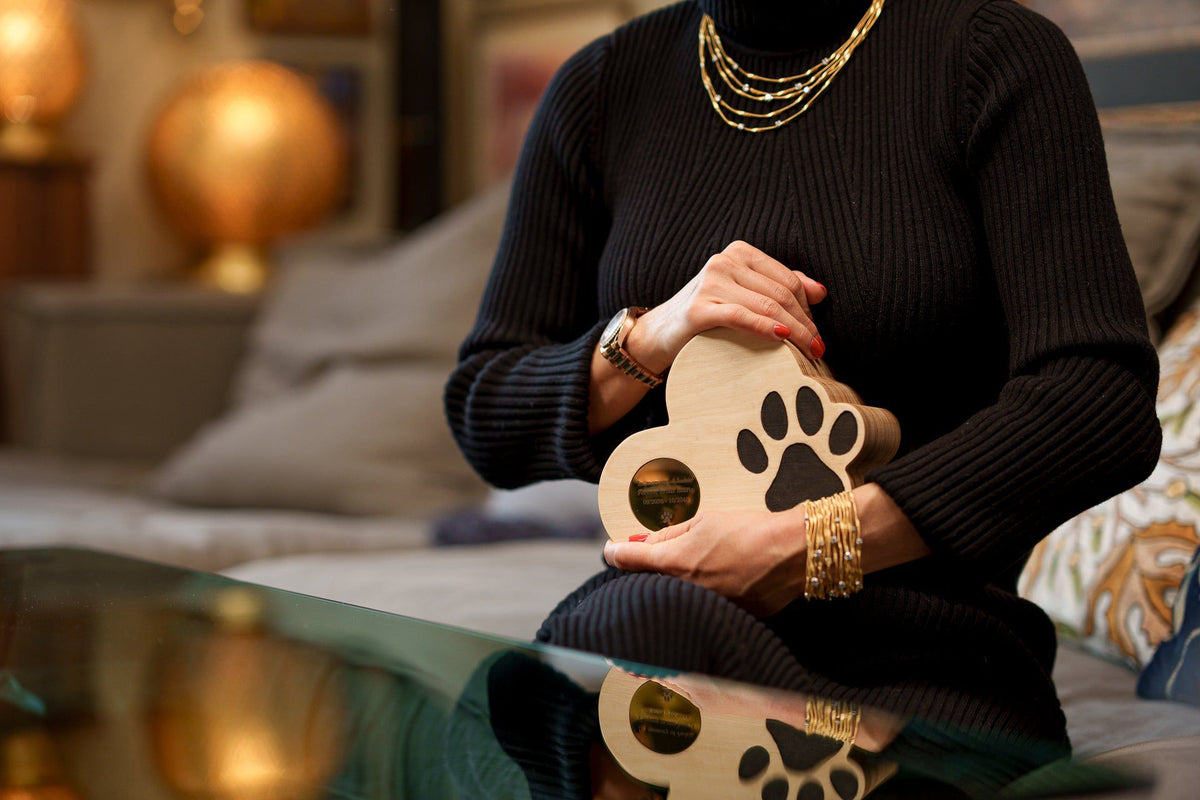
Can You Grieve a Life That Never Had Words?
Discover why losing a beloved pet can be so profound, how wordless bonds shape our lives, and how Pulvis Art Urns brings craftsmanship and thoughtful design to the art of remembering an animal companion.
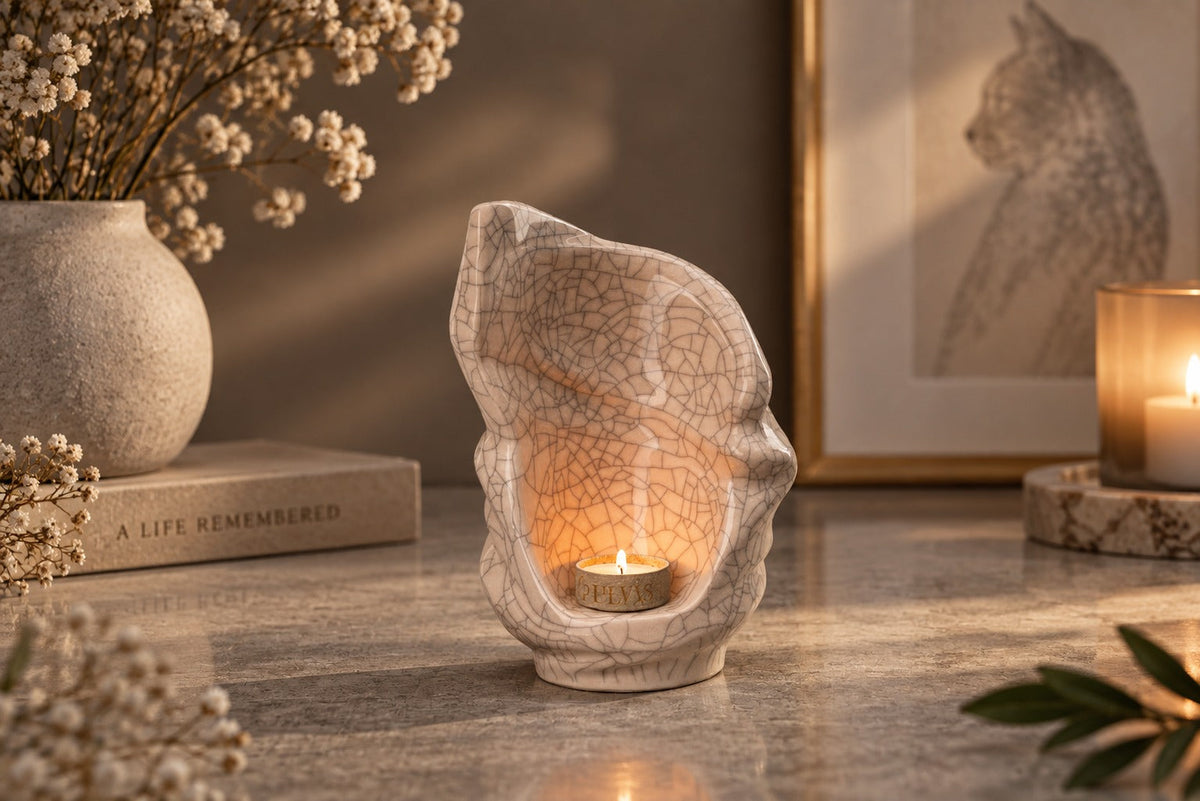
What Does the Bible Say About Cremation?
Explore what the Bible says about cremation, Christian beliefs about resurrection, and meaningful ways to honor a loved one’s memory through a thoughtful memorial.
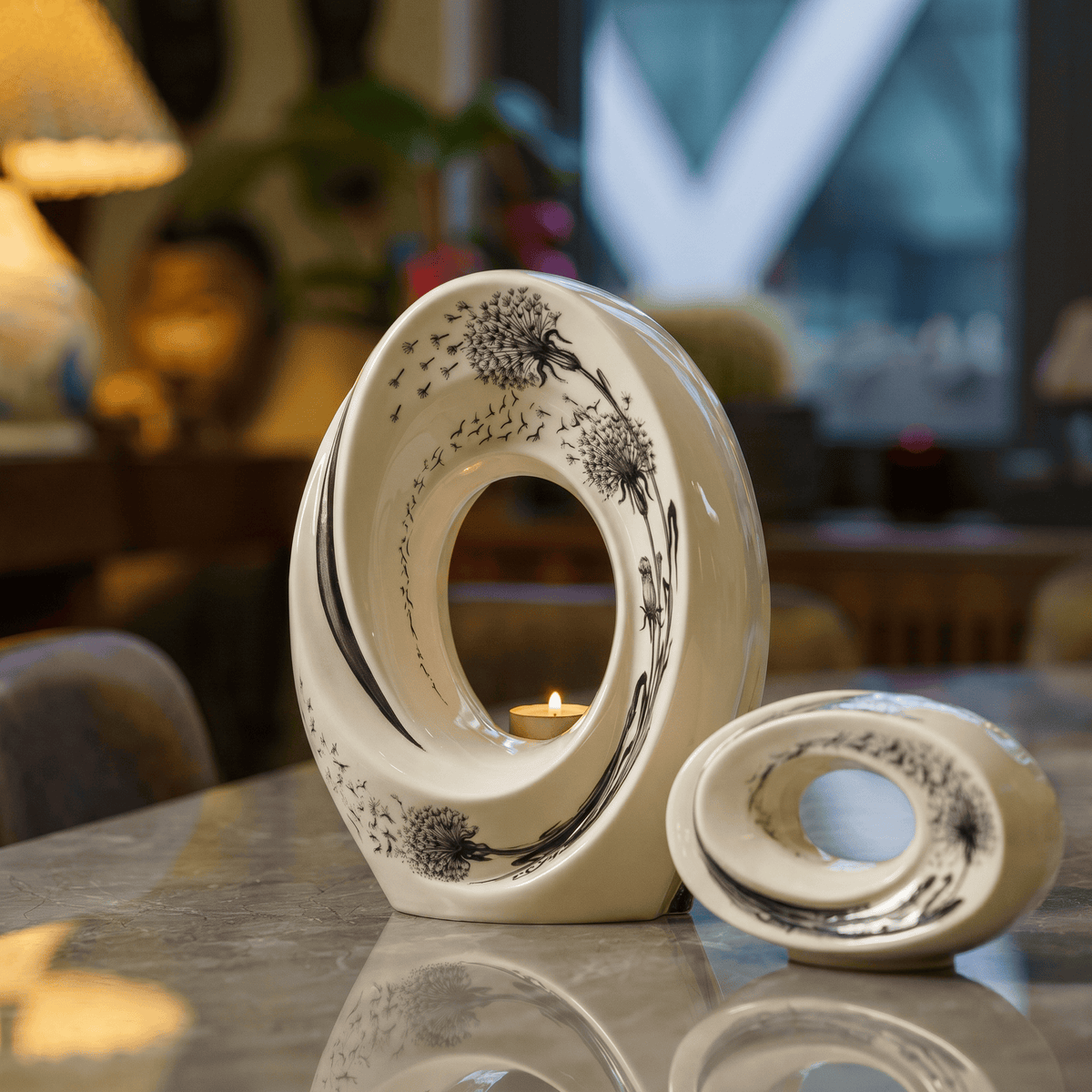
Why Do People Light Candles for the Dead?
Discover the meaning behind lighting candles for the dead, exploring the traditions, beliefs, and emotions that make this simple ritual a lasting expression of remembrance, comfort, and connection within the home.

The Pet as a Witness to a Human Life
Our pets witness far more of our lives than we realise. Explore what it means for an animal to become a quiet witness to our changing homes, relationships, routines and identities — and how a memorial urn can remain as a physical connection to the life they witnessed.

Can You Inherit a Pet’s Memory?
Can we remember a pet we never knew? Explore how stories, photographs, objects and memorials can carry an animal’s memory across generations, turning a private life into part of a family’s shared history.


Share:
The Rising Popularity of Pet Cremation
Everything You Need To Know About Cremation Urns for Ashes