



Here for you: art@pulvisurns.com | (562) 609-4019
7% de descuento en tu pedido
Usa el código al finalizar la compra:
Direct cremation constitutes the most basic form of cremation service. The decedent is transferred to the crematory shortly after death without embalming, public visitation, or the use of a ceremonial or rental casket. Upon completion of all legally required authorizations and permits, generally within several business days the cremation is performed.
The cremated remains are released to the next of kin in a temporary container unless a permanent urn has been selected. All documentation, including the filing and ordering of death certificates and the verification of identity, is managed by the funeral or cremation provider. The family may retrieve the remains in person or arrange for secure delivery.

Optional ancillary services may include private identification viewing, the opportunity to witness the initiation of the cremation process, expedited completion, publication of an online obituary, fingerprint collection for memorialization items, shipment of remains through USPS, and preparation of airline compliance documentation.
Direct cremation is appropriate for families preferring a simplified, cost-effective arrangement or greater scheduling flexibility regarding later memorialization. Typical urn selections include wooden cremation boxes, biodegradable urns for scattering, TSA-compliant travel urns, and small keepsake urns. Individuals completing pre-arrangement documentation are advised to record specific preferences and designate a provider.
This service type includes a full funeral ceremony with the decedent present, typically preceded by embalming and a visitation or viewing period. A rental casket is commonly used. Services are generally held within two to seven days of death, depending on family directives and facility availability. Cremation is performed after the funeral, and the cremated remains are subsequently released to the legal authorizing agent.
Ceremonial elements may include a processional, readings, eulogies, religious rites, military honors, musical selections, floral presentations, and photographic or audiovisual tributes. A graveside or columbarium committal may follow at the family's request.

This is customarily the highest-cost cremation option due to embalming, facility usage, staffing requirements, transportation services, and casket rental. Families often choose this arrangement to maintain customary rituals and enable in-person farewells.
For burial or columbarium placement, urns constructed of brass, metal, marble, or stone are recommended. For display during the funeral service, families may select an urn that aligns aesthetically with floral arrangements and photographic displays.
Advance planning should include verification of cemetery or niche specifications, coordination with clergy or an officiant, and provision for livestreaming services when needed.
Under this arrangement, cremation occurs shortly after death, and the memorial service held without the body present takes place at a later date. Memorial services may be conducted at a funeral facility, house of worship, outdoor venue, or private residence. The urn, photographs, and personal memorabilia commonly serve as the focal elements of the event.
This option permits considerable scheduling flexibility and is suitable for families coordinating travel, seasonal considerations, or larger gatherings. Memorial services may include readings, personal reflections, musical selections, audiovisual presentations, memory displays, and either religious or secular officiants. Scattering or interment may be incorporated as part of the same observance.

Costs generally fall in the mid-range due to the absence of embalming and casket rental, though facility and staffing expenses vary according to service scale.
Urn selections often emphasize display suitability, including artistic, nature-inspired, religious, or contemporary designs. Photo urns, scattering urns, keepsake urns, and cremation jewelry are common supplemental options.
Planning considerations include securing the venue, confirming the officiant, providing adequate notice to guests, and selecting an urn appropriate for its intended final placement.

Permits and Documentation:
The crematory provider completes all statutory authorizations, secures required permits, and files or issues death certificates.
Identification and Process Integrity:
Licensed providers follow strict chain-of-custody and identification protocols, including the use of durable identification tags throughout the cremation process.
Return of Cremated Remains:
Cremated remains are released in a temporary container unless a permanent urn has been procured in advance.
Family Responsibilities After Cremation:
Selection of a permanent urn appropriate for home placement, burial, columbarium interment, or division into keepsakes.
Scheduling or completing a memorial or celebration-of-life ceremony, if not previously conducted.
Determining final disposition: burial, niche placement, lawful scattering, or division for keepsake urns or memorial jewelry.
Ensuring compliance with TSA guidelines for air travel or USPS regulations for domestic shipment (Priority Mail Express with Label 139).

Direct Cremation:
Common selections include wooden cremation boxes or biodegradable urns intended for land or water scattering. Engraving or personalization may be applied.
Traditional Funeral with Cremation:
For cemetery or columbarium placement, brass, metal, marble, and stone urns are recommended due to durability and compliance with institutional standards. For display at services, urns are often coordinated with floral arrangements and visual tributes.
Cremation with Memorial Service:
Urns selected for display commonly reflect the decedent’s personal style or symbolic preferences. Keepsake urns allow distribution of small portions of cremated remains among family members.
Capacity Guidelines:
Standard adult urn capacity is approximately 200 cubic inches. Larger individuals may require an oversized urn. Keepsake urns typically hold 1–5 cubic inches.

How do I arrange cremation for myself or a family member?
Contact a licensed funeral establishment or cremation provider. The provider will manage all legal authorizations, permits, death certificates, and scheduling. Individuals preplanning should document their instructions and identify a preferred provider.
Why select a brass or metal urn?
These urns provide high durability and long-term preservation, making them well suited for burial or columbarium placement. They are available in a wide range of formal designs and finishes.
Why select a wooden cremation box?
Wooden urns offer a dignified, furniture-grade appearance and are appropriate for home placement. Their structure facilitates engraving and the use of name or photo plates.
Why select marble or stone?
Marble and stone urns offer superior durability and a premium appearance, and they are commonly used for burial or niche placement.
Why select biodegradable or scattering urns?
These urns are designed to decompose naturally during land or water ceremonies and may include features that facilitate dignified scattering.
What urn size is required?
A standard adult urn accommodates approximately 200 cubic inches. Cemetery or niche regulations should be reviewed prior to interment. Keepsake urns allow distribution among family members.
Can the urn be personalized?
Yes. Engraving of names, dates, quotations, symbols, or artwork is available and assists with both memorialization and identification.
When will the cremated remains be available?
Availability depends on provider processing times and completion of legal documentation. Remains are released in a temporary container unless a permanent urn has been selected.
What options exist for the final placement of ashes?
Cremated remains may be retained at home, divided into keepsakes, interred in a cemetery, placed in a columbarium, or scattered in a legally permitted location.
May cremated remains be transported by air?
Yes, provided that TSA and airline regulations are followed. A non-metal, TSA-compliant urn is recommended. Cremated remains should be transported in carry-on luggage.

¿Qué tamaño de urna necesito?
Regla sencilla: aprox. 1 litro de capacidad por cada 28 kg de peso corporal.
Cada página de producto indica la capacidad de la urna. Las urnas recuerdo guardan una pequeña parte de las cenizas para compartir.
¿Lo necesita para una fecha concreta?
Envío gratuito · Entrega en 3–5 días hábiles
Envío exprés en hasta 3 días hábiles: elígelo al finalizar la compra
¿Necesita ayuda para elegir?
Hable con nuestro equipo: le ayudaremos a encontrar la urna adecuada.
(562) 609-4019 art@pulvisurns.comEnvíenos un mensaje
Can You Grieve a Life That Never Had Words?
Discover why losing a beloved pet can be so profound, how wordless bonds shape our lives, and how Pulvis Art Urns brings craftsmanship and thoughtful design to the art of remembering an animal companion.
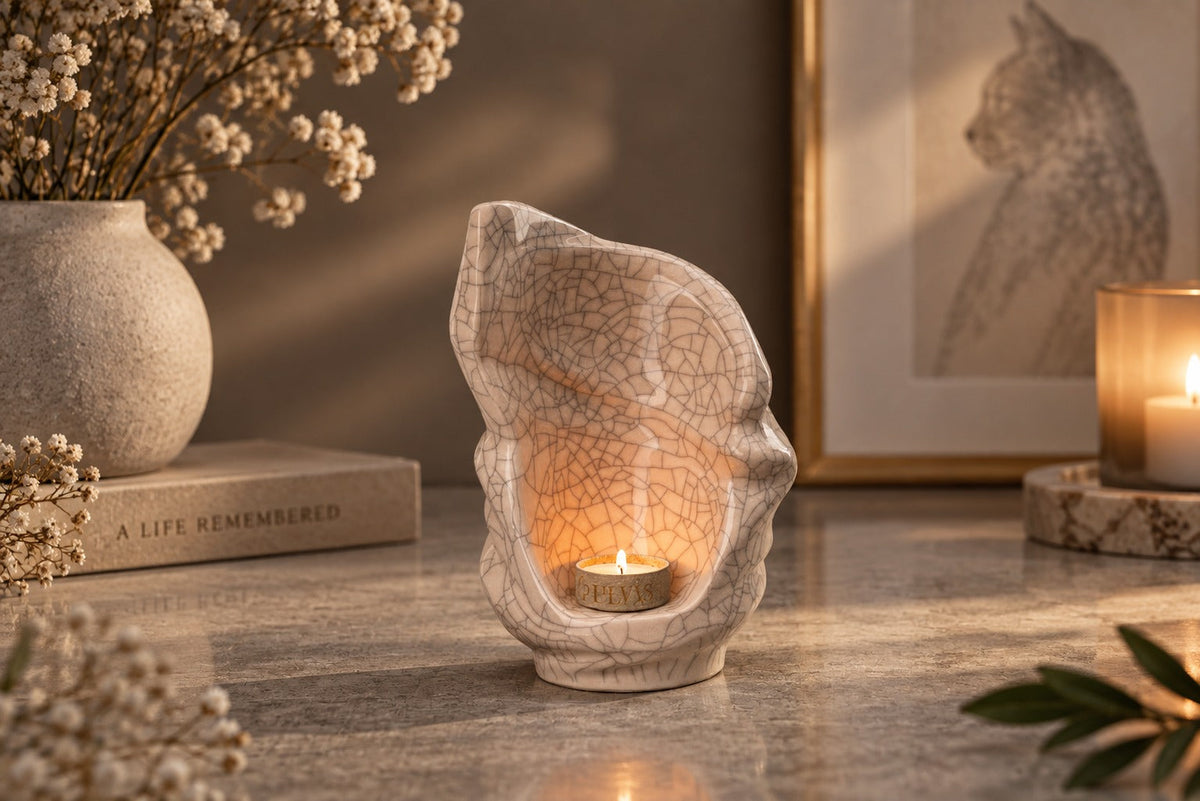
What Does the Bible Say About Cremation?
Explore what the Bible says about cremation, Christian beliefs about resurrection, and meaningful ways to honor a loved one’s memory through a thoughtful memorial.
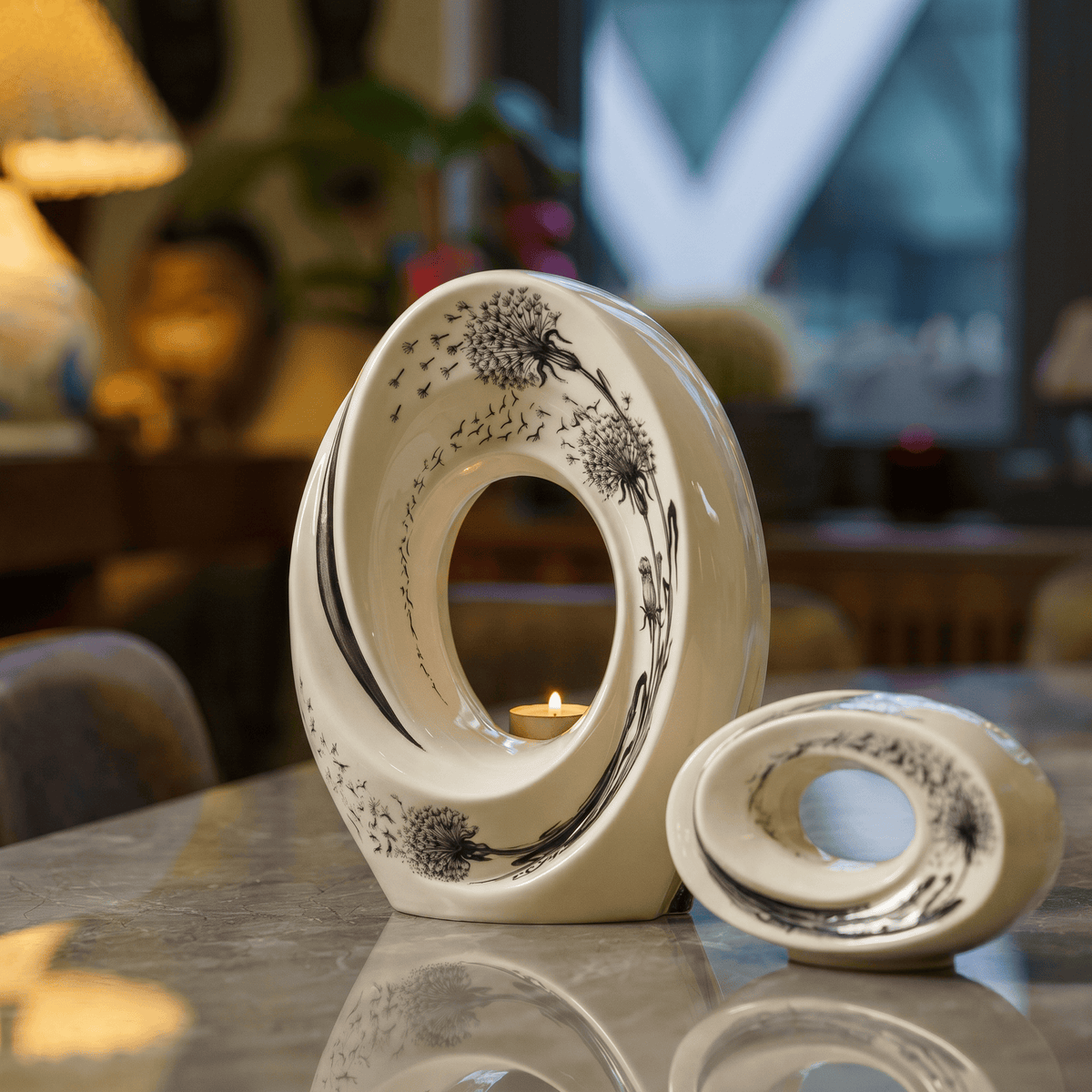
Why Do People Light Candles for the Dead?
Discover the meaning behind lighting candles for the dead, exploring the traditions, beliefs, and emotions that make this simple ritual a lasting expression of remembrance, comfort, and connection within the home.

The Pet as a Witness to a Human Life
Our pets witness far more of our lives than we realise. Explore what it means for an animal to become a quiet witness to our changing homes, relationships, routines and identities — and how a memorial urn can remain as a physical connection to the life they witnessed.

Can You Inherit a Pet’s Memory?
Can we remember a pet we never knew? Explore how stories, photographs, objects and memorials can carry an animal’s memory across generations, turning a private life into part of a family’s shared history.



Compartir:
5 Reasons Handmade Ceramic Cremation Urns Outperform Mass-Produced Alternatives
Finding Meaningful Dog Cremation Jewelry