

Here for you: art@pulvisurns.com | (562) 609-4019
7% de descuento en tu pedido
Usa el código al finalizar la compra:
There are faces we learn to read without ever being taught how.
We know when our dog is about to become excited before he reaches the door. We recognize the look our cat gives us when she wants to be left alone. We notice the difference between a curious expression and one that means something is wrong. Sometimes, we can even tell that our pet is waiting for something before they have made a single movement.
After living with an animal for years, these observations become almost automatic. A slight change in the eyes, the position of the ears, the tension around the mouth or simply the way an animal looks at us can communicate something that would be difficult to explain to another person.
But what are we actually seeing?

Can personality really be recognized in a pet’s face, or do we simply become exceptionally good at reading an individual animal we know intimately?
The answer lies somewhere between the two.
An animal’s face does not contain a straightforward portrait of its personality. There is no expression that can reliably tell us that a dog is patient, that a cat is independent or that one particular animal is naturally more affectionate than another. Personality is considerably more complex than appearance.
Yet the face can reveal something else: emotion, attention, expectation, fear, curiosity and familiarity. And because these signals are repeated throughout an animal’s life, the people who live with them can become remarkably skilled at recognizing them.
A pet’s face, in other words, becomes part of a private language.
We learn it through repetition.
A dog who raises his eyebrows when he hears a familiar word may eventually become recognizable to his owner before he even moves. A cat may have a particular expression when she is watching something from the window, another when she wants food and another when she is preparing to approach. These differences can be incredibly subtle.
To someone else, they may look like the same face.
To us, they are completely different.

This is partly because we do not experience our pets as static images. We experience them through movement and context. The face is only one part of a much larger system of communication that includes posture, ears, tail position, vocalizations, movement and proximity.
A photograph captures one moment. Living with an animal teaches us what came before it and what usually comes after.
That is why the same expression can mean very different things depending on the situation.
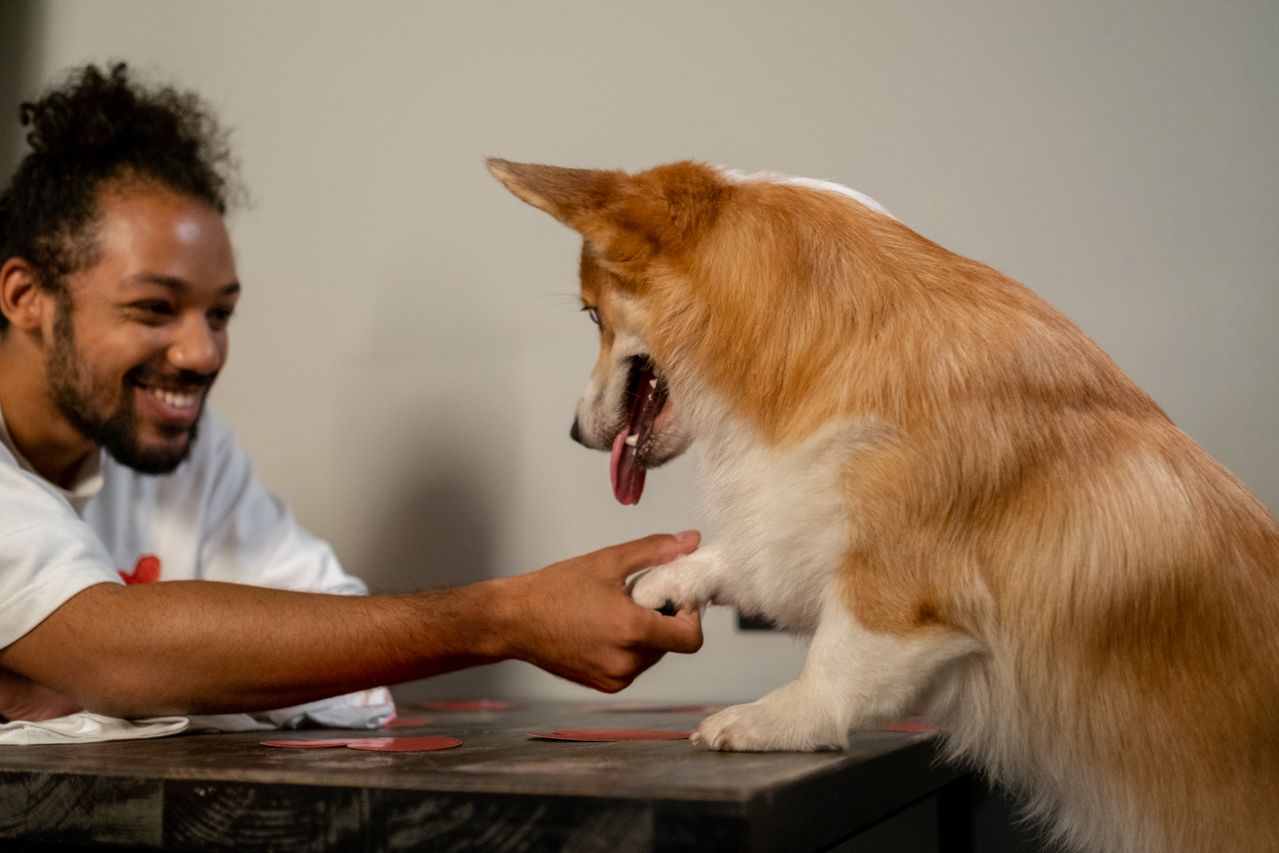
A dog with his mouth open and tongue visible may simply be relaxed. The same animal may look almost identical when he is excited after a walk. A cat staring directly at us may be observing something with complete concentration, asking for attention or simply deciding whether we are worth acknowledging.
The face alone rarely provides the whole answer.
And yet, humans are remarkably interested in faces.
We instinctively search them for information. We do it with other people, and we do it with animals. This is one reason why photographs of pets can feel so intimate. We are not simply looking at fur, eyes and familiar features. We are looking for the individual we know.
That distinction becomes particularly important when we look back at photographs after a pet has died.
Suddenly, an ordinary photograph can feel extraordinarily precise.
We may remember the exact expression. The way the ears were positioned. The slight tilt of the head. The particular look that meant the animal was about to do something mischievous. We may recognize an expression that nobody else would notice.
This is where memory changes the way we see a face.
Over years of companionship, we accumulate thousands of small observations. We know how our pet looks when they wake up, when they are waiting for food, when they hear our keys at the door, when they are frightened by something outside or when they simply want to be near us.
None of these moments exists independently.
Together, they form our understanding of who that animal was.
This may also explain why two pets that look remarkably similar to strangers can feel completely different to their owners. Breed, colour and physical characteristics may tell us something about appearance, but they cannot fully describe the individual.
The personality of an animal develops through temperament, genetics, experience, environment and relationships. It is expressed over time rather than contained in a single feature.
A pair of eyes cannot tell us everything.
But they can become familiar enough to tell us something.

Scientists have increasingly studied how animals use facial expressions and how humans interpret them. Dogs, for example, are capable of producing different facial movements in different social and emotional situations, while research into canine communication has shown that people can become sensitive to subtle changes in their expressions.
There is also evidence that dogs pay close attention to human faces and emotional cues. They can distinguish different human expressions and use information from our faces, voices and body language when responding to us.
The relationship therefore works in both directions.
We watch them.
They watch us.
Over time, the result can resemble a conversation without words.
This is perhaps why people sometimes say that their pet had “a certain look.” It may sound vague to someone who has never met the animal, but it is often remarkably specific to the person who lived beside them.
The expression cannot easily be separated from everything that person knows about the animal.
A photograph of a dog looking toward the camera might appear ordinary to thousands of people online. For its owner, it may immediately bring back a particular afternoon, a walk, a sound, a habit or a moment that happened immediately after the photograph was taken.
The face becomes a doorway into a much larger memory.
There is another interesting complication: we are not always objective observers.
Humans naturally attribute emotions and intentions to animals. We may interpret a pet’s expression using our own emotional vocabulary. Sometimes we are right. Sometimes we are projecting.
A dog that appears to be smiling is not necessarily experiencing happiness in the human sense. A cat that looks annoyed may simply be resting. An animal's facial expression should therefore never be treated as a simple translation of human emotion.
Understanding a pet requires context.
But context is exactly what an owner possesses.

This is what makes familiarity so powerful. The person who has lived with an animal for ten years has witnessed thousands of situations in which a particular expression appeared. They have learned what tends to happen next.
The recognition may not be conscious at all.
We simply know.
And perhaps this is one of the most fascinating things about living with an animal. Eventually, we stop seeing their face as a collection of physical features. We see it as uniquely theirs.
The eyes are no longer simply eyes. They are the eyes that waited for us at the door.
The ears are not simply ears. They are the ones that moved at the sound of a familiar voice.
The expression is not simply an expression. It is the look we learned to recognize without having to think about it.
This may be why photographs become so important after the loss of a pet.
We often take photographs without knowing which ones will eventually matter most. We photograph the dramatic moments, the birthdays and the holidays, but we also photograph the completely ordinary ones: an animal asleep on the floor, looking out of a window, sitting beside us or simply looking into the camera.
At the time, they may seem insignificant.
Later, they can become some of the most valuable images we own.
Because what we preserve is not merely the appearance of the animal. We preserve the face we knew.
And there is a difference.
A professional portrait can show an animal beautifully. A spontaneous photograph can sometimes show something more difficult to reproduce: recognition.
The moment when the animal looks directly at us, not at the camera.
The expression that belonged to a particular relationship.
The face that became familiar through thousands of ordinary days.
Perhaps that is why the idea of a pet's “personality” in its face is not entirely wrong, even if it is not scientifically as simple as it sounds.
Personality does not sit behind the eyes waiting to be discovered.
It emerges through behaviour, relationships and time.

But after years of companionship, we may become capable of seeing traces of that personality in the smallest details — because we have learned the individual behind them.
And when an animal is no longer beside us, those details can become unexpectedly powerful.
A photograph may preserve the shape of a face. Memory preserves everything we learned to see in it.
That is why, sometimes, we can look at an old photograph and recognize our pet instantly -not simply because we remember what they looked like, but because we remember who they were to us.
Perhaps this is the closest we come to recognizing personality in a face.
Not by discovering it there, but by knowing the life that made that face familiar.
¿Qué tamaño de urna necesito?
Regla sencilla: aprox. 1 litro de capacidad por cada 28 kg de peso corporal.
Cada página de producto indica la capacidad de la urna. Las urnas recuerdo guardan una pequeña parte de las cenizas para compartir.
¿Lo necesita para una fecha concreta?
Envío gratuito · Entrega en 3–5 días hábiles
Envío exprés en hasta 3 días hábiles: elígelo al finalizar la compra
¿Necesita ayuda para elegir?
Hable con nuestro equipo: le ayudaremos a encontrar la urna adecuada.
(562) 609-4019 art@pulvisurns.comEnvíenos un mensaje
What Does the Bible Say About Cremation?
Explore what the Bible says about cremation, Christian beliefs about resurrection, and meaningful ways to honor a loved one’s memory through a thoughtful memorial.
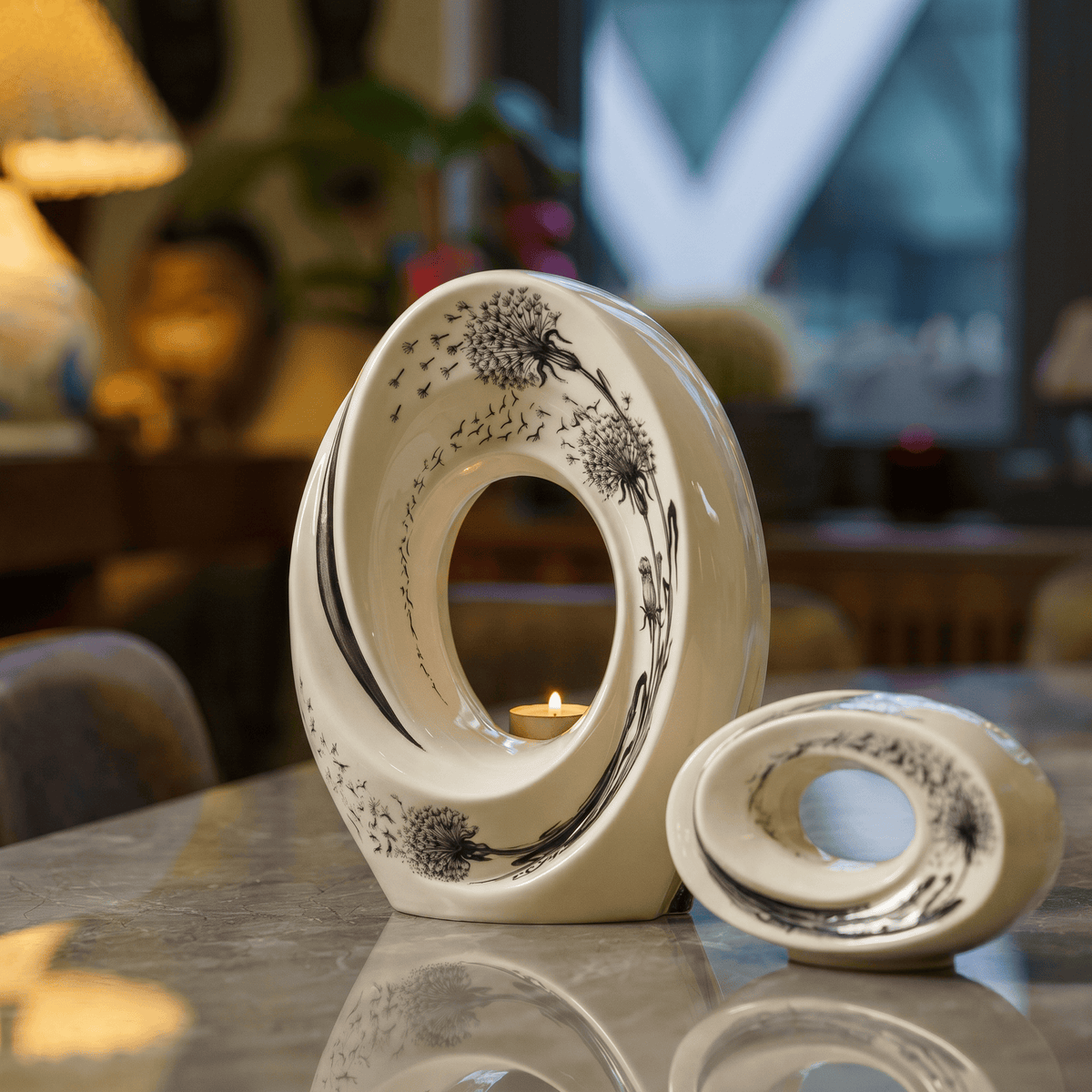
Why Do People Light Candles for the Dead?
Discover the meaning behind lighting candles for the dead, exploring the traditions, beliefs, and emotions that make this simple ritual a lasting expression of remembrance, comfort, and connection within the home.
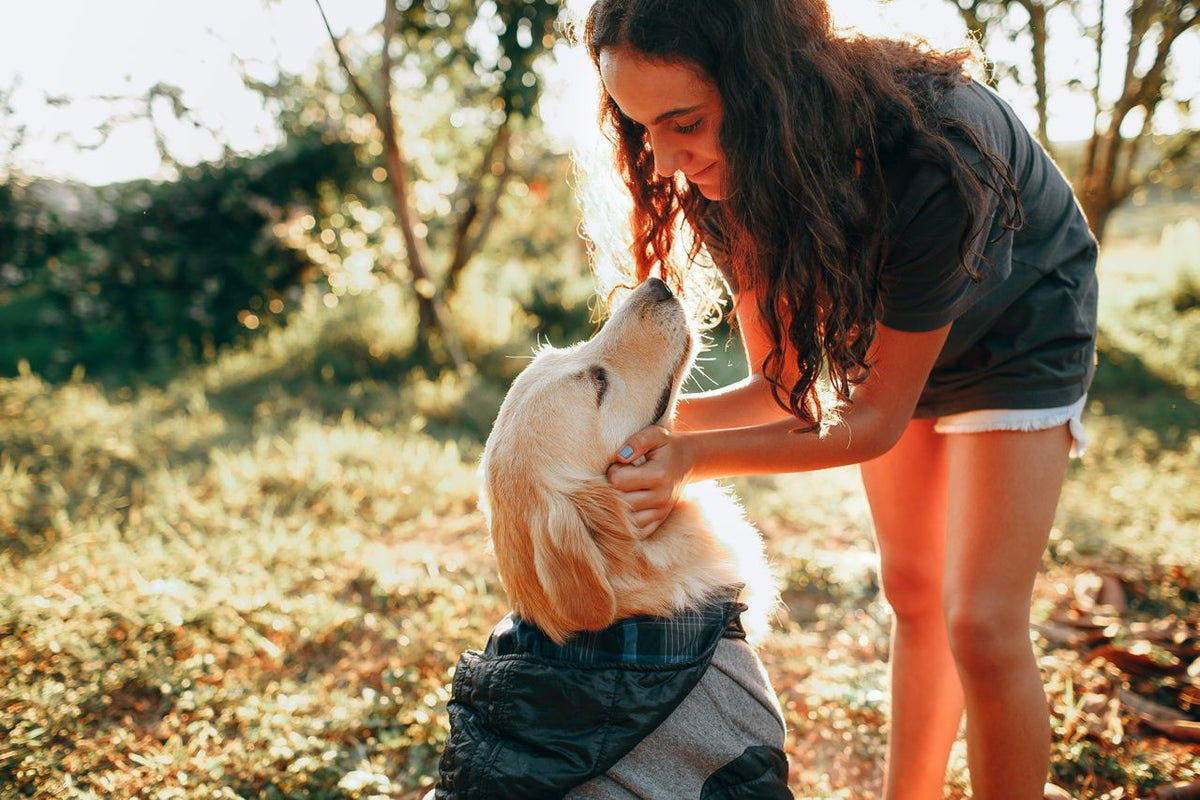
The Pet as a Witness to a Human Life
Our pets witness far more of our lives than we realise. Explore what it means for an animal to become a quiet witness to our changing homes, relationships, routines and identities — and how a memorial urn can remain as a physical connection to the life they witnessed.
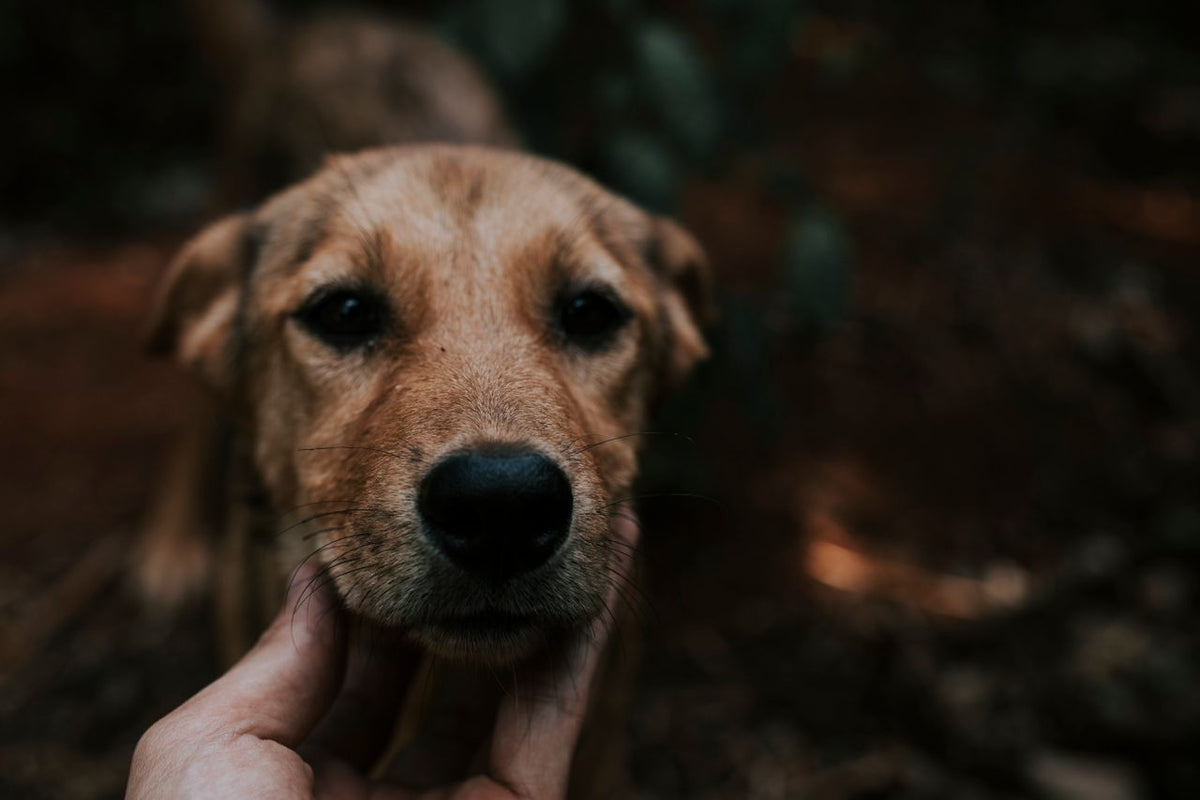
Can You Inherit a Pet’s Memory?
Can we remember a pet we never knew? Explore how stories, photographs, objects and memorials can carry an animal’s memory across generations, turning a private life into part of a family’s shared history.
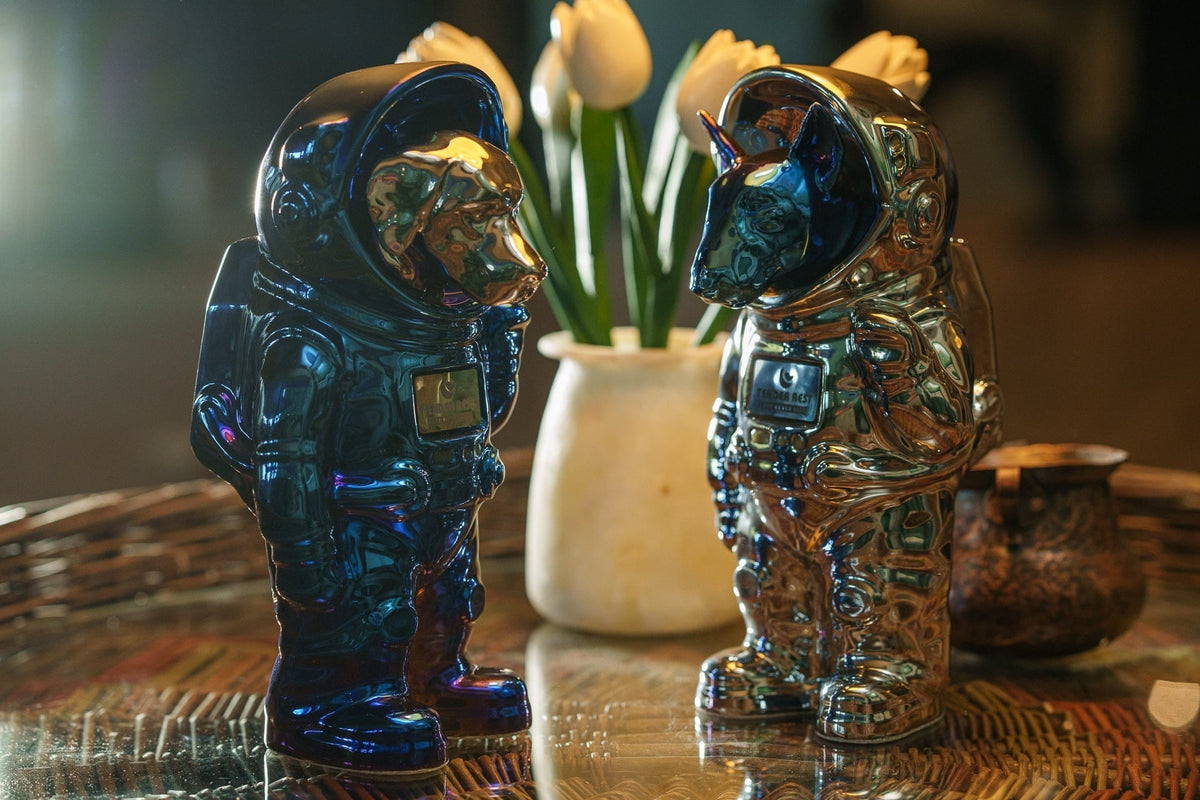
What a Pet Teaches Us About Impermanence
Living alongside a pet teaches us that the most meaningful parts of life are often temporary. Explore how animals shape our understanding of time, impermanence a quiet, lasting expression of what remains.



Compartir:
How Technology Is Changing the Way We Remember Our Pets
Why Your Pet’s Smell Can Bring Back an Entire Memory