


Here for you: art@pulvisurns.com | (562) 609-4019
7 % de réduction sur votre commande
Utilisez ce code lors du paiement :
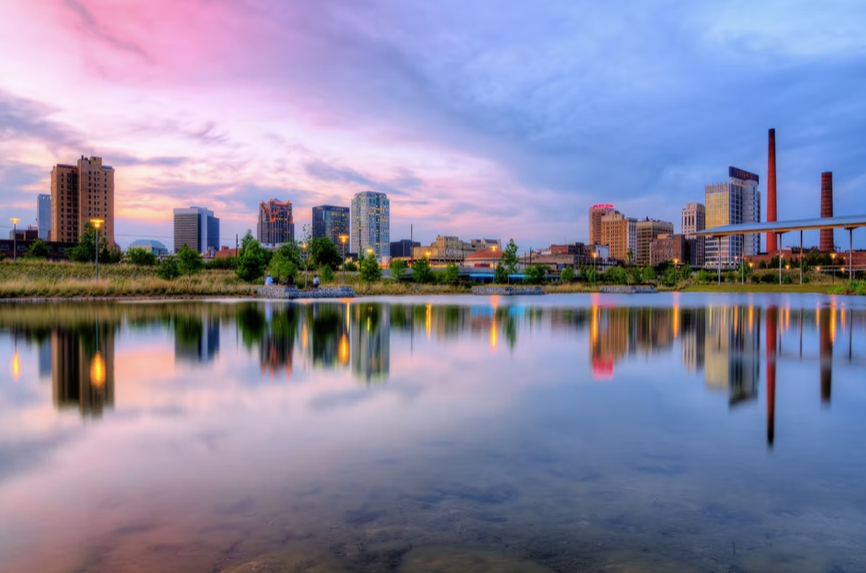
In Alabama, a state where "Heart of Dixie" traditions meet a profound respect for family and faith, end-of-life care is deeply influenced by a culture of communal support. Known for its hospitality and historic churchyards, the Yellowhammer State is currently seeing a subtle but steady transition toward more flexible memorial options. As of 2026, Alabama maintains specific legal safeguards—including a mandatory waiting period and coroner oversight—to ensure every final farewell is handled with precision and dignity. Whether you are in the historic neighborhoods of Birmingham or the coastal communities near Mobile, this guide provides the essential 2026 data and local resources for an Alabama legacy.
An Alabama Perspective on Heritage and Autonomy
In Alabama, the choice between burial and cremation is often a conversation between honoring a shared family history and adapting to the mobility of the modern era.
Emotional and Psychological Factors: Traditional burial remains a powerful cornerstone of Alabama life, particularly in rural counties where family cemeteries are meticulously tended. For many, a permanent grave site is a vital physical link to their ancestry. However, as families become more dispersed, cremation has emerged as the standard for "portable peace." It allows for a Celebration of Life to be held in the environments that truly defined the individual—such as a quiet morning on the banks of the Tennessee River or a gathering in a favorite local garden. Many families find comfort in keeping their loved one's remains in a sculptural Cremation Urn, allowing the memory to remain a vibrant, artistic part of the home.

The "Home Burial" Tradition: Alabama is one of the states where home burials on private property are generally permitted, provided families follow local zoning and health department regulations. This "back-to-the-land" approach appeals to the independent Hoosier-like spirit found in many rural Alabama communities.
Financial Realities: Economic pragmatism is a defining Alabama trait. 2026 data shows that a traditional funeral with a casket, vault, and cemetery fees in cities like Montgomery or Huntsville can be a significant investment. Cremation offers a way to bypass these "final real estate" costs, allowing families to redirect resources into Memorial Ideas like a scholarship fund or an artistic, handcrafted urn.
While South Carolina and Georgia have seen faster shifts, Alabama’s cremation rate is rising steadily as families seek more personalized options.
Cremation Rates: As of 2026, Alabama's cremation rate is approximately 48-52%. While this is an increase, Alabama remains one of the more traditional states in the South, with nearly half of all families still choosing burial.
Average Cost Breakdown: In 2026, Alabama families should budget for the following average expenses:
Traditional Funeral with Burial: A full-service funeral in Alabama averages $7,701. When including a cemetery plot and vault, the total often ranges from $9,000 - $12,500.
Direct Cremation: For a simple process with no ceremony, the average cost in Alabama is $2,016. Some specialized providers in Central Alabama offer "simple" packages starting as low as $695 - $995.
Full-Service Cremation: A cremation that includes a formal viewing and memorial service typically averages $5,665.
Alabama law includes specific procedural steps to ensure that end-of-life arrangements are verified and secure.
The 24-Hour Waiting Period: By state law, cremation cannot occur until at least 24 hours have passed from the time of death. This is a mandatory safety measure to allow for all legal reviews.
Coroner/Medical Examiner Authorization: A unique feature of Alabama law (Code § 22-9A-16) is that every cremation requires an additional sign-off from the county coroner or state medical examiner, even for natural deaths. This can sometimes cause a minor delay in scheduling, but it ensures a high level of oversight.
Death Certificates: Effective October 1, 2026, a new law in Alabama prohibits the "date of disposition" (burial or cremation date) from being listed on the death certificate to simplify vital records processing.
For the growing number of Alabama families choosing cremation, the vessel is a critical piece of the memorial landscape.
Sizing Rules: Always follow the industry standard: 1 lb of body weight prior to cremation = 1 cubic inch of ash. Most adults require a Standard Adult Urn with 200 cubic inches of capacity.
The Memorial Keepsake: In Alabama, Memorial Keepsakes are highly popular, especially among families who want to share a portion of the remains across different branches of the family tree.

Creative Tributes: 2026 trends in Alabama include hosting "Tailgate Celebrations" for sports fans, scattering ceremonies at Gulf Shores (at least 3 nautical miles out), and the use of artistic ceramic urns that match the classic, warm-toned decor of an Alabama home.
Based on 2026 service ratings and directories, here are several highly-regarded providers serving the state:
In the Birmingham area, Davenport & Harris Funeral Home is a historic institution with a legacy of service stretching back over a century. They are located at 301 Martin Luther King Jr Dr, Birmingham, AL 35211, and can be reached at (205) 252-2103.
Serving the Mobile region, Radney Funeral Home is a respected provider known for its large, well-appointed facilities and commitment to customized ceremonies. They are located at 3155 Dauphin St, Mobile, AL 36606, and can be reached at (251) 479-4547.
In Huntsville, Laughlin Service Funeral Home is a trusted name with deep community roots, specializing in both traditional and modern life celebrations. They are located at 2320 Bob Wallace Ave SW, Huntsville, AL 35805, and can be reached at (256) 534-2471.
| City | Funeral Home Website |
| Anniston | https://www.google.com/search?q=annistonservice.com |
| Auburn | jeffcoattrant.com |
| Bessemer | chambersfuneralhome.net |
| Birmingham | davenportharris.com |
| Birmingham | https://www.google.com/search?q=ridoutsvalleychapel.com |
| Decatur | https://www.google.com/search?q=rosellwoodfuneralhome.com |
| Dothan | sunsetmemorialpark.com |
| Enterprise | searcyfuneralhome.com |
| Florence | greenviewmemorial.com |
| Gadsden | https://www.google.com/search?q=crestwoodfuneralhome.com |
| Gulf Shores | https://www.google.com/search?q=pinecrestfuneralhome.com |
| Hoover | curriejefferson.com |
| Huntsville | laughlinservice.com |
| Madison | legacychapelfunerals.com |
| Mobile | https://www.google.com/search?q=radneyfuneralhome-mobile.com |
| Montgomery | https://www.google.com/search?q=ross-clayton.com |
| Opelika | jeffcoattrant.com |
| Prattville | davisfuneralhome.net |
| Selma | lawrencebrownservice.com |
| Tuscaloosa | https://www.google.com/search?q=sunsetbrown-service.com |
Whether you find peace in a traditional service in a historic Alabama church or in the sculptural beauty of a Cremation Urn displayed in your home, your choice is a profound act of love. By understanding the 2026 costs and the specific coroner authorization rules in Alabama, you can ensure your final tribute is as dignified and meaningful as the life it celebrates.
Quelle taille d'urne me faut-il ?
Règle simple : environ 1 litre de contenance pour 28 kg de poids corporel.
La contenance est indiquée sur chaque fiche produit. Les mini-urnes contiennent une petite partie des cendres à partager.
Besoin de la recevoir à une date précise ?
Livraison gratuite · Livraison en 3 à 5 jours ouvrés
Livraison express en 3 jours ouvrés maximum – à choisir lors du paiement
Besoin d'aide pour choisir ?
Parlez à notre équipe : nous vous aidons à trouver l'urne qui convient.
(562) 609-4019 art@pulvisurns.comEnvoyez-nous un message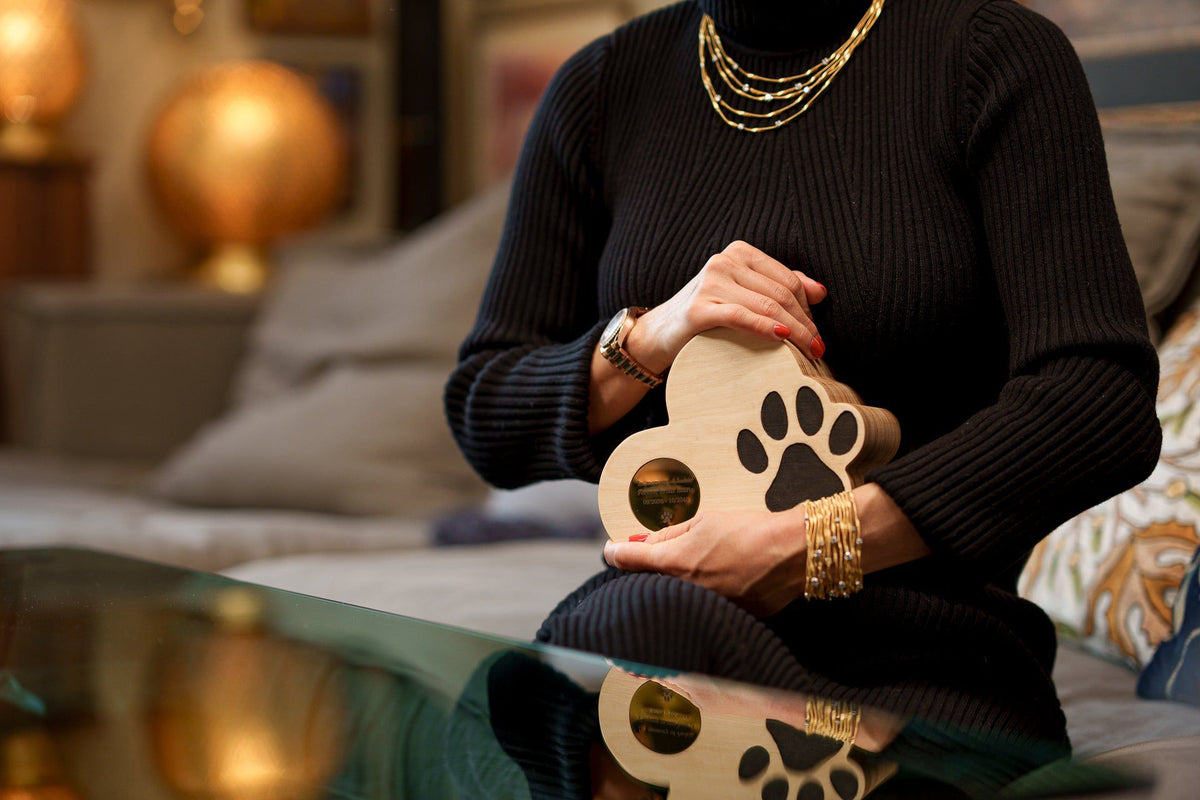
Can You Grieve a Life That Never Had Words?
Discover why losing a beloved pet can be so profound, how wordless bonds shape our lives, and how Pulvis Art Urns brings craftsmanship and thoughtful design to the art of remembering an animal companion.
What Does the Bible Say About Cremation?
Explore what the Bible says about cremation, Christian beliefs about resurrection, and meaningful ways to honor a loved one’s memory through a thoughtful memorial.
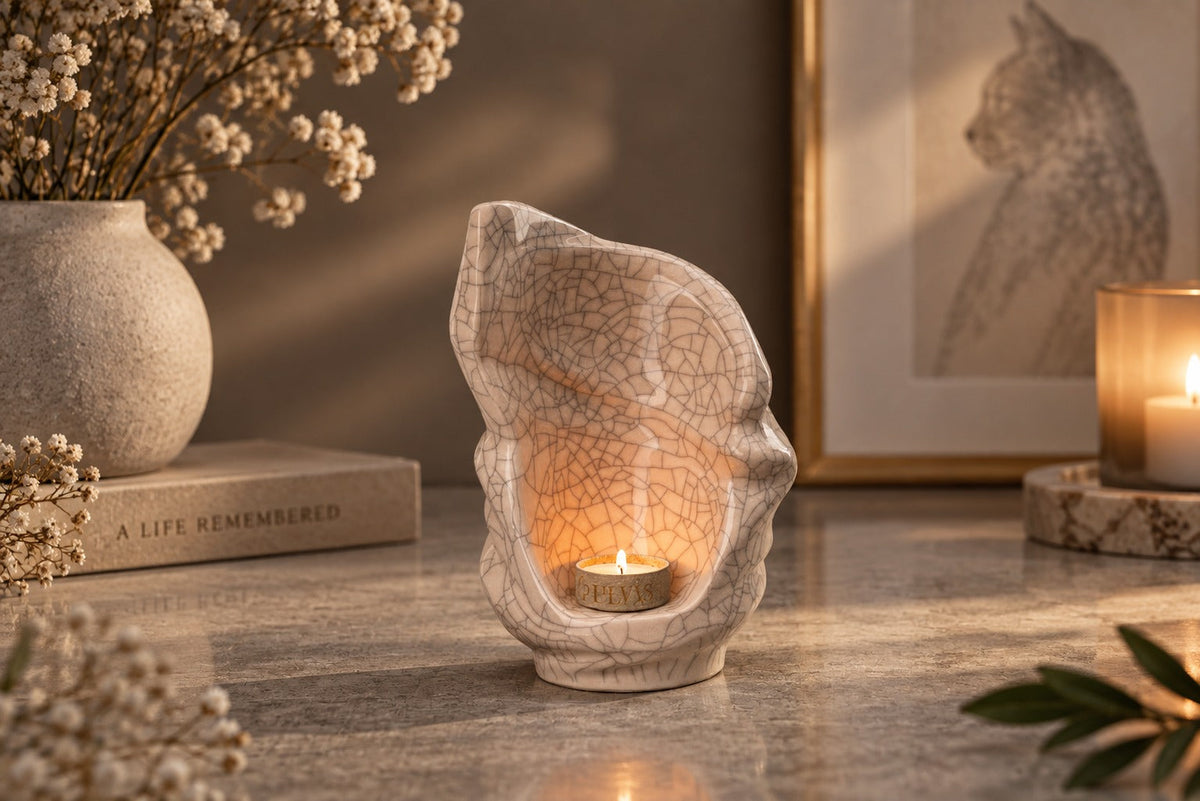
Why Do People Light Candles for the Dead?
Discover the meaning behind lighting candles for the dead, exploring the traditions, beliefs, and emotions that make this simple ritual a lasting expression of remembrance, comfort, and connection within the home.
The Pet as a Witness to a Human Life
Our pets witness far more of our lives than we realise. Explore what it means for an animal to become a quiet witness to our changing homes, relationships, routines and identities — and how a memorial urn can remain as a physical connection to the life they witnessed.

Can You Inherit a Pet’s Memory?
Can we remember a pet we never knew? Explore how stories, photographs, objects and memorials can carry an animal’s memory across generations, turning a private life into part of a family’s shared history.



Partager:
Easy Guide to Funeral Homes in Oklahoma
Ceramic Pet Urns: Durable & Stylish Options