



Here for you: art@pulvisurns.com | (562) 609-4019
7 % de réduction sur votre commande
Utilisez ce code lors du paiement :
In Oklahoma, a land of wide-open prairies and a resilient "pioneer spirit," end-of-life traditions are deeply personal and pragmatic. As we move through 2026, the "Sooner State" is maintaining its respect for traditional burial while experiencing a steady rise in cremation, driven by a desire for simplicity and cost-effectiveness. Oklahoma is unique for its specific oversight involving the Medical Examiner’s office and its legislation protecting the state's Funeral Board to ensure high standards of care. Whether you are in the vibrant metropolitan areas of Oklahoma City and Tulsa or the vast, rural expanses of the panhandle, this guide provides the essential 2026 data to help you navigate these choices.
An Oklahoma Perspective on Practicality and Place
In Oklahoma, the choice between burial and cremation often hinges on the concept of "home"—whether that means a permanent plot in a historic cemetery or the freedom to scatter remains across a beloved piece of family land.
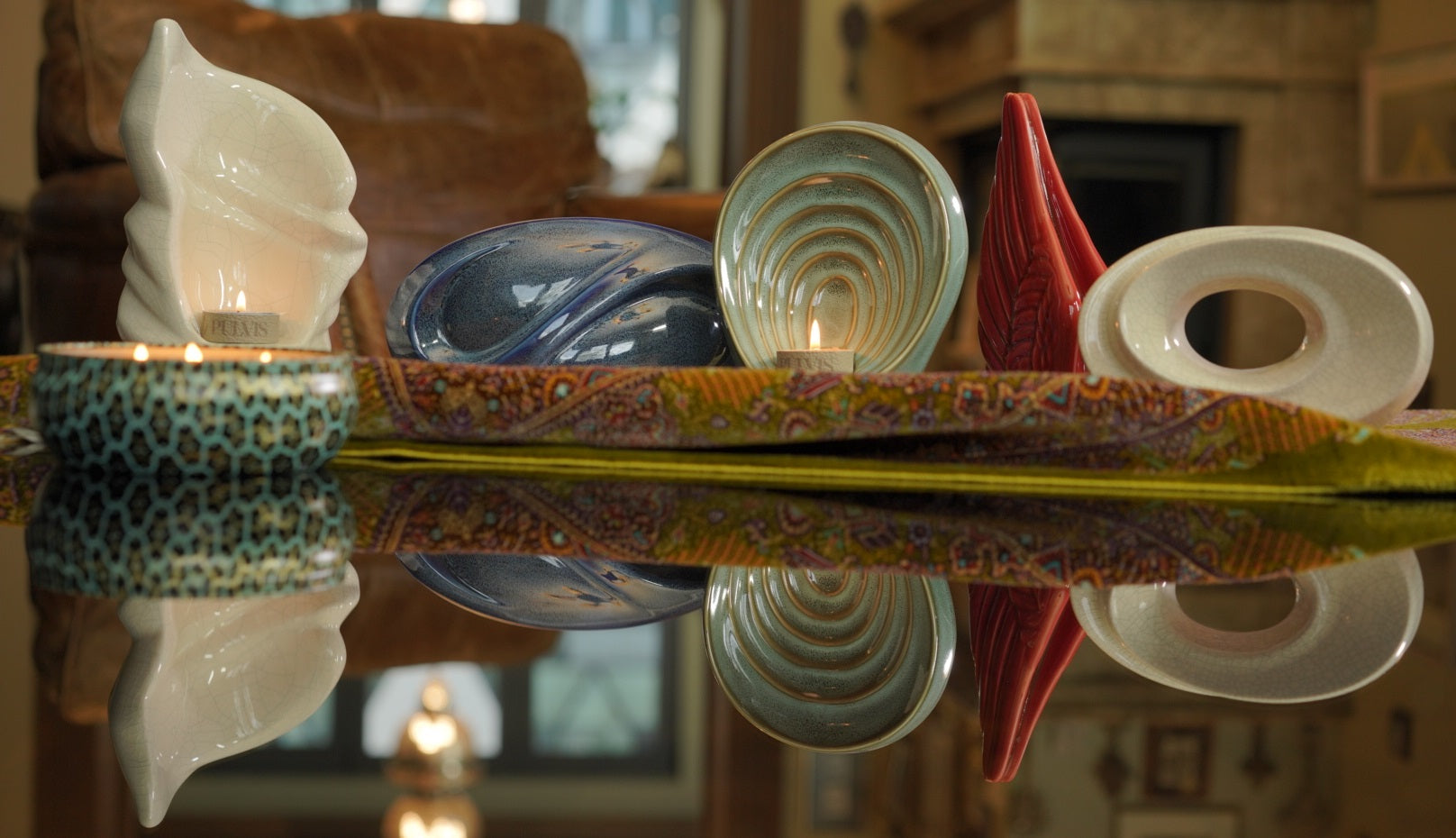
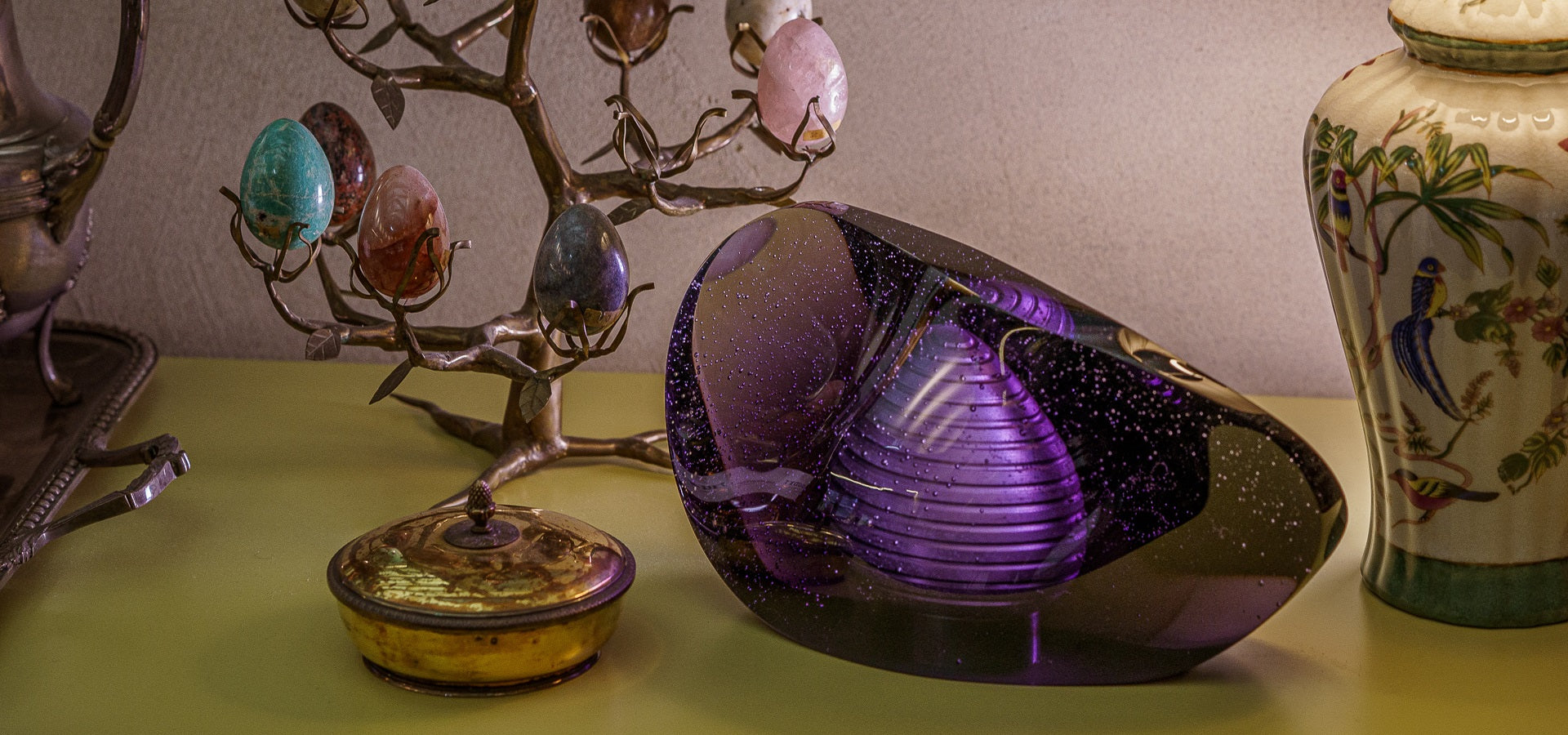
Emotional and Psychological Factors: Burial remains a significant tradition, particularly within the state's strong faith communities. A permanent headstone provides a place for ritual and remembrance. However, many Oklahoma families are now opting for cremation as a "uncluttered" way to say goodbye. It allows for a Celebration of Life to be held in places that truly resonated with the individual—perhaps a sunrise service at the Wichita Mountains or a gathering at a local community center. Families often choose to keep their loved one's remains in a sculptural Cremation Urn, treating the ashes not as "remains" but as a piece of living art that stays within the family home.

Financial Realities: Oklahoma families are notoriously practical. According to 2026 data, a traditional funeral with all the associated "trimmings" can be a heavy financial burden. Cremation is increasingly viewed as the "smart" option, allowing families to skip the costs of vaults and expensive caskets. This transparency in cost allows for a focus on Memorial Ideas that reflect the individual’s true passions rather than just paying for "real estate" in a cemetery.
Environmental Impact: With Oklahoma’s vast agricultural heritage, there is a growing respect for "green" practices. Cremation is often preferred by those who want a low-impact return to nature. Many choose to pair this with a handcrafted ceramic vessel that is both beautiful and permanent, keeping the legacy intact without the need for traditional cemetery resources.
Oklahoma’s cremation rate is climbing toward the national average, reflecting a broader shift in Midwestern values toward simpler ceremonies.
Cremation Rates: As of 2026, the cremation rate in Oklahoma is approximately 52-54%. While traditional burial is still highly respected, the majority of families now choose cremation for its flexibility and lower entry cost.
Average Cost Breakdown: In 2026, Oklahoma families should budget for the following average expenses:
Traditional Funeral with Burial: A full-service funeral in Oklahoma averages $7,966. In larger cities like Oklahoma City or Tulsa, a full package (including cemetery fees and a headstone) typically ranges from $9,000 - $13,000.
Direct Cremation: For a simple process with no ceremony, the average cost in Oklahoma is $2,159. Some specialized providers in the Tulsa area offer basic "no-frills" packages starting as low as $797 - $845.
Full-Service Cremation: A cremation that includes a formal viewing and memorial service typically averages $5,692.
Oklahoma has distinct laws to ensure the integrity of the cremation process, particularly regarding the Medical Examiner’s oversight.
OCME Permit for Disposal: In Oklahoma, a body cannot be cremated until a permit for disposal has been issued by the Office of the Chief Medical Examiner (OCME). This is a critical step that ensures every death is properly reviewed before a permanent disposition like cremation occurs.
No Fixed "Clock": Unlike states with a strict 24 or 48-hour "wait," Oklahoma’s timing is tied to the permit issuance. While the law requires a death certificate to be filed within three days, the actual cremation happens once the OCME clears the case. In practice, this usually results in a waiting period of 24–48 hours.
Refrigeration Rule: Oklahoma law requires that unembalmed remains must be placed in refrigerated storage (40°F or less) if cremation does not happen immediately.
For the growing number of Oklahomans choosing cremation, the urn is more than a container; it is a centerpiece of the home.
Sizing Rules: Always follow the industry standard: 1 lb of body weight prior to cremation = 1 cubic inch of ash. Most adults require a Standard Adult Urn with 200 cubic inches of capacity.
The Memorial Keepsake: Very popular in Oklahoma for families who wish to share ashes among several children or grandchildren. These small, artistic tokens allow everyone to keep a "piece of home" with them.

Creative Tributes: 2026 trends in Oklahoma include "Prairie Scatterings" on private land (with owner consent) and the use of artistic ceramic urns that match the rustic-modern aesthetic of Oklahoma interiors.
Based on 2026 service ratings and directories, here are several highly-regarded providers serving the state:
In Oklahoma City, Resthaven Funeral Home & Gardens is a premier choice known for its compassion and "Plan Ahead" support. They are located at 500 SW 104th St, Oklahoma City, OK 73139, and can be reached at (405) 691-1661.
Serving the Tulsa region, Schaudt’s Funeral Service & Cremation Care is a family-owned provider specializing in "simple goodbyes" and modern celebrations. Their Tulsa chapel is at 5757 S Memorial Dr, Tulsa, OK 74145, and can be reached at (918) 523-5757.
In Broken Arrow, Floral Haven Funeral Home & Cemetery offers a beautiful, all-in-one park setting with highly rated staff. They are located at 6500 S 129th E Ave, Broken Arrow, OK 74012, and can be reached at (918) 505-7254.
| City | Funeral Home Website |
| Ada | criswellfh.com |
| Ardmore | alexanderfuneralhome.org |
| Bartlesville | stumpff.org |
| Broken Arrow | floralhaven.com |
| Claremore | mmsfuneralhomes.com |
| Duncan | granthamfuneralhomes.com |
| Edmond | https://www.google.com/search?q=matthewsfuneralhome.com |
| Enid | andersonburris.com |
| Lawton | beckerfuneral.com |
| Muskogee | bradleyfuneralservice.com |
| Norman | havenbrookfuneralhome.com |
| Oklahoma City | resthavenokc.com |
| Oklahoma City | https://www.google.com/search?q=vondelsmithfuneralhome.com |
| Ponca City | https://www.google.com/search?q=troutdale-funeralhome.com |
| Stillwater | strodefh.com |
| Tulsa | schaudtfuneralservice.com |
| Tulsa | moorefuneral.com |
| Yukon | yandaandsonfuneralhome.com |
Whether you find peace in the red earth of a family farm or in the sculptural beauty of a Cremation Urn displayed on your mantle, your choice is a profound act of love. By understanding the 2026 costs and the specific OCME permit rules in Oklahoma, you can ensure your final act is one that honors both your life and the state you call home.
Quelle taille d'urne me faut-il ?
Règle simple : environ 1 litre de contenance pour 28 kg de poids corporel.
La contenance est indiquée sur chaque fiche produit. Les mini-urnes contiennent une petite partie des cendres à partager.
Besoin de la recevoir à une date précise ?
Livraison gratuite · Livraison en 3 à 5 jours ouvrés
Livraison express en 3 jours ouvrés maximum – à choisir lors du paiement
Besoin d'aide pour choisir ?
Parlez à notre équipe : nous vous aidons à trouver l'urne qui convient.
(562) 609-4019 art@pulvisurns.comEnvoyez-nous un message
Can You Grieve a Life That Never Had Words?
Discover why losing a beloved pet can be so profound, how wordless bonds shape our lives, and how Pulvis Art Urns brings craftsmanship and thoughtful design to the art of remembering an animal companion.
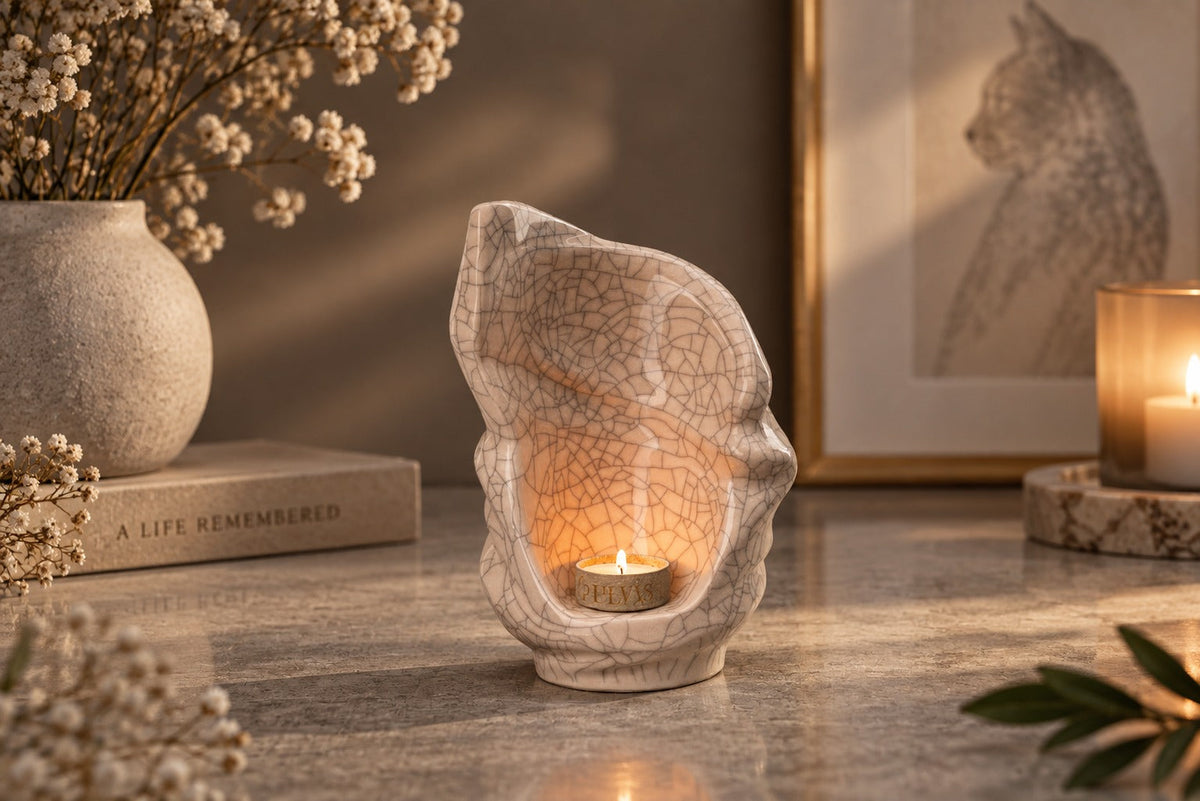
What Does the Bible Say About Cremation?
Explore what the Bible says about cremation, Christian beliefs about resurrection, and meaningful ways to honor a loved one’s memory through a thoughtful memorial.
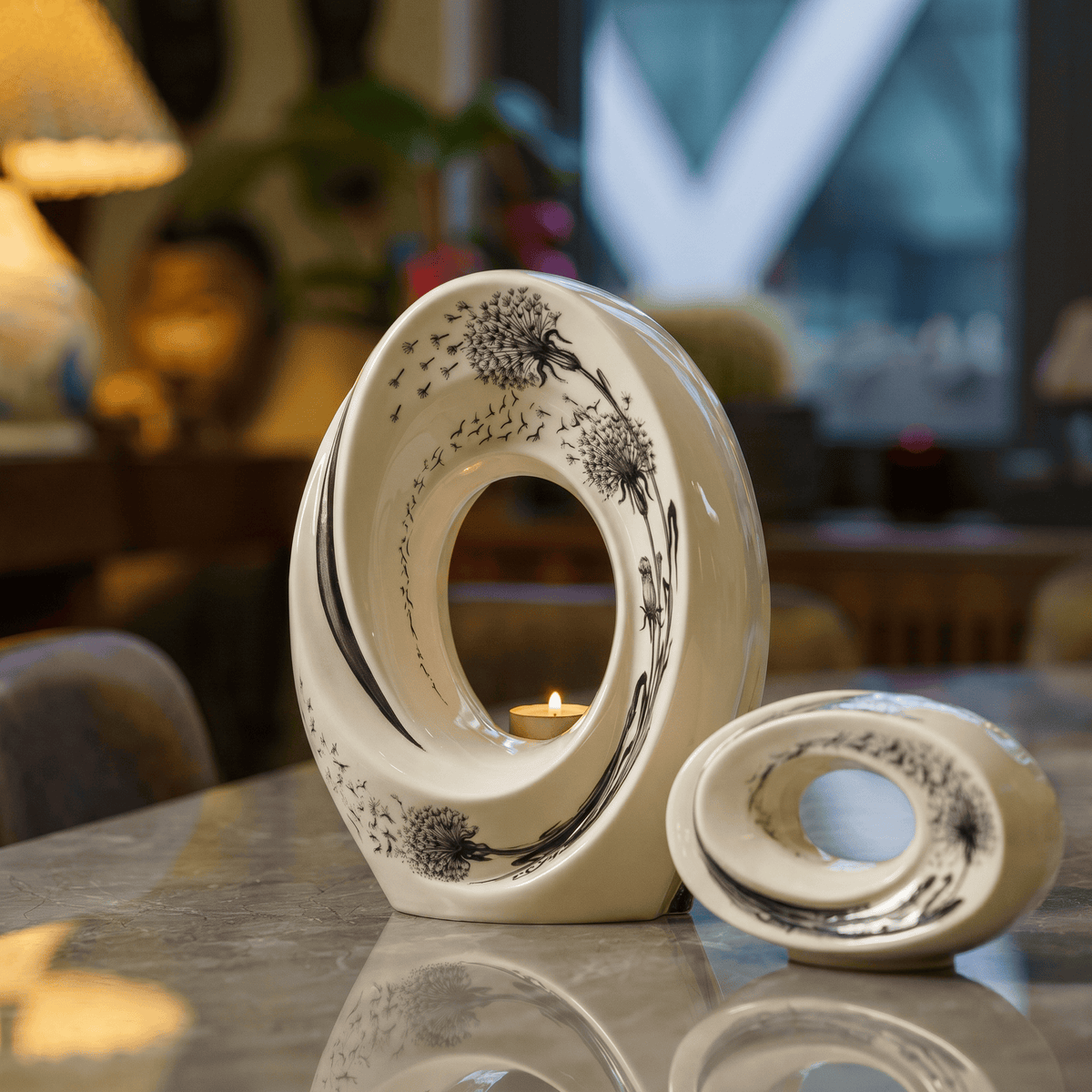
Why Do People Light Candles for the Dead?
Discover the meaning behind lighting candles for the dead, exploring the traditions, beliefs, and emotions that make this simple ritual a lasting expression of remembrance, comfort, and connection within the home.

The Pet as a Witness to a Human Life
Our pets witness far more of our lives than we realise. Explore what it means for an animal to become a quiet witness to our changing homes, relationships, routines and identities — and how a memorial urn can remain as a physical connection to the life they witnessed.

Can You Inherit a Pet’s Memory?
Can we remember a pet we never knew? Explore how stories, photographs, objects and memorials can carry an animal’s memory across generations, turning a private life into part of a family’s shared history.



Partager:
Easy Guide to Funeral Homes in Ohio
Easy Guide to Funeral Homes in Alabama