
Here for you: art@pulvisurns.com | (562) 609-4019
An urn is usually understood through its function: a vessel designed to hold ashes. But what happens when the object becomes something more than its purpose? When its form, materials, craftsmanship and presence in a space begin to matter just as much as what it contains?
A pet urn can exist somewhere between object and artwork. It can hold ashes, but it can also occupy a place in a home, contribute to its surroundings and become a lasting representation of an animal that was deeply loved.
This raises an interesting question: can a pet urn be considered a sculpture?
Sculpture has never been limited to objects created simply to be looked at. Throughout history, functional objects have also been carefully designed, decorated and transformed into expressions of culture, identity and craftsmanship.
The same idea can apply to memorial objects.
A pet urn has a clear practical purpose, but that does not mean its appearance has to be secondary. Its proportions, surface, shape and materials can be deliberately considered. Instead of hiding its function, an artistic urn can incorporate that function into its design.
The result is an object that serves a purpose while also existing as something visually and emotionally meaningful.

There is a subtle difference between something that simply contains ashes and something that becomes part of the environment around them.
A purely functional container answers one question: where should the ashes be kept?
An artistic urn can answer another: what should this object represent?
That distinction changes how we see it. The urn is no longer simply associated with the moment of death. It becomes associated with the life that came before it.
Its shape might suggest movement, softness or strength. Its texture might create a sense of warmth. Its presence might be quiet and understated or deliberately expressive.
None of these qualities changes what the urn contains. They change what the object communicates.
Art has always been used to preserve things that cannot physically remain.
A sculpture can represent a person, a place, an idea or a moment without reproducing it literally. It creates a physical form for something that otherwise exists only in memory.
This is one reason the idea of a sculptural pet urn is so compelling.
A beloved animal cannot be reduced to a photograph or a physical object. Their personality existed in movement, sound, habits and interaction. Yet a carefully designed object can still become a way of representing their presence.
It does not have to look exactly like the animal.
Sometimes abstraction can say more than imitation.

Traditional funeral objects often carry a recognizable visual language. They can be formal, solemn and intentionally associated with death.
Contemporary memorial design can take a different direction.
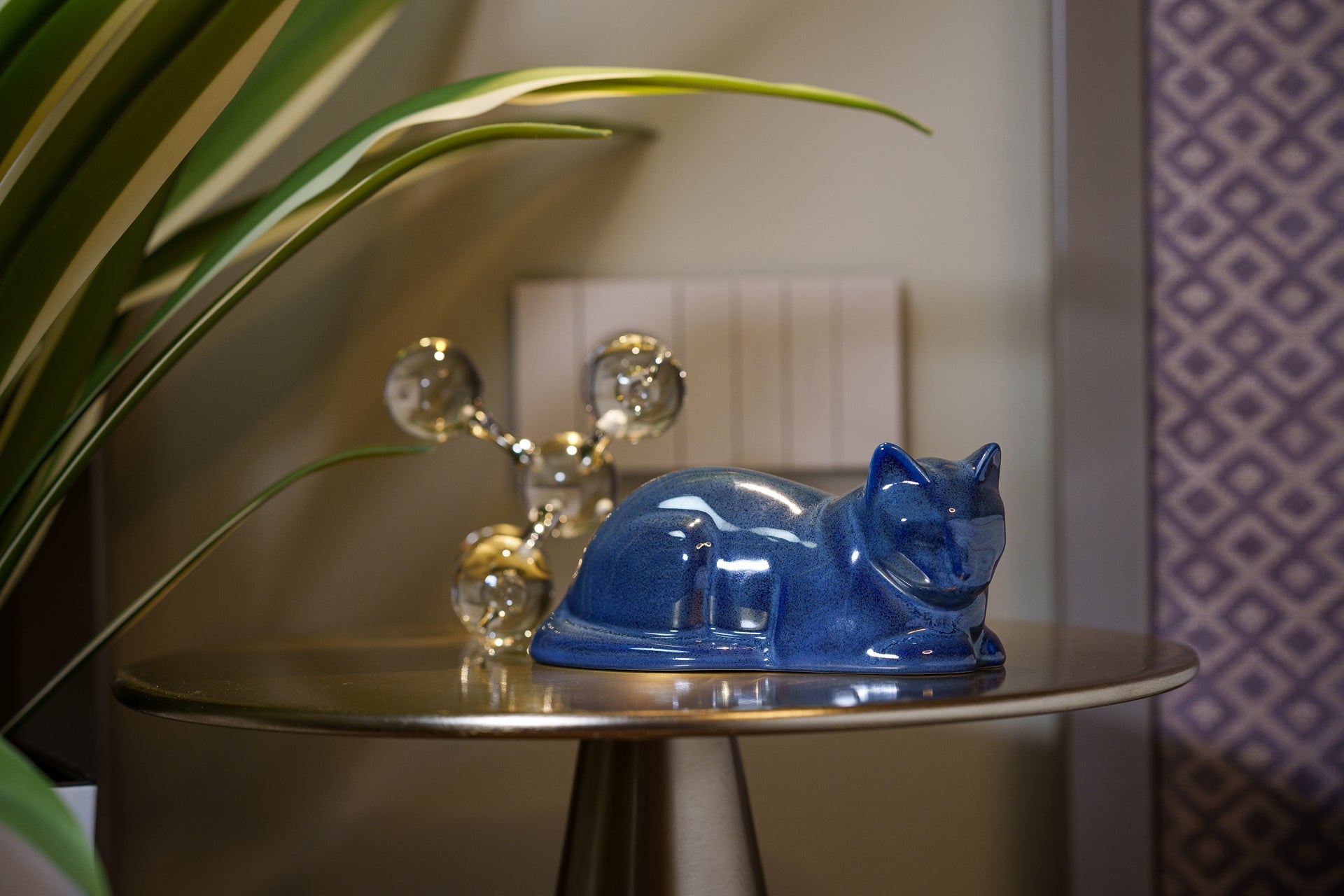
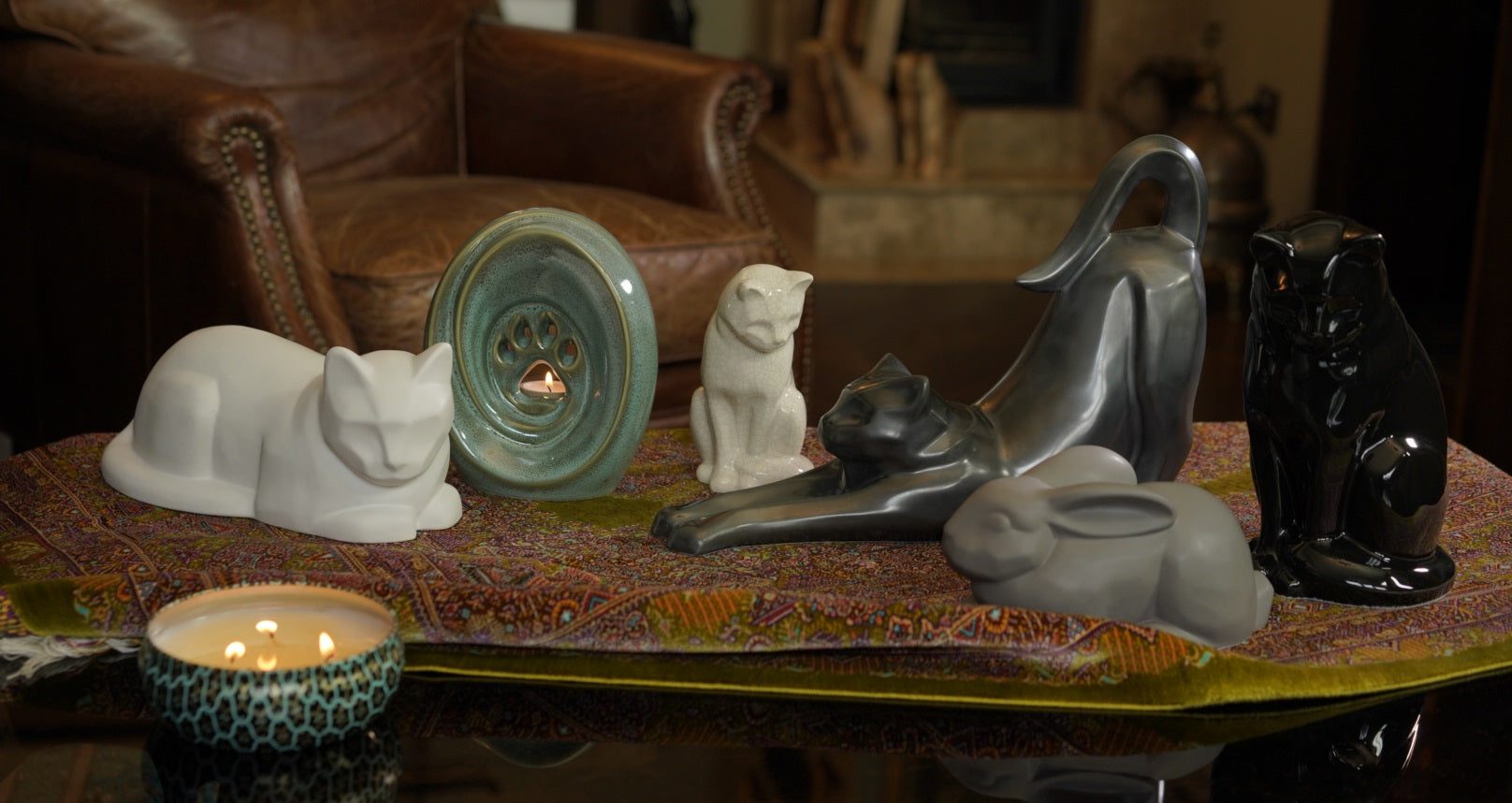
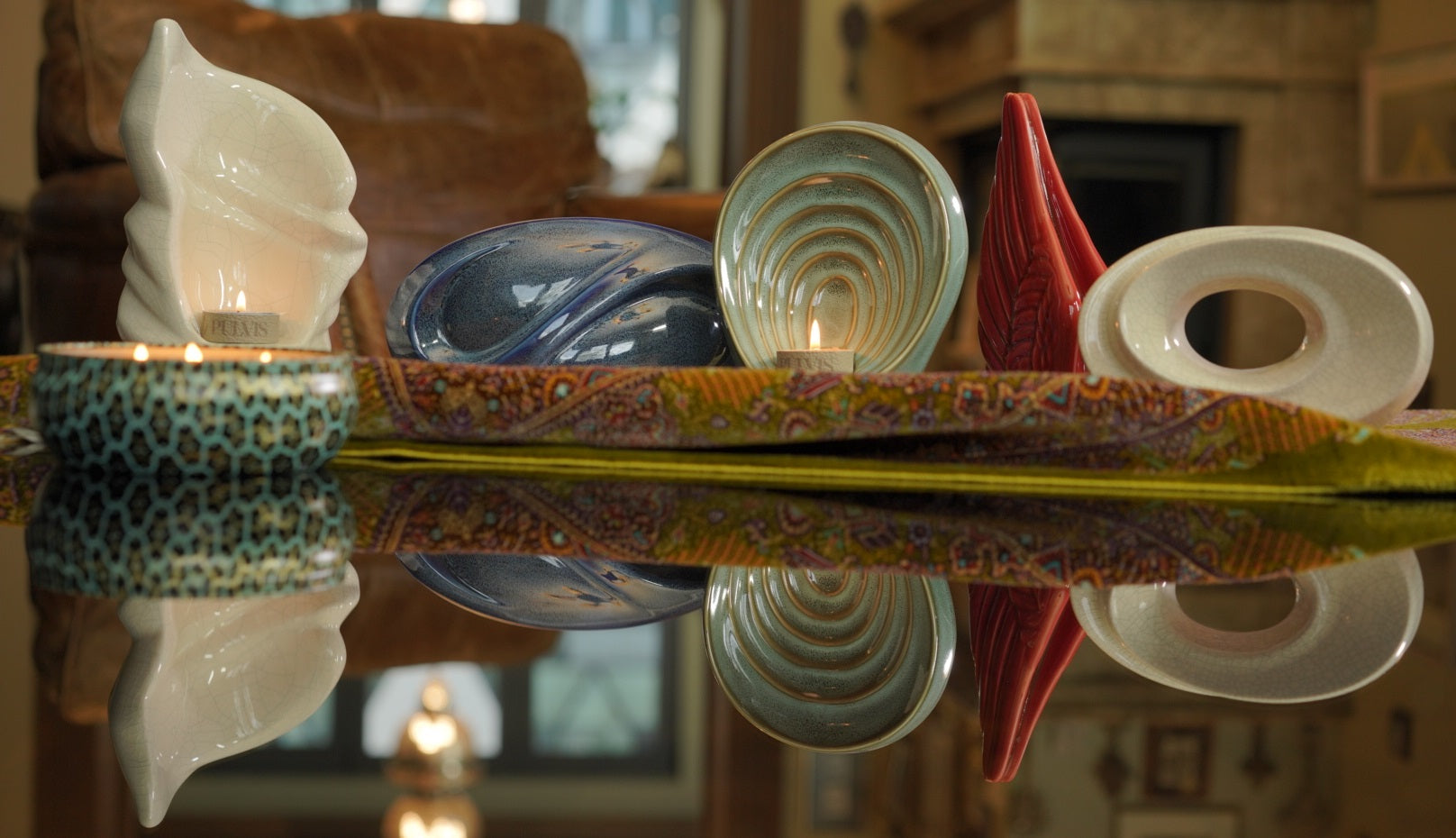
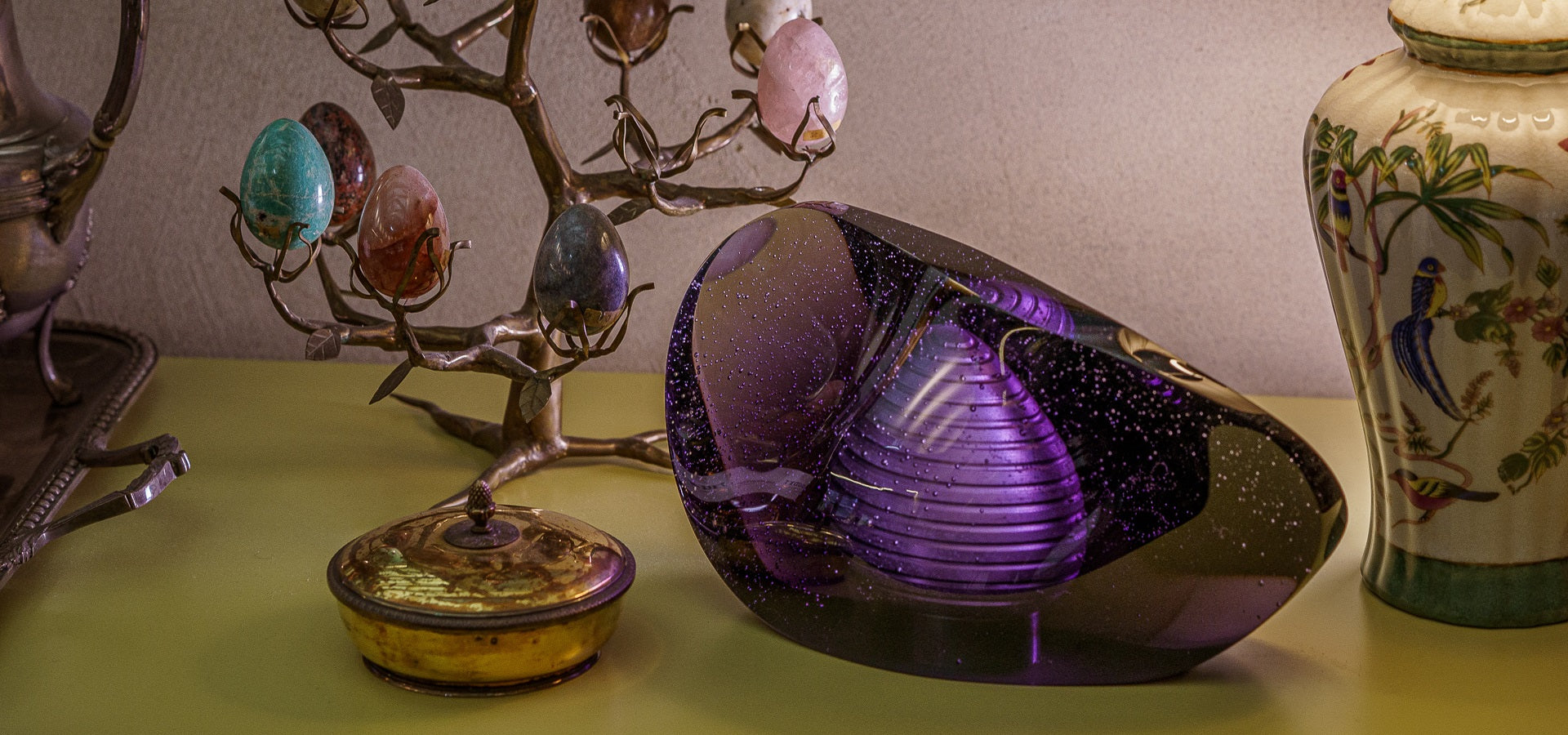
An artistic pet urn might look like a piece of interior design, a ceramic artwork or a small sculpture. It can exist naturally within a home rather than feeling as though it belongs exclusively to a funeral setting.
This can change the emotional relationship we have with it.
Instead of immediately communicating loss, the object can become something we associate with the character of the animal, the years spent together and the memories that remain.
The distinction is important: beautiful design does not make loss less real. It can simply give memory a different visual language.
Materials can also influence whether we perceive an urn as an artwork.
Ceramic, stone, metal, wood and other materials have their own physical qualities. They can be smooth or rough, heavy or delicate, matte or reflective. Each creates a different relationship between the object and its surroundings.
This is part of what makes sculpture so powerful. We do not experience a sculpture only through its image. We experience its physical presence.
The same can be true of a memorial urn.
Its weight, surface and craftsmanship can make it feel like something made to last. The material itself becomes part of the story of permanence.

There is also something uniquely powerful about the fact that an urn contains something.
A sculpture normally represents or expresses an idea through its visible form. An urn has an additional layer: something invisible exists inside it.
The outside can be seen. The contents cannot.
This creates an unusual relationship between visibility and absence. The object is physically present while what it protects remains hidden.
In that sense, an urn can be thought of as a sculpture of memory — an object whose meaning extends beyond what can be seen.
The growing importance of pets in our lives has changed what we expect from objects created to remember them.
A pet may have been part of the home for ten, fifteen or even twenty years. Their presence influenced the space around them: the sofa they slept on, the doorway where they waited, the corner where their toys were kept.
It makes sense, then, that the object chosen to represent them can also have a place within that environment.
A sculptural urn does not have to be hidden away. It can become part of the home because it belongs to the story of the home.
It can quietly occupy the same space where the animal once did.

There is another reason artistic urns can feel different: craftsmanship itself can become meaningful.
Creating something carefully, patiently and intentionally carries a sense of respect. Every curve, surface and detail can contribute to an object designed to remain for years.
For a memorial object, this permanence matters.
The pet's life was temporary, as all lives are, but the object created in their memory can be made to endure.
In that way, craftsmanship becomes part of the tribute. The care invested in the object reflects the care that existed within the relationship.
For this reason, the philosophy behind Pulvis is closely connected to this idea: a memorial urn does not have to be separated from art and design. When craftsmanship, material and form are given the same attention as function, an urn can become an object that feels worthy of the memory it carries.

There is no single definition that determines where sculpture ends and functional design begins. An object can be both.
A pet urn can contain ashes and still be a work of art. It can fulfil a practical purpose while also contributing to a space aesthetically. It can be a vessel, a memorial and a sculptural object at the same time.
Perhaps the more interesting question is not whether a pet urn can be a sculpture, but whether we still need to separate the two.
When an object is created to hold something precious, designed with intention and made to remain long after the moment for which it was created, its value can extend far beyond its function.
A pet urn can be a container.
It can be a memorial.
And, in the right hands, it can also become a small piece of art carrying the memory of a life that mattered.
Can a pet urn be more than a vessel for ashes? Explore how craftsmanship, materials and sculptural design can transform a memorial urn into a meaningful work of art that keeps the memory of a beloved companion present.
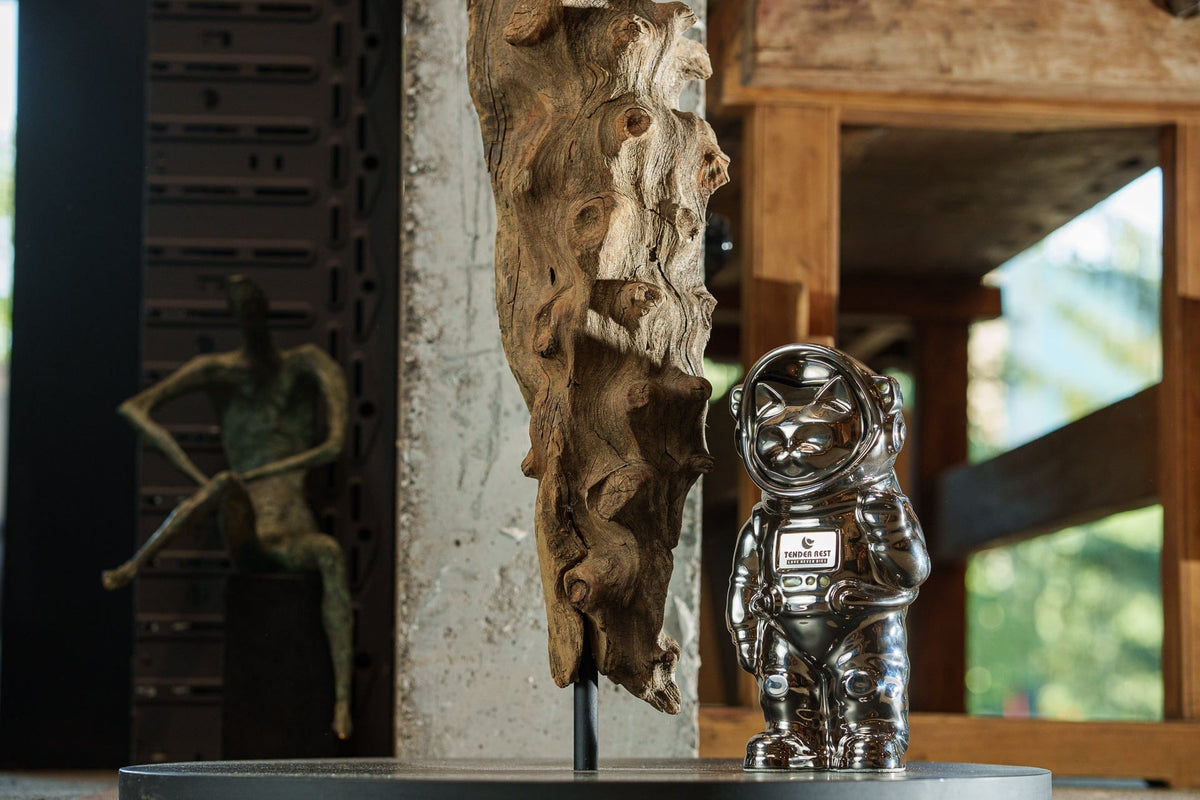
The Pet Funeral Is Changing: What Modern Goodbyes Look Like
Pet funerals are changing as animals become an increasingly important part of our families. Discover how cremation, memorial ceremonies, personalized urns and new rituals are creating more personal ways to say goodbye to a beloved companion.
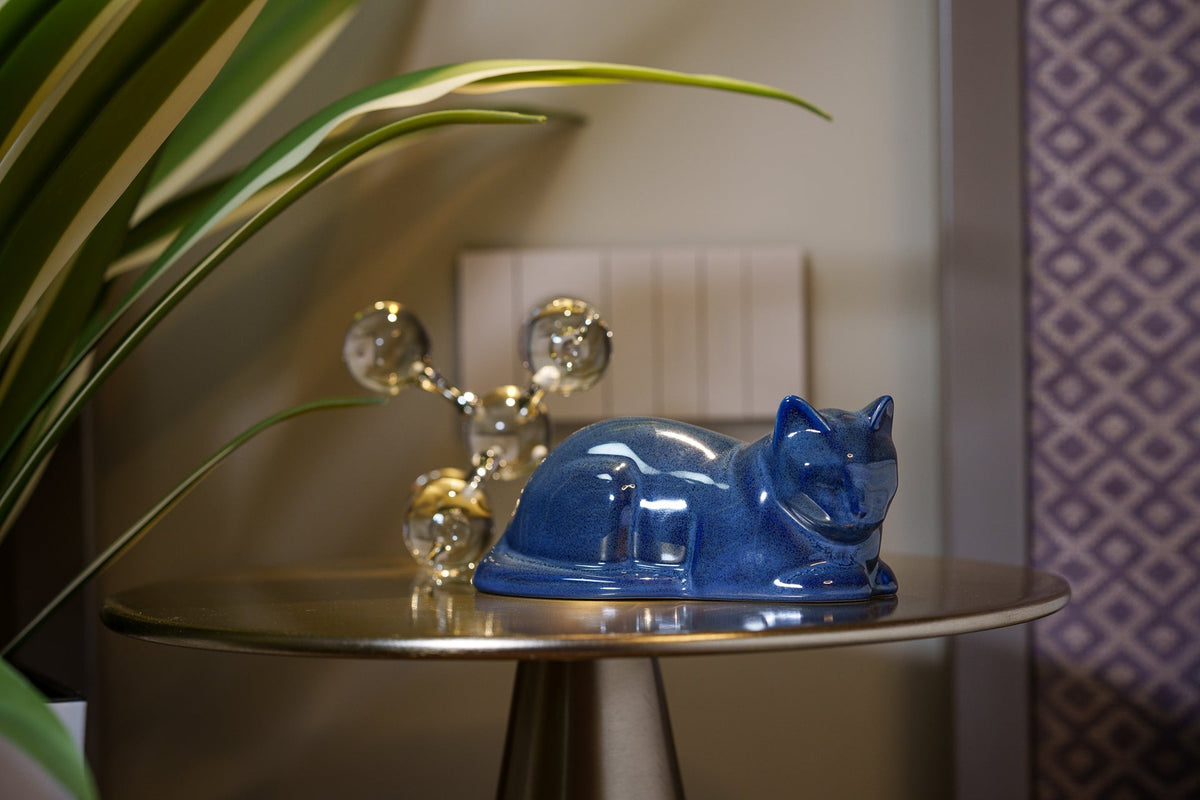
Can the Design of a Pet Urn Change the Way We Grieve?
Can the design of a pet urn influence the way we experience grief? Explore how meaningful materials, forms and memorial design can help transform loss into a lasting connection with a beloved companion.

What Are the Most Unique Urns Available Today?
Discover the most unique cremation urns available today, from handcrafted ceramic and sculptural designs to glass, nature-inspired, personalized, and keepsake memorials. Learn what makes an urn distinctive and how to choose a meaningful design based on capacity, material, placement, and personal significance.
How Do You Choose the Right Pet Urn?
A practical guide to choosing the right pet urn, covering size, capacity, materials, personalization, closure, and meaningful ways to memorialize your beloved companion.


Compartir:
The Pet Funeral Is Changing: What Modern Goodbyes Look Like